In summary:
- Shift your focus from planning miles to budgeting time and energy to avoid burnout.
- Account for the « invisible workload » of chores like dumping tanks and grocery shopping, which can consume hours.
- Adopt a pacing framework like the « 2-2-2 Rule » (200 miles max, arrive by 2 PM, stay 2 nights) to ensure rest and enjoyment.
- Build a multi-layered navigation system with offline maps to eliminate the stress of dead zones.
- Mastering small, daily van life habits is the key to sustainable and joyful long-term travel.
The scene is all too familiar. You arrive at a potential campsite as dusk settles, your shoulders tense from a long day behind the wheel. The spot is taken. The next one is miles away. You’re tired, hungry, and the beautiful vista you sped past hours ago is now a forgotten blur. You meticulously planned the miles, but you forgot to plan for the journey itself. This is the classic road trip burnout, a common pitfall for van lifers eager to see it all but who end up just seeing the inside of their vehicle.
Conventional wisdom tells you to « be flexible » or to simply « plan your route on Google Maps. » But this advice often fails because it overlooks the real culprit: the invisible workload. The constant cycle of driving, finding a spot, setting up, and performing essential chores drains your energy far more than the mileage alone. The stress doesn’t come from the driving; it comes from the rush against a ticking clock, the anxiety of the unknown, and the exhaustion of perpetual motion.
But what if the solution wasn’t to plan more, but to plan differently? What if the key to a sustainable road trip lies not in maximizing distance, but in budgeting your time and energy? This is the core of the slow-travel philosophy. It’s a mental shift from a destination-focused checklist to an experience-oriented journey. It’s about creating space in your day for both the planned and the spontaneous, ensuring you end each day feeling refreshed, not depleted.
This guide will walk you through this more mindful approach to road trip planning. We will explore how to account for the hidden time-sinks of van life, how to use simple rules to set a sustainable pace, and how to master the practical skills that reduce daily stress. It’s time to stop surviving your road trip and start truly living it.
To help you structure this new approach, this article breaks down the essential strategies into manageable sections. The following summary outlines the key topics we will cover, from managing daily chores to mastering the art of slow-paced travel.
Summary: A Guide to Burnout-Free Road Trip Planning
- Why emptying tanks and shopping takes 2 hours out of your driving day?
- How to use apps to find legal spots at 6 PM in high season?
- The « 2-2-2 Rule »: Why limiting driving to 200 miles saves your mood?
- Highway vs Backroads: Is the view worth double the gas consumption?
- When Google Maps fails: Downloading areas for dead zones
- Why the rear swings out and hits cars during tight turns?
- How to share your location without draining your battery?
- Living in a Van: How to Manage Moisture and Mold in Small Spaces?
Why emptying tanks and shopping takes 2 hours out of your driving day?
The most common mistake in road trip planning is focusing solely on driving time. The reality of van life involves an « invisible workload » of essential chores that can easily consume two hours or more of your day. These are the non-negotiable tasks: finding a dump station, emptying black and grey water tanks, refilling fresh water, doing laundry, and grocery shopping. Ignoring this time block is the fastest way to derail your itinerary and induce stress.
A simple stop at a dump station can turn into a 45-minute affair when you factor in waiting in line, setup, the dumping process itself, and cleanup. This is a task that more than 75% of RVers perform during their trips, making it a universal time commitment. Combine this with a grocery run in an unfamiliar town, and your « quick stop » has suddenly eaten a significant chunk of your afternoon, pushing your arrival time into the stressful late-evening window.
The solution is to stop treating these tasks as interruptions and start scheduling them as a dedicated « admin block. » Instead of trying to squeeze them in, consciously budget time for them. A strategic approach is to batch these chores together. Plan to hit a town that has a dump station, laundromat, and grocery store in close proximity. By tackling all your admin tasks in one efficient, two-hour block every 3-4 days, you free up your other travel days to be purely for driving and exploration. This simple shift in mindset transforms chores from a daily source of friction into a predictable, manageable part of your routine.
How to use apps to find legal spots at 6 PM in high season?
Arriving at 6 PM in a popular area during high season without a plan is a recipe for anxiety. The romantic notion of pulling over wherever you please quickly evaporates when every official campground is full and « No Overnight Parking » signs are everywhere. This nightly scramble for a legal and safe place to sleep is a major contributor to road trip burnout. Fortunately, technology provides a powerful antidote, but it requires a proactive strategy, not a last-minute panic search.
Your smartphone is your best tool, but you need to use the right apps with the right filters. Don’t just search for « campgrounds near me. » Use apps that specialize in dispersed camping, or « boondocking, » and provide user-generated reviews. Apps like iOverlander, The Dyrt, and Campendium are essential. The key is to start your search by 2 or 3 PM, not when you’re ready to stop. Look for spots with recent, positive reviews that confirm accessibility and legality. Pay close attention to comments about road conditions, cell service, and how crowded the area gets.
During high season, having multiple backup options is non-negotiable. Identify a primary target and at least two or three alternatives along your route. This way, if your first choice is full or inaccessible, you can proceed to the next without stress. The following table compares some of the most effective apps for finding a spot, helping you build a robust digital toolkit for any situation.
This comparative data, drawn from an analysis of the best boondocking apps, highlights how different tools serve different needs, from finding free spots to securing unique stays.
| App Name | Best For | Free Tier | Pro Cost (Annual) | Key Feature |
|---|---|---|---|---|
| iOverlander | Free boondocking & international travel | Yes | $59.99-$99.99 | Crowd-sourced wild campsites, dump stations, mechanics |
| The Dyrt | Comprehensive campground database | Yes | $35.99 | 500,000+ campgrounds with reviews, offline maps, BLM/USFS overlays |
| Campendium | Accurate boondocking info | Yes | $20 (Roadpass Pro: $60) | More accurate open/closed status, elevation sorting |
| Harvest Hosts | Unique stays at farms/wineries | No | $99 | Access to 5,000+ unique overnight locations |
The « 2-2-2 Rule »: Why limiting driving to 200 miles saves your mood?
The « 2-2-2 Rule » is less of a strict regulation and more of a guiding philosophy for sustainable travel. It’s a simple, memorable framework designed to combat driver fatigue and create space for genuine exploration: drive no more than 200 miles (or 320 km) per day, arrive at your destination by 2 PM, and stay for at least 2 nights. While it may sound restrictive, its power lies in what it prevents: the exhaustion and stress of constant motion.
Driving 400 miles in a day might seem efficient, but it leaves no time or energy for anything else. You arrive late, stressed, and face setup in the dark. The 200-mile limit, however, typically translates to about 4-5 hours of driving on mixed roads. This is a manageable amount that prevents physical and mental exhaustion. Arriving by 2 PM is the game-changer. It gives you a crucial « arrival buffer » to find the best campsite, handle any unexpected issues, and set up in daylight. Most importantly, it leaves the entire afternoon and evening free for relaxing, exploring the area, or simply enjoying the act of being still.
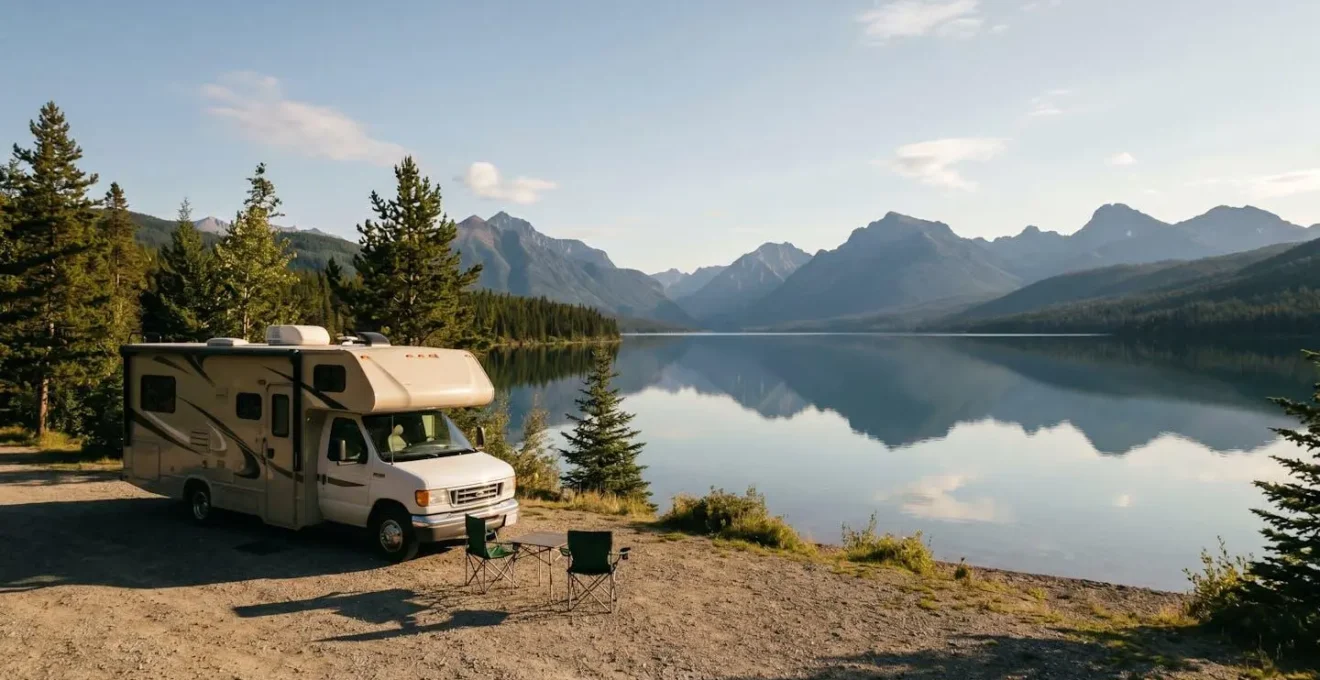
Staying for two nights breaks the relentless cycle of pack-up/drive/set-up. It allows you one full day where you don’t have to move your home, giving you the freedom to take a day trip, go for a long hike, or catch up on work. This slower pace is especially relevant today, as 46% of campers now work remotely during their trips, making longer stays not just desirable but necessary. Adopting this rhythm transforms your trip from a frantic blur of windshield time into a series of meaningful, restorative stops.
Highway vs Backroads: Is the view worth double the gas consumption?
The debate between efficient highways and scenic backroads is a central dilemma of any road trip. Highways get you there fast, but often at the cost of sterile scenery and high-speed stress. Backroads offer beauty and discovery but can be slow, winding, and significantly less fuel-efficient. The most sustainable approach isn’t to choose one over the other, but to develop a strategic framework for when to use each.
Think of your driving days in two distinct categories: « Transit Days » and « Exploration Days. » A Transit Day is about covering distance efficiently. This is when you use the highway. The goal is to move from Point A to Point B with minimal stress, but you should still respect your energy limits. Even on a Transit Day, capping your drive at around 300 miles helps maintain a sustainable pace. These days are perfect for crossing less scenic regions or making up time.
An Exploration Day, by contrast, is about the journey itself. This is when you embrace the backroads. On these days, your mileage goal should be much lower, perhaps 150-200 miles maximum. This slower pace allows you to stop for photos, visit a roadside farm stand, or take an impromptu hike without feeling rushed. It’s also crucial to match your road choice to your vehicle. A large Class A motorhome is best suited for highways, while a nimble campervan can confidently tackle more adventurous backroads. By consciously alternating between these two modes, you get the best of both worlds: efficient travel when you need it and immersive exploration when you want it.
When Google Maps fails: Downloading areas for dead zones
In the digital age, we’ve come to rely on apps like Google Maps as an infallible guide. But in the remote areas that van lifers cherish—national parks, forests, and desert landscapes—cell service is a luxury, not a guarantee. A « No Service » notification at a critical junction can instantly trigger panic. Relying on a single, connectivity-dependent tool for navigation is not a plan; it’s a gamble. A resilient navigation strategy involves a multi-layered system that works even when you’re completely off the grid.
The first layer is simple but crucial: downloading offline maps. Before you enter a known dead zone, use Google Maps or a similar app to download the entire corridor of your planned route. This ensures you have basic road navigation, but it often lacks detailed terrain or trail information. This is where the second layer comes in. Apps like Gaia GPS or onX Offroad are designed for backcountry travel. By pre-downloading their satellite imagery and topographic layers for a region, you gain a much richer understanding of the landscape, including forest service roads, trailheads, and elevation.
The final and most foolproof layer is the ultimate backup: a physical road atlas. An atlas for the state or region you’re traveling in is an invaluable, battery-free resource that can save you in a true emergency. Beyond maps, remember to pre-download other essential data: campsite reviews, dump station locations, and local emergency contacts. A well-prepared co-pilot can manage these offline resources, allowing the driver to stay focused on the road. This layered approach removes navigation anxiety and replaces it with the quiet confidence of being prepared for anything.
Why the rear swings out and hits cars during tight turns?
One of the most intimidating aspects of driving a van or RV is mastering its unique turning dynamics. A common and costly mistake for new drivers is « tail swing. » This happens when making a tight turn, especially from a stop. As you turn the front wheels, the rear of the vehicle behind the rear axle swings out in the opposite direction. This is because the pivot point is the rear axle, and any part of the vehicle behind it will move outwards before following the turn. This is how parked cars get swiped in gas stations and campground posts get taken out.
Understanding the physics is the first step to avoiding it. The longer the distance between your rear axle and your rear bumper (the « rear overhang »), the more dramatic the tail swing will be. To compensate, you must pull further forward into the intersection or turn than you would in a car before initiating the turn. You need to ensure your vehicle’s pivot point (the rear wheels) has cleared the obstacle before you start turning the steering wheel.
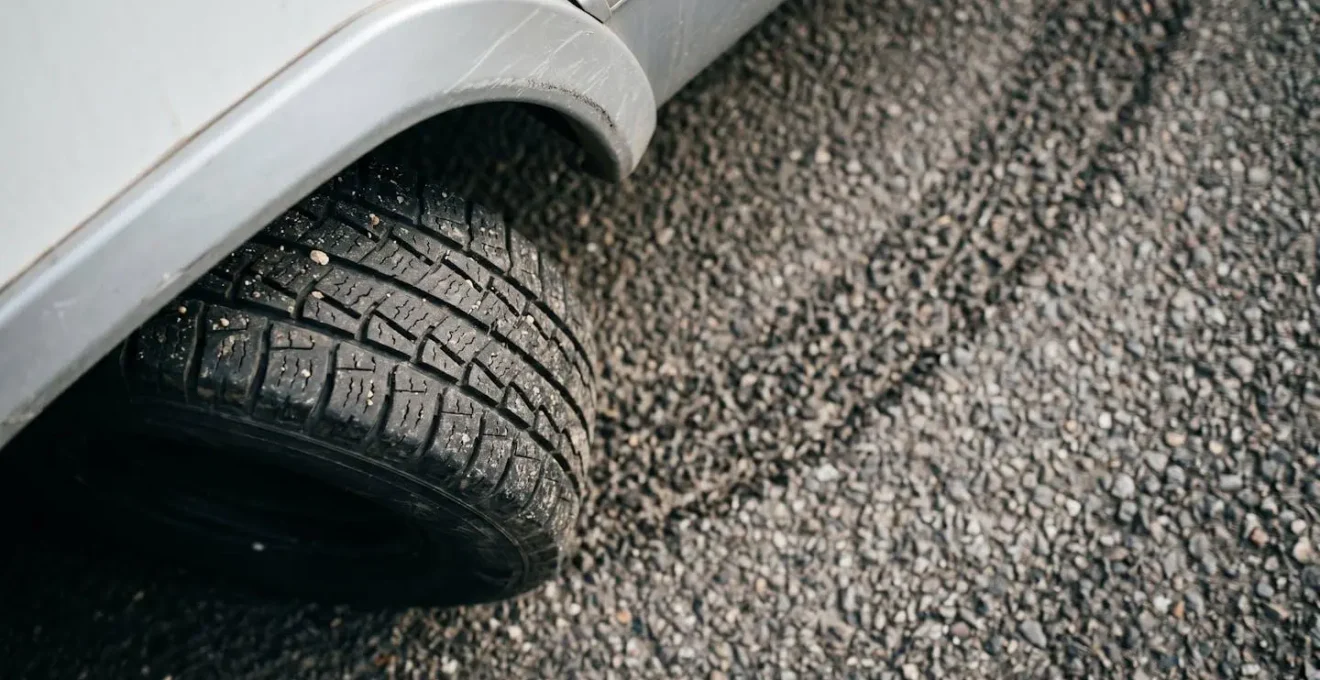
Practicing this in a large, empty parking lot is essential. Use cones or cardboard boxes to simulate obstacles and get a feel for your vehicle’s specific turning radius. A powerful technique is to use your side mirrors as a guide. Watch the obstacle in your mirror and wait until your rear wheels have passed it before you begin to turn. This mental checkpoint will become second nature over time. Mastering this single skill will dramatically boost your driving confidence and save you from expensive and stressful mistakes.
Your Action Plan: Mastering the Pivot Point Technique
- Pre-Scout Tight Spots: Use Google Maps Street View to virtually « drive » through tricky gas stations or campgrounds before you arrive. Identify potential hazards in advance.
- Establish Your Reference Point: In an empty lot, have someone stand at your RV’s rear corner. From the driver’s seat, find a spot on your mirror or window that aligns with that corner. This is now your tail swing reference.
- Practice the Pivot: Set up a cone as an obstacle. Drive past it and watch your mirror. Only begin your turn *after* your established reference point has fully cleared the cone.
- Measure Your Overhang: Use a tape measure to find the exact distance from the center of your rear axle to the furthest point of your rear bumper. Knowing this number makes your tail swing predictable, not a surprise.
- Build a « No-Go » Mindset: Have the confidence to refuse a turn or parking spot that looks too tight. It’s better to find an alternative route than to risk damage. A backup plan is part of safe driving.
How to share your location without draining your battery?
Staying connected with loved ones provides peace of mind for both you and them, but constant live location sharing can be a significant drain on your phone’s battery—a precious resource when you’re off-grid. The key is to shift from continuous tracking to a system of deliberate, energy-efficient check-ins. This approach reduces battery consumption and, just as importantly, manages the « worry load » for family back home.
Instead of leaving « Find My » or Google Maps location sharing on all day, establish a « Check-in Protocol. » This is a pre-agreed plan where you commit to sending a simple text or message at a specific time each day, for example, at 6 PM once you’ve settled for the night. A quick message like, « All good, settled in near Lake Tahoe for the night, » provides all the necessary information without requiring constant GPS pings. This creates a reliable rhythm that your family can count on, reducing their need to constantly check your location.
For more automated but still efficient tracking, you can configure apps to update your location at set intervals (e.g., every 6 or 12 hours) rather than continuously. You can also optimize your phone’s settings by disabling background app refresh for non-essential apps and reducing location accuracy from « Precise » to « Approximate » for sharing apps. For true off-grid safety where cell service is non-existent, a dedicated satellite messenger like a Garmin inReach or Zoleo is the best solution. These devices use very little power to send pre-set messages or an SOS signal, providing a reliable lifeline that doesn’t depend on your phone’s battery.
Key takeaways
- The foundation of a burnout-free road trip is to budget your time and energy, not just your miles.
- The « 2-2-2 Rule » is a powerful framework that builds rest and exploration directly into your itinerary, preventing exhaustion.
- Proactive management of chores, offline navigation, and daily vehicle checks transforms potential stressors into predictable routines.
Living in a Van: How to Manage Moisture and Mold in Small Spaces?
Of all the practical challenges of van life, managing moisture is perhaps the most persistent and crucial. Every breath you take, every meal you cook, and every rainy day introduces humidity into your small, sealed space. Left unchecked, this moisture leads to condensation, which in turn can lead to mold, musty odors, and potential respiratory health issues. Effectively managing moisture is not a one-time fix; it’s a non-negotiable daily ritual.
The cornerstone of moisture control is active ventilation. Your first action every morning should be to establish airflow. This means cracking a couple of windows (even in the cold) and running your roof vent fan for at least 10-15 minutes. This simple act expels the humid air that has built up overnight. Following this, take a moment to wipe down any visible condensation from windows and cold metal surfaces. This two-part ritual—air out, wipe down—is the single most effective habit for preventing moisture buildup.

Beyond daily rituals, you can employ passive and active solutions. Passive methods include placing desiccants like silica gel packs or products like DampRid in enclosed spaces such as cabinets and under your mattress to absorb ambient humidity. In consistently humid climates, like the Pacific Northwest or the Southeast, an active solution may be necessary. A low-amperage 12V dehumidifier can run continuously, pulling a surprising amount of water from the air and keeping your living space dry and healthy. The strategy must adapt to the climate: aggressive ventilation is perfect for the dry Southwest, but a combination of ventilation and dehumidification is often required in more humid regions.
Your journey towards more mindful travel begins now. Start by applying just one of these principles on your next trip—whether it’s budgeting for your admin block or trying a two-night stay—and observe the difference it makes in your energy and enjoyment.