Equipment
Standing at the threshold of your first camping adventure—or looking to upgrade your well-worn gear—can feel overwhelming. The sheer variety of camping equipment available today ranges from minimalist ultralight tools to comprehensive family setups, each designed for different environments, budgets, and camping styles. Yet behind this complexity lies a simple truth: the right equipment transforms outdoor experiences from uncomfortable endurance tests into restorative connections with nature.
Understanding camping equipment isn’t about owning the most expensive gear or accumulating the largest collection. It’s about building a thoughtful selection of reliable tools that match your specific needs, whether you’re planning weekend trips to established campgrounds or venturing into remote backcountry terrain. This article breaks down the fundamental categories of camping gear, explains how to evaluate quality and suitability, and provides practical insights to help you make confident decisions that will serve you for years to come.
Understanding Your Camping Equipment Needs
Before diving into specific gear categories, it’s essential to establish a framework for thinking about equipment. Many beginners make the mistake of purchasing items impulsively or based solely on recommendations, only to discover their choices don’t align with their actual camping activities.
Your equipment needs stem from three fundamental questions: Where will you camp? How will you get there? What conditions will you face? A car camper accessing drive-up sites can prioritize comfort and bring heavier items like folding chairs and coolers. A backpacker covering 15-20 miles daily must obsess over every ounce, favoring compact, lightweight alternatives. Similarly, desert camping in summer demands entirely different gear than alpine environments or humid coastal regions.
Consider also your progression as a camper. Purchasing versatile, quality items initially—even if slightly more expensive—often proves more economical than replacing cheap gear that fails or becomes inadequate as your skills and ambitions grow. Think of your equipment collection as an evolving toolkit rather than a one-time purchase.
Essential Gear Categories Every Camper Should Know
Camping equipment naturally divides into several core categories, each serving critical functions for safety, comfort, and enjoyment in outdoor environments.
Shelter Systems
Your shelter represents your primary protection against elements. Tents dominate this category, available in configurations from minimalist single-wall designs weighing under two pounds to spacious family models accommodating six people with standing room. Key considerations include seasonal rating (three-season versus four-season), setup complexity, interior space, and weather resistance. Beyond traditional tents, alternatives like hammock systems, tarps, and bivy sacks offer specialized solutions for specific conditions and preferences.
Sleep Systems
Quality sleep directly impacts your camping enjoyment and safety. This category encompasses sleeping bags (available in mummy, rectangular, and semi-rectangular shapes with synthetic or down insulation), sleeping pads (providing crucial insulation from ground cold and cushioning), and pillows. Temperature ratings matter significantly—a bag rated for 40°F won’t keep you comfortable at 25°F, regardless of how many layers you wear inside it.
Cooking and Food Storage
Meal preparation equipment ranges from simple setups to elaborate camp kitchens. Core items include stoves (canister, liquid fuel, or solid fuel), cookware (pots, pans, utensils), food storage containers, and water treatment systems. In areas with wildlife, proper food storage solutions like bear canisters or hanging systems become non-negotiable safety requirements rather than optional accessories.
Clothing and Footwear
Appropriate clothing follows the layering principle: base layers for moisture management, insulation layers for warmth, and outer layers for weather protection. Footwear choices depend entirely on terrain—lightweight trail runners suffice for maintained paths, while rugged boots with ankle support prove essential for off-trail rocky terrain. Avoid cotton fabrics in favor of synthetic or wool materials that retain warmth when wet.
Navigation and Safety Equipment
Even in familiar areas, navigation tools remain essential. Maps, compasses, and GPS devices (with backup batteries) form the foundation. Safety gear includes first aid supplies, emergency shelters, fire-starting tools, illumination (headlamps and flashlights), and communication devices appropriate to your location’s remoteness.
How to Choose Equipment That Matches Your Adventure
With categories understood, the selection process requires evaluating specific products against consistent criteria that reveal true quality and suitability.
Start with intended use matching. Manufacturers design equipment for specific applications—using a heavy car-camping tent for backpacking creates unnecessary burden, while bringing an ultralight racing pack on a week-long trip leaves you without adequate capacity. Read product descriptions carefully to understand the designer’s vision, then honestly assess whether it aligns with your plans.
Weight versus durability trade-offs appear constantly in camping gear. Ultralight materials reduce pack weight but may sacrifice longevity. A tent floor made from 30-denier fabric weighs less than 70-denier alternatives but punctures more easily on rough ground. Consider your priorities: weekend warriors might accept heavier, more durable options, while thru-hikers covering thousands of miles often replace worn ultralight gear mid-journey rather than carry extra ounces from the start.
Evaluate features critically rather than assuming more equals better. Multiple pockets, compression straps, and adjustment points add functionality but also weight and potential failure points. Ask whether each feature serves a genuine purpose in your camping style. Sometimes simpler designs prove more reliable and easier to operate in challenging conditions.
Reviews and testing provide valuable insights, but approach them strategically. Look for reviews from users with similar needs and experience levels. A five-star review from someone doing weekend trips may not reflect performance during extended expeditions. Professional reviews from outdoor publications often include systematic testing under controlled conditions that reveal durability and performance characteristics casual users might miss.
Seasonal Considerations for Your Camping Gear
Environmental conditions dramatically affect equipment requirements. Understanding seasonal variations helps you select appropriate gear and avoid dangerous mismatches between equipment capabilities and actual conditions.
Spring and fall shoulder seasons present unpredictable conditions—temperatures may swing from near freezing at night to warm during the day, with possibilities of rain, snow, or sun. Equipment for these seasons emphasizes versatility: sleeping bags rated for temperatures 10-15°F below your expected minimum, layered clothing systems, and shelters with good ventilation that can be closed completely if storms arrive. Waterproofing becomes particularly important as precipitation frequency increases.
Summer camping, while generally more forgiving, still demands appropriate equipment. In many regions, intense heat and humidity create discomfort and safety concerns. Prioritize ventilation and moisture management—tents with large mesh panels, lightweight breathable clothing, and sleeping bags that unzip fully to function as quilts. Sun protection (hats, long sleeves with UPF ratings, sunglasses) transitions from optional to essential. In mountainous areas, be prepared for sudden weather changes and cold nights even during summer months.
Winter and cold-weather camping requires the most specialized and expensive equipment. Four-season tents engineered to withstand wind and snow loads, sleeping bags rated to extreme temperatures (often 0°F or lower), insulated sleeping pads with R-values above 4, and extensive clothing layers become necessary. Cold-weather camping rewards experience and proper preparation—this isn’t the season to learn through trial and error with inadequate gear.
Maintaining and Extending Your Equipment’s Lifespan
Quality camping equipment represents a significant investment. Proper maintenance dramatically extends usability and performance, making the difference between gear that lasts one season and equipment that serves reliably for decades.
Cleaning protocols vary by item but share common principles: remove dirt and debris promptly, use appropriate cleaning products (harsh detergents can damage waterproof coatings and technical fabrics), and ensure complete drying before storage. Moisture trapped in storage promotes mold growth and material degradation. After trips, air out tents fully, wipe down sleeping pads, and hang sleeping bags loosely rather than storing them compressed.
Storage conditions matter tremendously. Keep equipment in cool, dry locations away from direct sunlight, which degrades fabrics and coatings over time. Store sleeping bags uncompressed in large cotton or mesh storage sacks—chronic compression destroys insulation’s loft, whether down or synthetic. Inspect gear periodically during storage to catch developing problems early.
Repair minor damage immediately before it worsens. Small tent fabric tears sealed with repair tape remain manageable; ignored, they can expand into irreparable damage. Many outdoor retailers offer repair services for major brands, and learning basic repairs—patching fabrics, replacing shock cords, resealing seams—extends equipment life significantly. Manufacturers increasingly provide repair guides and sell replacement parts, supporting sustainability and reducing waste.
Understand when equipment reaches end-of-life. Sleeping bags that no longer maintain warmth despite cleaning, tents with degraded waterproof coatings that cannot be reapplied effectively, or packs with failed structural components may need replacement. However, many items dismissed as worn out simply need proper cleaning, minor repairs, or reproofing treatments to restore functionality.
Building a well-considered camping equipment collection takes time and experience. Start with versatile, quality essentials suited to your most frequent camping conditions, then expand strategically as your skills and ambitions grow. Pay attention to how your gear performs in the field, learn from both successes and shortcomings, and refine your setup accordingly. The goal isn’t perfection or completeness, but rather developing a reliable toolkit that enables safe, comfortable outdoor experiences that deepen your connection with natural environments.
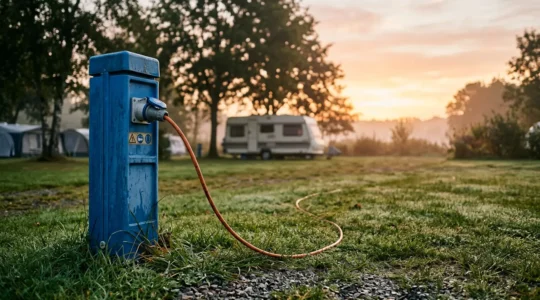
Campsite Electricity: Why Your Kettle Trips the Breaker Every Morning?
In summary: Your home kettle trips the campsite breaker because it demands over 2000 Watts, while a typical 6-Amp hook-up only supplies about 1380 Watts. The solution is to think of your power supply as a strict « power budget » and…
Lire la suite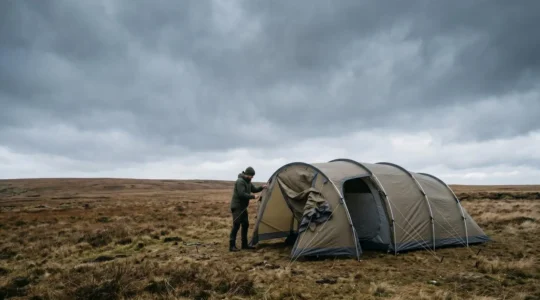
Pitching Large Tunnel Tents: How to Do It Solo Without Breaking Poles?
In summary: Orient the tent with the narrow end into the wind before you even unroll it. Insert all poles into the sleeves first, but do not tension them. Secure the windward end to the ground first; this creates a…
Lire la suite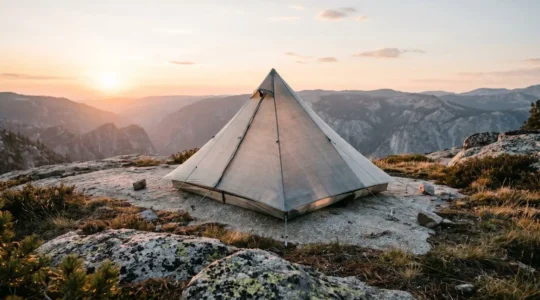
Single-Wall Shelters: A Fluid Dynamics Approach to Defeating Condensation
The key to a dry single-wall tent isn’t just passive ventilation; it’s actively engineering pressure differentials to force moisture out. Campsite selection is an exercise in fluid dynamics, avoiding low-lying « condensation bowls » where cold, moist air pools. Your tent’s pitch—specifically…
Lire la suite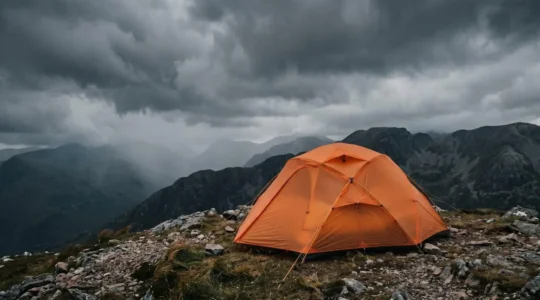
Geodesic Domes: A Structural Analysis of Why They Survive Winds That Flatten Other Tents
The inherent strength of a geodesic dome isn’t magic; it’s a direct result of superior structural engineering that actively channels aerodynamic load. A dome’s stability stems from its network of interconnected triangles, which transforms wind force from a breaking pressure…
Lire la suite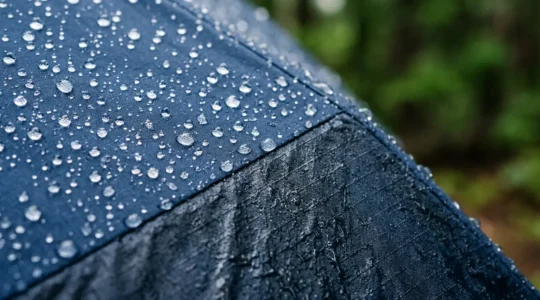
Why Your « Waterproof » Jacket Soaks Through After 2 Hours of Heavy Rain?
Your jacket isn’t leaking; its complex moisture management system is being overwhelmed by a physical process you can learn to control. Your body produces far more moisture during heavy exertion (over 1 liter/hour) than any « breathable » fabric can possibly vent….
Lire la suite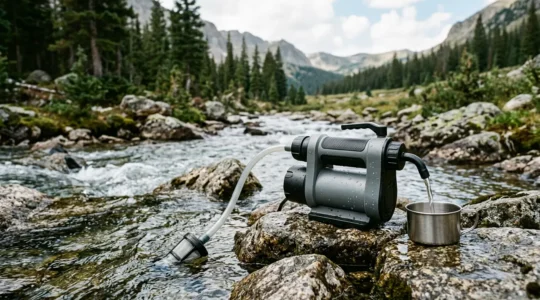
Filter vs. Purifier: The Ultimate Guide to Virus-Proof Water in High-Risk Environments
For international travel in high-risk environments, a standard water filter is dangerously insufficient; only a purifier or a multi-stage system provides reliable protection against viruses. Most backcountry filters have pores too large to block viruses like Norovirus, creating a false…
Lire la suite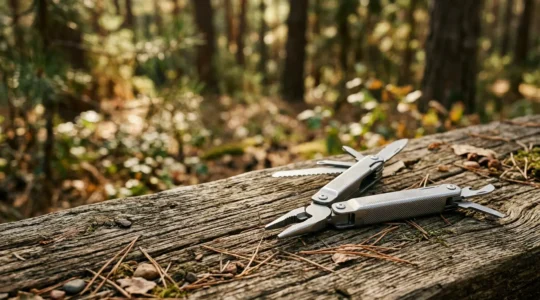
The One-Tool Rule: Why a 15-Function Multi-Tool Beats a Heavy Toolbox?
The common belief that a multi-tool is a « master of none » is wrong; its true value is forcing a minimalist repair mindset that makes you more resourceful than a heavy toolbox ever could. A multi-tool isn’t a compromise on capability,…
Lire la suite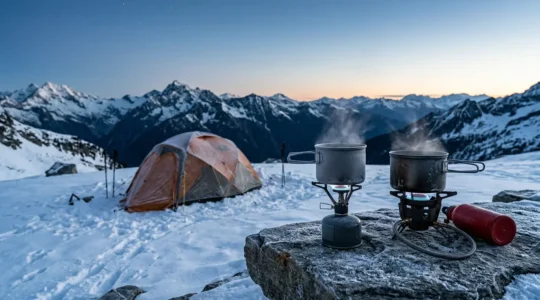
Canister vs Liquid Fuel: Which Stove Won’t Fail at -5°C?
Stove failure at -5°C isn’t a simple canister versus liquid fuel debate; it’s a failure to master the physics of fuel vaporization and system maintenance. Canister stoves fail due to a predictable drop in vapor pressure as the more volatile…
Lire la suite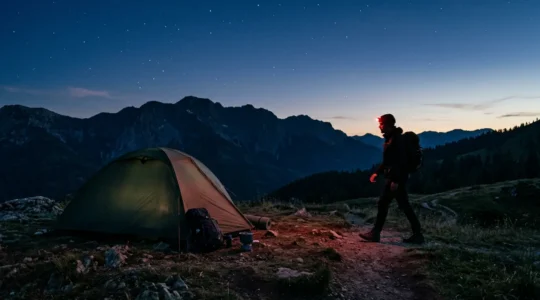
Night Vision: How to Choose a Headlamp That Won’t Blind Your Camp Mates?
Choosing the right headlamp is less about maximum brightness and more about smart power management and group courtesy. The red light mode is critical because it avoids depleting rhodopsin in your eyes, preserving true night vision for you and others….
Lire la suite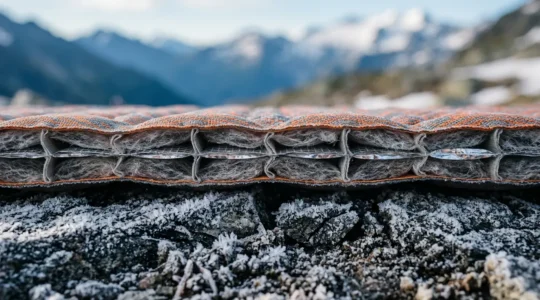
Sleeping Mats: Why Your Expensive Bag Fails without the Right R-Value?
The frustrating reason you’re cold isn’t your expensive sleeping bag; it’s that you’re losing a thermal war against the ground, and your sleeping pad is your only real weapon. Your body weight crushes your sleeping bag’s insulation, creating a « thermal…
Lire la suite