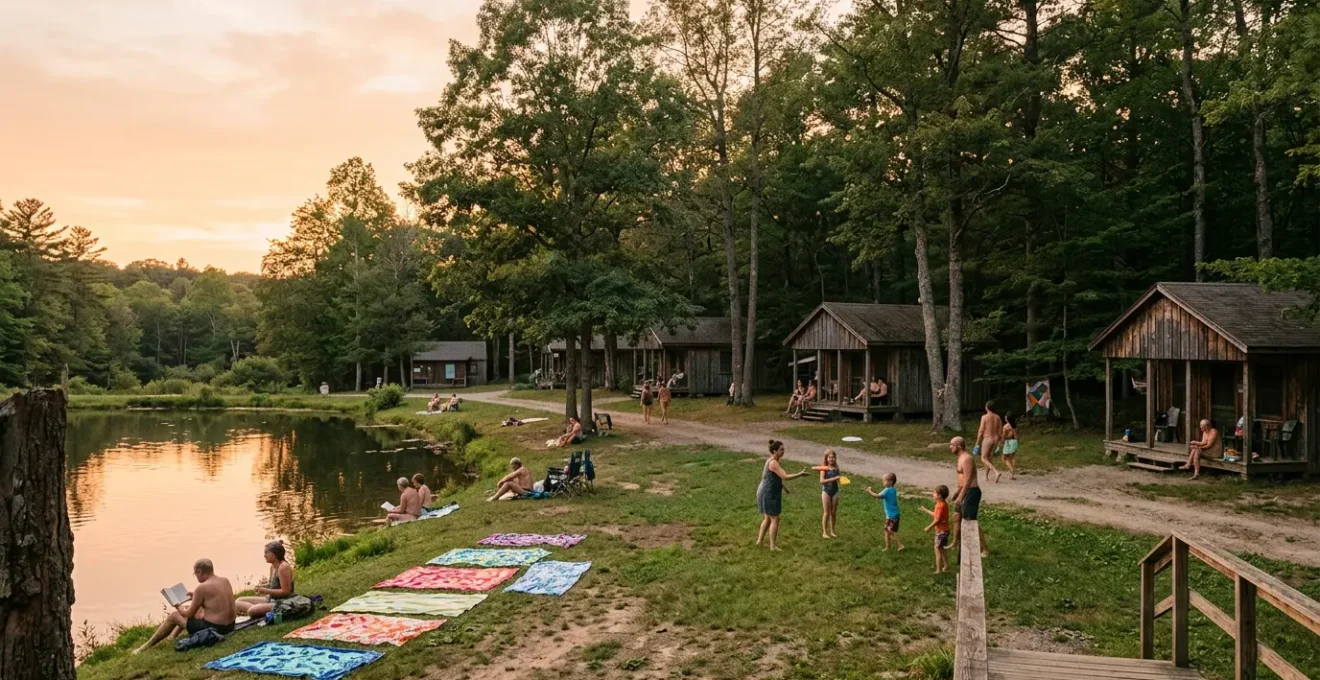
The anxiety of a first naturist visit rarely comes from nudity itself, but from the fear of unknowingly breaking an important social code.
- Mastering core etiquette, especially the non-negotiable towel rule, is your key to immediately signaling respect and belonging.
- Choosing an officially certified naturist club over a public « clothing-optional » beach is the single most important step for ensuring a safe, respectful, and family-friendly environment.
Recommendation: Focus on learning the community’s simple language of respect. Your confidence and relaxation will naturally follow once you understand the « why » behind the rules.
The thought of visiting a naturist campsite for the first time with your family can stir a mix of excitement and apprehension. You’re drawn to the promise of freedom, nature, and a unique way to connect, but a nagging question holds you back: « How will we fit in? » This social anxiety isn’t really about nudity. It’s about the fear of the unknown, of committing a social faux pas, or of being perceived as disrespectful in a community with its own distinct culture. Many beginners believe the key is to just « relax and be confident, » but this advice often misses the point.
True confidence in a naturist setting doesn’t come from ignoring your anxiety, but from understanding and embracing the social code that makes the environment safe and comfortable for everyone. This code is built on a foundation of respect, hygiene, and the removal of social hierarchies. It’s a non-verbal language that, once learned, allows everyone to genuinely relax. The rules you might have heard about—carrying a towel, not staring, understanding when clothing is or isn’t appropriate—aren’t arbitrary restrictions. They are the very tools that create the non-judgmental atmosphere that naturism is celebrated for.
This guide is designed to be your translator. We will move beyond the generic advice and give you the practical knowledge and cultural context you need. We’ll explore why this culture can be so positive for families, how to talk to your children about it, and the critical differences between a certified club and a public beach. By understanding the ‘why’ behind the ‘what,’ you’ll be able to walk into your first naturist campsite not as a nervous tourist, but as a respectful and prepared new member of the community.
This article provides a clear roadmap to help you navigate your first experience with ease and confidence. Below is a summary of the key areas we will cover, each designed to demystify an aspect of naturist culture and empower you and your family.
Summary: A Guide to Your First Naturist Experience
- Why FKK culture promotes higher self-esteem in children?
- How to explain naturism to skeptical teenagers before the trip?
- The towel etiquette error that marks you as a disrespectful tourist
- FKK certified vs clothing-optional beaches: Where is family safety higher?
- How to find legitimate family naturist clubs in conservative regions?
- The « textile error »: Why dressing up for dinner can be offensive?
- The « social leveling » effect: How nudity removes status symbols
- FKK Guidelines: What Are the Strict Rules Beginners Often Break?
Why FKK culture promotes higher self-esteem in children?
One of the biggest concerns for families considering naturism is the potential impact on their children. However, far from being detrimental, the environment of a structured naturist community can be profoundly positive for a child’s developing self-image. When children grow up seeing a wide variety of normal, un-airbrushed human bodies, it demystifies nudity and teaches them that all bodies are acceptable. This exposure helps neutralize the often-toxic messages about « perfect » bodies that they are bombarded with from media and social pressures.
This isn’t just anecdotal; it’s backed by research. Studies have consistently found that experiences in naturism are associated with positive, not negative, outcomes for well-being. For example, two pre-registered studies involving over 660 participants found a clear link between naturism and healthier psychological states. The environment normalizes the human form in all its diversity, which is a powerful antidote to body shame.
Naturist activity predicted, preceded or caused increases in positive body image, self-esteem and life satisfaction.
– Dr. Keon West, Journal of Happiness Studies, Springer
In a world where children, especially pre-teens and teens, are under immense pressure to conform to unrealistic beauty standards, the FKK environment offers a refreshing and healthy counter-narrative. It teaches them to respect their own bodies and the bodies of others, fostering a foundation of self-acceptance that can last a lifetime. The focus shifts from what a body looks like to what it can do—swim, play, and enjoy the sun.
How to explain naturism to skeptical teenagers before the trip?
Approaching the topic of a family naturist holiday with a teenager requires empathy and open communication. At an age where social acceptance and body image are paramount, the idea can seem daunting or « weird. » The key is to frame the conversation not around the act of being nude, but around the values of respect, freedom, and escaping judgment—values that often resonate deeply with adolescents who feel scrutinized daily.
Start by acknowledging their feelings. Say something like, « I know this might sound a little strange at first, but I want to talk about a different kind of holiday. » Explain that naturism is about more than just not wearing clothes; it’s a culture focused on connecting with nature and accepting people as they are, without the labels that clothes often create. Contrast the environment of a naturist resort with the high-pressure world of social media, where appearances are everything.

As the image above symbolizes, there’s a stark contrast between the cluttered, judgmental digital world and the open freedom of a natural environment. You can explain that a naturist club is one of the few places where there are no designer labels, no fashion trends, and no pressure to look a certain way. It’s a break from that constant performance. Emphasize that their comfort is the priority and that they will have agency. While certified clubs are typically fully nude, discuss what makes them feel safe and what their boundaries are. This conversation itself can build trust and show that you respect their perspective.
The towel etiquette error that marks you as a disrespectful tourist
If there is one single rule that defines the naturist social code, it is this: you must always have a towel with you, and you must always sit on it. This isn’t a suggestion; it’s the cornerstone of community respect and hygiene. Forgetting or ignoring this rule is the fastest way to mark yourself as a newcomer who hasn’t understood the culture. The towel is your personal, portable barrier that ensures no direct body contact with shared surfaces like chairs, benches, or loungers.
Think of it as the equivalent of taking off your shoes before entering someone’s home in many cultures. It’s a simple, non-verbal signal that says, « I respect this shared space and the comfort of others. » This rule is universal across all legitimate naturist venues, from the poolside cafe to the sauna. In saunas, the etiquette is even stricter: your entire body, including your feet, must be on your towel to prevent sweat from touching the wood. Carrying a fresh, dry towel is not just practical; it’s a demonstration of your commitment to the community’s shared values.
Being prepared with a towel immediately removes a major source of potential anxiety. You won’t have to wonder where or how to sit; you’ll already have the tool you need to do it respectfully. It’s a simple action that speaks volumes and instantly integrates you into the social fabric of the community.
Action Plan: Mastering the Towel Protocol
- Carry a towel with you at all times; this is the golden rule of naturism.
- Use your towel as a complete barrier when sitting on any shared surface, including chairs, benches, and sun loungers.
- In saunas, use a large enough towel to ensure no part of your body, including your feet, touches the wooden benches directly.
- Consider keeping a spare dry towel handy, especially when moving between wet areas (like the pool) and dry areas (like a restaurant).
- If you accidentally forget your towel, politely acknowledge the mistake. A simple, « Pardon me, I’ll go grab my towel before I sit down, » shows you understand and respect the rules.
FKK certified vs clothing-optional beaches: Where is family safety higher?
For families, the distinction between a certified naturist club and a public « clothing-optional » beach is not a minor detail—it is the most critical factor for ensuring a safe and respectful experience. « Clothing-optional » simply means nudity is tolerated, but it comes with no inherent structure, rules, or vetting. These public spaces can attract a wide range of people, and unfortunately, some may not share the respectful ethos of naturism. This can lead to unwanted attention or behavior that is inappropriate for a family setting.
In stark contrast, an officially certified FKK (Freikörperkultur) or naturist resort is an intentional community. These are private clubs or resorts, often affiliated with a national or international naturist federation. They operate under a strict code of conduct that prioritizes safety, respect, and non-sexualized nudity. The key difference is accountability. Members and guests are known, and there are clear consequences for breaking the rules. Many clubs have processes in place to ensure the safety of all guests, especially families.
Case Study: The International Naturist Federation (INF-FNI) Standard
The International Naturist Federation (INF-FNI) is the global umbrella organization for national naturist federations in over 30 countries. Clubs affiliated with the INF-FNI adhere to a shared, strict code of conduct. This creates a predictable and safe environment worldwide. Membership often requires an application and agreement to abide by community values. This process fosters a community of known individuals with a shared ethos, providing a level of accountability and trust that is completely absent from anonymous public beaches. For families, choosing an INF-FNI affiliated location is the gold standard for guaranteeing a respectful experience.
Furthermore, many family-oriented naturist clubs have robust safety protocols. It is not uncommon for reputable venues to require background checks for first-time adult visitors, enforce strict no-photography zones, and have staff trained to discreetly manage any inappropriate behavior. For a family, the peace of mind that comes with this structured, protected environment is invaluable. It’s the difference between hoping for a good experience and ensuring one.
How to find legitimate family naturist clubs in conservative regions?
Finding a genuine, family-friendly naturist club can feel challenging, especially if you live in a region where naturism is less common or misunderstood. The internet can be a confusing mix of legitimate communities and sites with a very different, non-naturist focus. The key to navigating this is to adopt a « federation-first » approach and know the red flags to watch for.
Your search should always begin with official national and international naturist federations. Organizations like the American Association for Nude Recreation (AANR) in the US, British Naturism (BN) in the UK, or the Fédération Française de Naturisme (FFN) in France are the gatekeepers of legitimacy. These federations are all members of the overarching International Naturist Federation (INF-FNI), which represents groups in 34 countries. Their websites contain directories of affiliated clubs, which is your most reliable source for finding vetted, reputable, and family-friendly venues. These clubs have agreed to a code of conduct that ensures a safe and respectful environment.
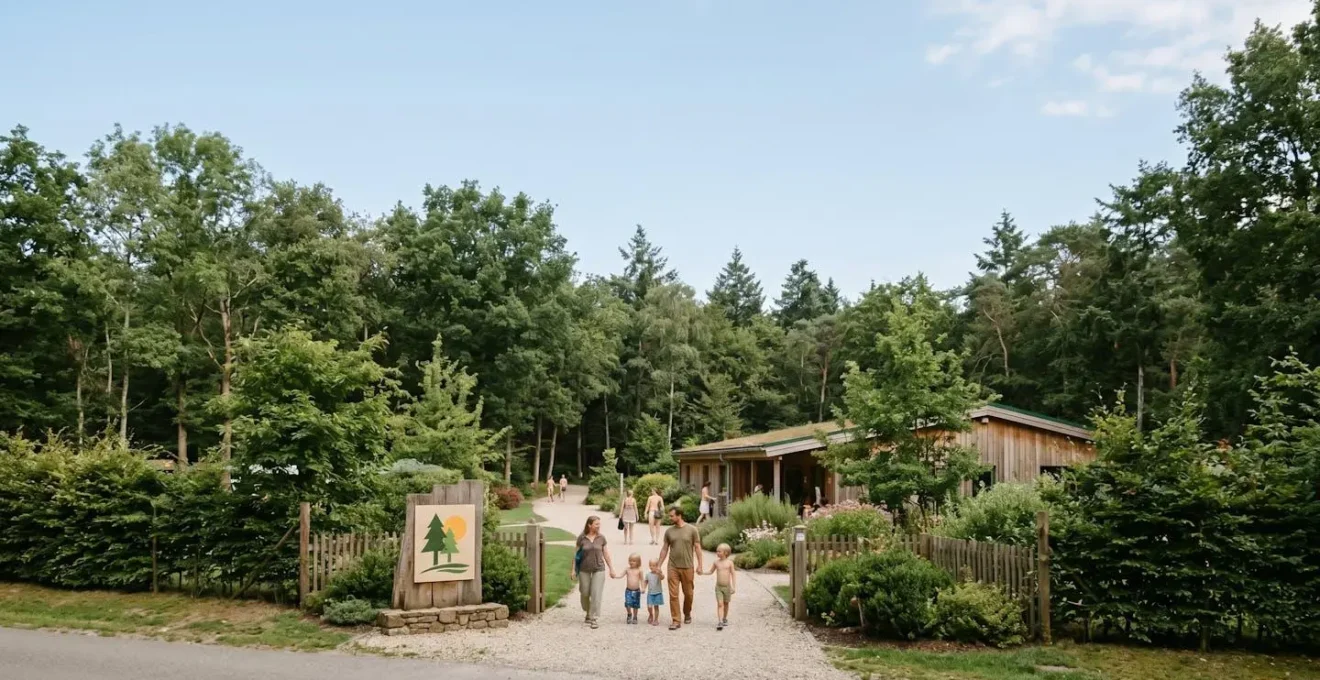
When evaluating a club you find online, apply a « litmus test » to its web presence. Legitimate naturist community forums and social media groups discuss philosophy, club events, family activities, and community life. The language is respectful and non-sexualized. Be wary of any site or group where the focus is on physical attributes, sexually suggestive language, or « hookup » culture. These are major red flags that indicate the group is not aligned with the principles of authentic naturism. A final test is to send an inquiry email; a professional, family-oriented club will respond with clear information about their values and visitor process.
The ‘textile error’: Why dressing up for dinner can be offensive?
For newcomers, one of the most counter-intuitive aspects of naturist etiquette occurs in social settings like a restaurant or bar within the resort. A beginner might think, « This is a more formal setting, I should put on some clothes to be polite. » In reality, this action can be interpreted as the exact opposite. In a dedicated naturist environment, choosing to wear clothes when nudity is the norm can be a disruptive social signal.
The philosophy of a naturist space is to remove the barriers and social status symbols that clothing represents. When everyone is nude, you meet each other on a level playing field. Deliberately reintroducing clothing into that environment can create a sense of separation. It can be perceived, even if unintentionally, as a sign of discomfort, judgment, or even a feeling of superiority. You are, in effect, putting a barrier back up that everyone else has agreed to take down. It disrupts the shared vulnerability and equality that define the community atmosphere.
In a space designed to remove barriers, deliberately reintroducing clothing can be interpreted as a non-verbal signal of discomfort or superiority.
– Naturist community etiquette experts, AANR West – Naturist Etiquette Guide
Of course, there are exceptions. You should always wear clothes for protection when appropriate (e.g., a hat for sun, shoes for walking), or if you are genuinely cold. The « error » is not about practical clothing, but about « textiles » worn for social reasons—like a dress or shirt for dinner. The respectful choice is to embrace the community norm, grab your towel to sit on, and join the table as an equal.
Key Takeaways
- The primary source of anxiety for first-time naturists is not nudity, but the fear of violating the community’s social code.
- Mastering a few key rules—especially the mandatory towel rule for hygiene—is the fastest way to signal respect and feel confident.
- For families, choosing a certified naturist club over a public « clothing-optional » beach is essential for ensuring safety, accountability, and a respectful environment.
The ‘social leveling’ effect: How nudity removes status symbols
At the heart of the naturist philosophy is a powerful concept known as the « social leveling » effect. In our everyday « textile » world, clothing acts as a constant stream of information. We consciously or unconsciously judge others based on the brands they wear, the style they adopt, and the uniform they have on. A designer suit signals wealth, a band t-shirt signals musical taste, and a corporate logo signals profession. These symbols create instant hierarchies and preconceptions before a single word is spoken.
Naturism intentionally strips all of this away. When everyone is nude, you are left with just the person. The CEO is indistinguishable from the plumber; the artist is on the same level as the accountant. This removal of external status symbols forces people to engage with one another on a more authentic, human level. Conversations are based on shared interests and personality, not on perceived social or economic standing. This creates a uniquely egalitarian and unpretentious atmosphere that many find incredibly liberating.
This effect has a profound impact on personal well-being. By removing the pressure to « dress the part, » it reduces social anxiety and encourages genuine connection. In fact, research published in the Journal of Happiness Studies shows that participation in naturist activities leads to increased life satisfaction, largely because it improves body image and self-esteem.
A 2015 survey by British Naturism proved that naturists have higher self-esteem and better body confidence, with naturist children growing up happy, well-adjusted, and with better understanding of their bodies.
Understanding this social leveling is key to conquering your anxiety. You are not entering a space where you will be judged more harshly; you are entering one where the primary tools of social judgment have been deliberately removed. Your smile and your towel are the only « outfit » you need.
FKK Guidelines: What Are the Strict Rules Beginners Often Break?
Once you’ve grasped the core principles of respect, hygiene, and social leveling, the specific rules of a naturist club become easy to understand. They are all designed to uphold that safe and comfortable environment. However, in their initial nervousness, beginners often make a few common mistakes. Being aware of these will help you navigate your first visit smoothly and confidently, allowing you to relax and enjoy the experience.
The most significant and strictly enforced rule is the ban on photography. In a place built on trust and vulnerability, the presence of a camera or even a phone pointed in the wrong direction can instantly shatter that trust. Assume photography is strictly forbidden everywhere unless you are in a clearly marked zone and have explicit permission. Many clubs will even place a sticker over your phone’s camera upon entry. This isn’t about being overly restrictive; it’s about guaranteeing everyone’s privacy and peace of mind.
Another common misstep is the difference between a friendly glance and gawking. Normal, brief eye contact during conversation is expected and polite. The offense is the prolonged, detached stare or « scan » of someone’s body. The technique is simple: make a conscious effort to focus on people’s faces when you talk to them. This signals respect and shows you are engaging with them as a person. Finally, avoid being the « over-eager newcomer. » In an anxious attempt to fit in, some beginners can be overly friendly, violating personal space or initiating long conversations. A simple, friendly « hello » as you walk by is perfect. Let others signal if they’re open to a longer chat. Respecting social quietude is just as important as being friendly.
By focusing on this code of conduct, you are not just avoiding mistakes; you are actively contributing to the respectful and safe atmosphere that makes naturism a unique and rewarding experience. Your first visit is the beginning of a journey into a community built on trust and authenticity. Prepare to be welcomed.
Frequently Asked Questions about FKK Guidelines
What is the photography rule at naturist venues?
Photography is strictly forbidden in public areas at all FKK locations except in clearly marked zones and only with prior permission. The mere act of pointing a phone or camera creates anxiety for everyone else. Most venues require camera phones to be sealed with stickers upon entry to ensure everyone’s privacy is respected.
What’s the difference between glancing and gawking?
Normal, brief eye contact when talking is expected and polite. The offense is the detached, prolonged ‘gawk’ or ‘scan.’ The technique to avoid this is to consciously focus on people’s faces and eyes during conversation, not their bodies. This shows you are engaging with them as a person and respecting their vulnerability.
What is the ‘over-eager newcomer’ error?
In an anxious attempt to fit in, some beginners can be overly friendly, initiating long conversations without invitation or violating personal space. A simple, friendly ‘hello’ while walking by is perfect. Let others signal if they are open to a longer chat. Respecting social quietude and personal boundaries is as important as being friendly.