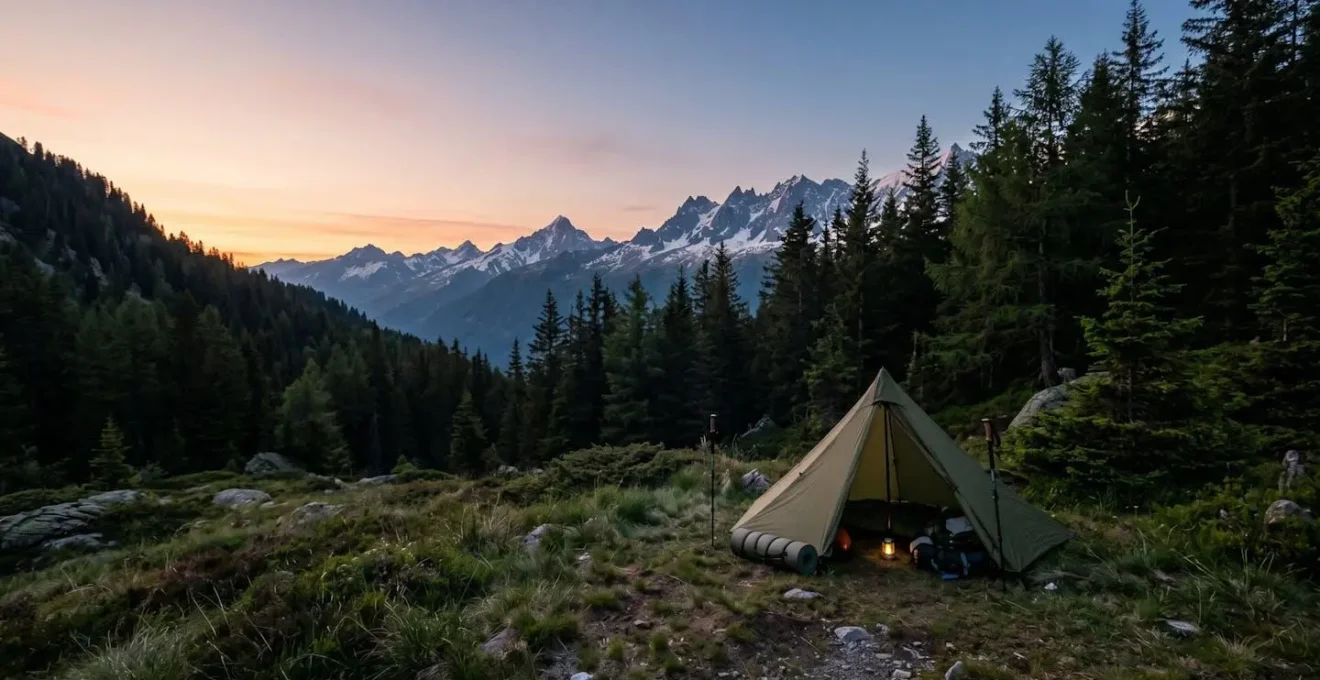
Successfully wild camping in restricted parts of Europe isn’t about finding legal loopholes; it’s about mastering a system of responsibility that makes you an invisible and asset-based visitor.
- Most regulations exist not to punish, but to protect fragile ecosystems from the cumulative impact of soil compaction and contamination.
- True stealth is more than visual concealment; it’s about temporal and ecological invisibility—understanding natural rhythms and minimizing your biological footprint.
Recommendation: Shift your mindset from « how to avoid getting caught » to « how to be so self-reliant and respectful of the environment that you are never the problem authorities need to solve. »
The allure of wild camping is undeniable for any serious adventurer: the profound silence, the unfiltered night sky, and the freedom from crowded, designated campsites. Yet, for many experienced hikers in Europe, this dream is shadowed by a persistent fear of hefty fines and legal trouble. The common advice— »just check the local laws »—is both correct and utterly insufficient. While nations with a « Right to Roam » like Norway, Sweden, and Scotland offer clear guidelines, much of the continent exists in a complex grey area of restrictions, prohibitions, and tolerated practices.
Many guides focus on the simplistic dichotomy of « wild camping » versus « bivouacking, » or offer generic « Leave No Trace » advice. But this overlooks the core issue. The restrictions aren’t arbitrary punishments; they are a direct response to the immense pressure that growing visitor numbers place on finite natural resources. Experienced campers don’t need another list of rules; they need a strategic framework for responsible autonomy. This guide moves beyond the legal statutes to explore the underlying principles of why these rules exist.
The key to unlocking the freedom of wild camping without conflict is not to become an expert in legal evasion, but an expert in ecological responsibility and risk management. It’s about understanding your impact on such a deep level—from the invisible fungal networks under your tent to the timing of your departure—that your presence becomes a non-event. This article will provide a system for becoming an « asset-based visitor, » someone so self-reliant and low-impact that they strengthen, rather than threaten, the case for responsible access to wild spaces.
This article provides a comprehensive framework for navigating the complexities of wild camping in Europe. We will explore the reasons behind increasing regulations, delve into advanced techniques for minimizing your physical and ecological footprint, and outline strategies for managing both gear and potential interactions with authorities.
Summary: How to Legally Camp Wild in Europe without Fines?
- Why fines for wild camping increased by 40% in national parks?
- How to set up a stealth camp at twilight without being spotted?
- Bivouac sack vs ultralight tent: Which is safer for high winds?
- The sanitation mistake that ruins local ecosystems in 24 hours
- When to leave your spot: The « Leave No Trace » timing rule everyone breaks
- Why strict regulations protect fragile ecosystems from tent footprints?
- The « just in case » items that stay in the trunk 99% of the time
- Camping in National Parks: How to Navigate Permit Systems Like a Ranger?
Why fines for wild camping increased by 40% in national parks?
The increasing crackdown on illegal camping isn’t born from a desire to spoil fun; it’s a direct and necessary reaction to overwhelming pressure on fragile environments. As more people seek solace in nature, the cumulative impact grows exponentially. National parks, in particular, have become flashpoints where the tension between open access and conservation is most acute. The surge in visitor numbers is a well-documented global trend. For instance, in the United States, national park visits increased by 55 million in a decade, pushing total annual visitors past 330 million.
This explosion in popularity means more foot traffic, more waste, and more potential for damage in sensitive areas never intended for high-volume use. In response, park authorities are left with few options but to tighten regulations and increase enforcement. Fines are not merely punitive; they are a primary tool for deterring behaviour that causes long-term harm. In many jurisdictions, these penalties are being significantly increased to reflect the true cost of environmental damage and resource strain.
For example, legislation in some popular park systems has not only doubled the base fine for unlawful camping but added supplementary penalties for camping without the required permits. This financial deterrent is designed to force a shift in thinking, encouraging visitors to either use designated facilities or master the legal permit system. Understanding this context is the first step for a responsible wild camper: the rules aren’t against you, they are in place to protect the very wilderness you seek. Your goal is to operate in a way that proves you are part of the solution, not the problem.
How to set up a stealth camp at twilight without being spotted?
Mastering the art of « social invisibility » is paramount for responsible bivouacking in restricted areas. This goes far beyond simply hiding behind a tree; it involves a deep understanding of light, landscape, and human behaviour. The most critical phase is the setup, which should always occur in the narrow window of post-sunset twilight. Arriving at your pre-scouted location just as the light fades allows you to become one with the growing shadows, making you virtually undetectable to passing cars or distant observers.
This is the moment to trust your senses over technology. One of the biggest mistakes campers make is flicking on a bright headtorch. This instantly shatters your low-light advantage and acts as a beacon. Instead, allow your eyes to adjust to the dark for 10-15 minutes. You’ll be surprised by how much you can see, while anyone in the brightly lit world of headlights will perceive only darkness where you are. This discipline, combined with the right gear and location, forms the foundation of effective stealth.
Your equipment and choice of spot are the final layers of your camouflage. Earth-toned or green gear is non-negotiable. Brightly coloured tents and packs are designed to be seen, which is the opposite of your goal. When scouting, look for natural depressions, the blind side of small hills, or dense forest edges. A key principle is to camp above nearby trails or roads, as people’s line of sight is naturally directed downwards or straight ahead, and the physical effort of climbing uphill deters casual curiosity. By combining these techniques, you aren’t just hiding; you are integrating seamlessly into the environment.
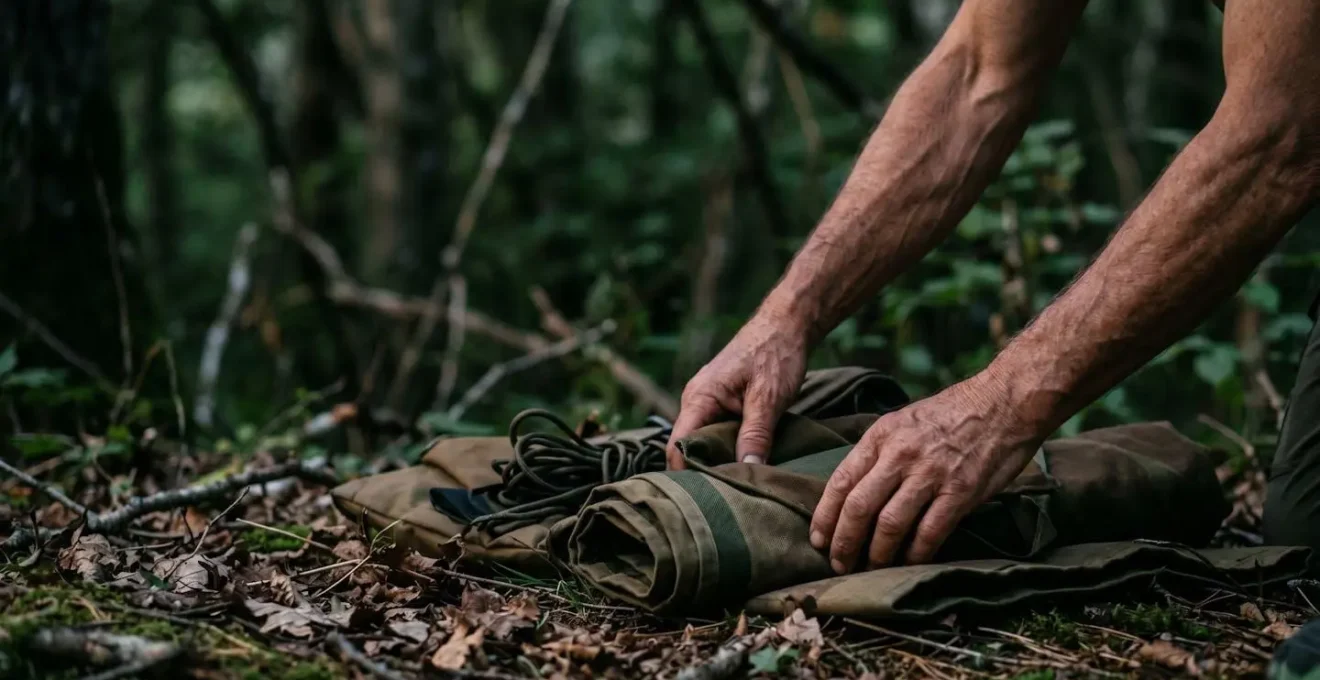
As this image demonstrates, the process should be quiet, deliberate, and utilize natural cover. Every movement is calculated to minimize sound and visual disturbance. The core rule remains: arrive late, leave early. This simple mantra is your best defence, allowing you to utilize marginal spots responsibly without ever registering as a presence to the daytime world.
Bivouac sack vs ultralight tent: Which is safer for high winds?
The choice between a bivouac sack (bivy) and an ultralight tent is a critical decision for the wild camper, and in high-wind conditions, the answer is not as simple as it seems. While a tent offers superior comfort and psychological security, a bivy’s low profile gives it a significant structural advantage against powerful gusts. A tent presents multiple failure points—poles can snap, guylines can loosen, and large fabric panels can catch the wind like a sail. A bivy, by contrast, has almost no vertical profile, allowing the wind to pass harmlessly over it.
However, safety is about more than just wind resistance. A bivy’s primary weakness is its poor ventilation, which creates a high risk of condensation, especially in damp, windy weather. A wet sleeping bag is a direct path to hypothermia, a far greater threat than a collapsed tent. Furthermore, the confined, « coffin-like » space of a bivy can induce claustrophobia or panic during a severe storm, compromising a camper’s ability to make calm, rational decisions. An ultralight tent, with its breathable inner wall and protected vestibule for gear, provides a much more stable environment for both body and mind.
Ultimately, the choice depends on a careful assessment of the expected conditions and your personal risk tolerance. For exposed, high-altitude ridges where extreme winds are the primary concern, a bivy’s superior wind-shedding ability may be the deciding factor. For most other three-season European conditions, an ultralight tent offers a more balanced solution, providing better moisture management, gear protection, and the psychological comfort needed to ride out a storm safely. The following table breaks down the key trade-offs.
This comparative data, drawn from extensive field testing and analysis, highlights the specific strengths and weaknesses of each shelter system in challenging conditions.
| Feature | Bivouac Sack | Ultralight Tent |
|---|---|---|
| Wind Resistance | Excellent – low profile means wind blows right over (highest point just 1 foot off ground) | Moderate – multiple failure points (poles, guylines, fabric) vulnerable to high winds |
| Weight | 0.5-2 pounds average | 1.5-5 pounds average |
| Condensation Risk | High – poor ventilation in windy/damp conditions can lead to wet sleeping bag and hypothermia | Lower – better ventilation with double-wall designs |
| Psychological Comfort | Low – coffin-like feeling can induce panic in storms | High – perceived security helps maintain calm decision-making |
| Setup Complexity | Minimal – already knocked down design | Moderate – requires proper staking and guy-line tension |
| Gear Protection | None – gear must stay outside and exposed | Good – vestibule provides protected storage |
The sanitation mistake that ruins local ecosystems in 24 hours
Of all the « Leave No Trace » principles, none is more misunderstood—and more damaging when ignored—than proper sanitation. The most common and critical mistake is assuming that « biodegradable » soap is safe to use directly in or near water sources. This single act of convenience can have a devastating and immediate impact on fragile aquatic ecosystems. Even eco-friendly soaps contain surfactants that break the surface tension of water, which can be fatal to aquatic insects that rely on it. Furthermore, they introduce foreign compounds that disrupt the delicate nutrient balance of alpine lakes and streams.
The soil is a powerful, living filter. The correct and only responsible method is to carry water at least 200 feet (about 70 adult steps) away from any river, lake, or stream before washing yourself or your dishes. The soapy wastewater should then be scattered over a wide area or disposed of in a 6-8 inch deep cathole, where soil bacteria can effectively break down the compounds before they ever reach the water system. Failing to do this concentrates pollutants and overwhelms the ecosystem’s ability to process them.
Case Study: The Biodegradable Soap Myth
Ecological studies reveal that even biodegradable soaps cause significant harm when used directly in water. The surfactants they contain disturb water surface tension and, according to analysis of backcountry water contamination, can rapidly increase nitrogen levels in sensitive alpine lakes. This harms aquatic life and can trigger algal blooms. In high-use camping areas, this impact is amplified exponentially, with soap residues persisting in water systems and disrupting entire aquatic ecosystems within 24-48 hours of concentrated use. The mistake is not the soap, but the location of its use.
This principle extends to all forms of waste. Proper sanitation is not just about aesthetics; it’s about protecting the invisible biological machinery that keeps wilderness healthy. Adhering to a strict sanitation protocol is a non-negotiable mark of an expert camper.

The rich, organic layer of the forest floor, as shown here, is the only appropriate place for wastewater disposal. This environment is teeming with microbial life ready to break down waste, a process that simply cannot happen in open water.
Action Plan: Backcountry Sanitation Protocol
- Water Source Buffer: Never use soap, even biodegradable types, directly in any body of water. Always carry water at least 200 feet away from the source before washing.
- Urine Dispersion: Disperse urine in a wide fan pattern away from trails and camp. Avoid repeated urination in the same spot to prevent soil over-nitrification, which kills native plants.
- Cathole Discipline: Dig catholes for solid human waste 6-8 inches deep and at least 200 feet from water, trails, and campsites. This allows soil bacteria to properly decompose the waste.
- Pack It Out in Fragile Zones: In high-altitude, arid, or frozen environments where microbial activity is low, pack out all solid waste using approved WAG bags.
- Dishwater Management: Scrape all food particles from dishes and pack them out with your trash before washing. Scatter the strained, dirty dishwater over a wide area 200 feet from water sources.
When to leave your spot: The « Leave No Trace » timing rule everyone breaks
The cardinal rule of stealth camping is « arrive late, leave early, » but the « leave early » part is often misinterpreted. The common wisdom is to pack up and be gone at the crack of dawn. However, this advice ignores a crucial element of wilderness etiquette: wildlife. The hours around sunrise and sunset are known as crepuscular periods, which are the peak activity times for many animals, including deer, foxes, and various bird species. A hasty, noisy departure at dawn can cause significant stress and disruption to wildlife during their most important feeding and foraging window.
A more responsible approach involves a nuanced understanding of timing, balancing wildlife consideration with social invisibility. The goal is to depart before the first human activity begins, which varies dramatically with location. Near a city, this might be 6 AM when the first trail runners appear. In a remote mountain valley, it could be as late as 9 AM. This is the « Social Invisibility Principle »: your departure should be timed to avoid human encounters, not a specific time on the clock.
Advanced stealth campers often employ a « False Departure » technique. This involves packing up your sleep system and tent at first light, then moving 500 meters or so to a durable surface—like a large, flat rock or a patch of bare ground—to quietly prepare breakfast and coffee. This makes your sensitive overnight spot immediately invisible while allowing you to wait out the peak wildlife activity period. This two-stage departure shows a higher level of respect for the environment, minimizing both visual and ecological impact. It requires efficiency and the ability to break down camp in near-darkness, but it is the mark of a truly considerate wild camper.
Why strict regulations protect fragile ecosystems from tent footprints?
To the untrained eye, a patch of flattened grass is the only evidence of a night spent camping. However, the most significant damage is invisible and long-lasting. Strict regulations on where you can camp exist to protect the complex, fragile ecosystems that are easily destroyed by the simple act of pitching a tent. The ground beneath you is not inert dirt; it’s a living, breathing system.
The footprint of a tent does more than just bend plants. It compacts the soil, creating a hard, impermeable layer. This « hardpan » effect prevents water from being absorbed into the ground, leading to increased runoff and erosion. It also makes it impossible for new seeds to germinate, creating a barren patch that can persist for years after a single overnight stay. This physical damage is only part of the story. The most profound impact occurs in the subterranean world.
Case Study: The Invisible Damage of a Tent
Beneath the forest floor lies a vast, intricate web of symbiotic fungi known as the mycelial network. This « fungal internet » connects the roots of trees and plants, transporting water and vital nutrients throughout the ecosystem. As outlined in studies on the environmental impact of illegal camping, the pressure and soil compaction from a tent can sever these delicate connections. Once broken, this network can take decades to re-establish. In alpine or desert environments, a single footstep can destroy cryptobiotic soil crust—a living layer of organisms that prevents erosion—a wound that may take up to a century to heal. The cumulative effect of these impacts in popular areas forces authorities to implement designated camping zones to concentrate the damage rather than letting it spread uncontrollably.
These unseen consequences are why regulations are not just bureaucratic hurdles but essential conservation tools. By understanding the deep and lasting ecological footprint of your presence, you can appreciate the importance of choosing durable surfaces, using designated sites where available, and supporting the systems designed to protect these wild places for generations to come.
Key Takeaways
- Ecological Impact is Microscopic: The most significant reasons for camping restrictions are invisible damage to soil structure and underground fungal networks, not just visible trash.
- Invisibility is Multi-layered: True stealth involves managing your visual presence (gear, location), your timing (avoiding peak wildlife/human hours), and your biological signature (waste).
- Responsibility is Your Permit: In areas with restrictions, demonstrating extreme self-reliance and a deep understanding of Leave No Trace principles is your best tool for avoiding conflict.
The « just in case » items that stay in the trunk 99% of the time
For the responsible wild camper, risk management extends beyond a first-aid kit and a map. It includes preparing for the unlikely but stressful event of being discovered by a landowner or authority figure. The items in your « legal safety » kit are not for everyday use; they are strategic tools for de-escalation and demonstrating responsibility. They form a « Liability Shield, » proving that you are a self-reliant asset, not a potential burden.
The most powerful tool in this kit is for de-escalation. A confrontation can often be transformed into a positive interaction with the right approach. This might include a small, culturally appropriate gift—like high-quality local chocolate or a craft beer—paired with a pre-printed, laminated card. This card could have a polite apology and a brief explanation of the « Leave No Trace » ethos, perhaps even translated into the local language. This simple gesture shows respect and immediately changes the dynamic from trespasser-to-owner to respectful-guest-to-host.
Next is your « Legal Boundary Kit. » This consists of a laminated physical map with property and park boundaries clearly marked, alongside a reliable compass. In the event you are questioned, being able to demonstrate that you performed due diligence to avoid private land is a powerful statement. This physical proof, backed up by a GPS device, shows you are not a careless wanderer but a methodical and respectful visitor. Finally, carrying a satellite messenger like a Garmin inReach or Zoleo serves as your « Liability Shield Device. » It proves to authorities that you have a reliable means of communication and will not become a strain on local search-and-rescue resources, reinforcing your status as a competent and prepared adventurer.
Your Emergency Legal & Safety Kit
- De-escalation Kit: A small, culturally appropriate gift (e.g., quality chocolate) and a pre-translated card explaining your commitment to Leave No Trace principles.
- Legal Boundary Kit: A laminated physical map showing property lines and park boundaries, plus a reliable compass and GPS backup to prove due diligence.
- Liability Shield Device: A satellite messenger (e.g., Garmin inReach) to prove self-reliance and assure authorities you won’t burden emergency services.
- Standard First-Aid Kit: Comprehensive supplies for treating common backcountry injuries.
- Water Redundancy: An extra water supply and a reliable water treatment method (filter or purification tablets).
- Emergency Rations: Extra high-calorie, non-perishable food that requires no cooking.
Camping in National Parks: How to Navigate Permit Systems Like a Ranger?
While stealth and low-impact skills are essential for unofficial bivouacking, a truly expert camper also knows how to master the official systems. In many of Europe’s most spectacular national parks, the only legal way to spend a night in the wild is through a permit. Viewing these systems as a bureaucratic enemy is a novice’s mistake. Instead, you should see them as a puzzle to be solved, a system with rules that can be learned and leveraged. Success requires moving beyond simply trying the main online portal during peak season.
One of the most effective strategies is targeting the « shoulder season. » Identify the precise dates when permit quotas loosen but the weather remains favourable—for example, late September in the Alps or early June in the Pyrenees. This allows you to avoid the lottery madness of July and August. Another advanced technique is mastering the « cancellation game. » Many parks release cancelled permits back into the online pool at a specific time each day. Using permit-tracking services and knowing this schedule can give you a significant advantage.
For those with non-standard itineraries, a well-researched phone call to a ranger station can be incredibly powerful. If you can present a detailed, expert-level plan that demonstrates your competence and avoids high-traffic areas, rangers are often empowered to issue discretionary or unlisted permits. Furthermore, don’t overlook walk-in quotas. Many parks, particularly in the US, hold back 25-40% of their permits for in-person, day-of-departure issuance. Arriving at a ranger station early with a flexible plan can often guarantee a permit. Penalties for ignoring these systems can be severe, with fines for camping without a permit in US parks ranging from $75 to over $250, and potentially much more for serious violations in Europe.
Finally, expand your definition of a « legal » site. Many European countries, including Germany, Belgium, and France, offer designated « trekking sites » or unmanned alpine huts. These are legal, often free or low-cost, and provide a wild experience with none of the legal risks. Researching these alternatives is a hallmark of a strategic and knowledgeable wild camper who knows how to play by the rules to get the experience they want.
Ultimately, the freedom of wild camping in Europe is earned, not given. It is earned through a deep commitment to environmental stewardship, a rigorous dedication to skill-building, and a respectful understanding of the systems—both natural and man-made—that govern these beautiful landscapes. By adopting this mindset of profound responsibility, you cease to be a potential problem and become a silent, valued guest in the wilderness.