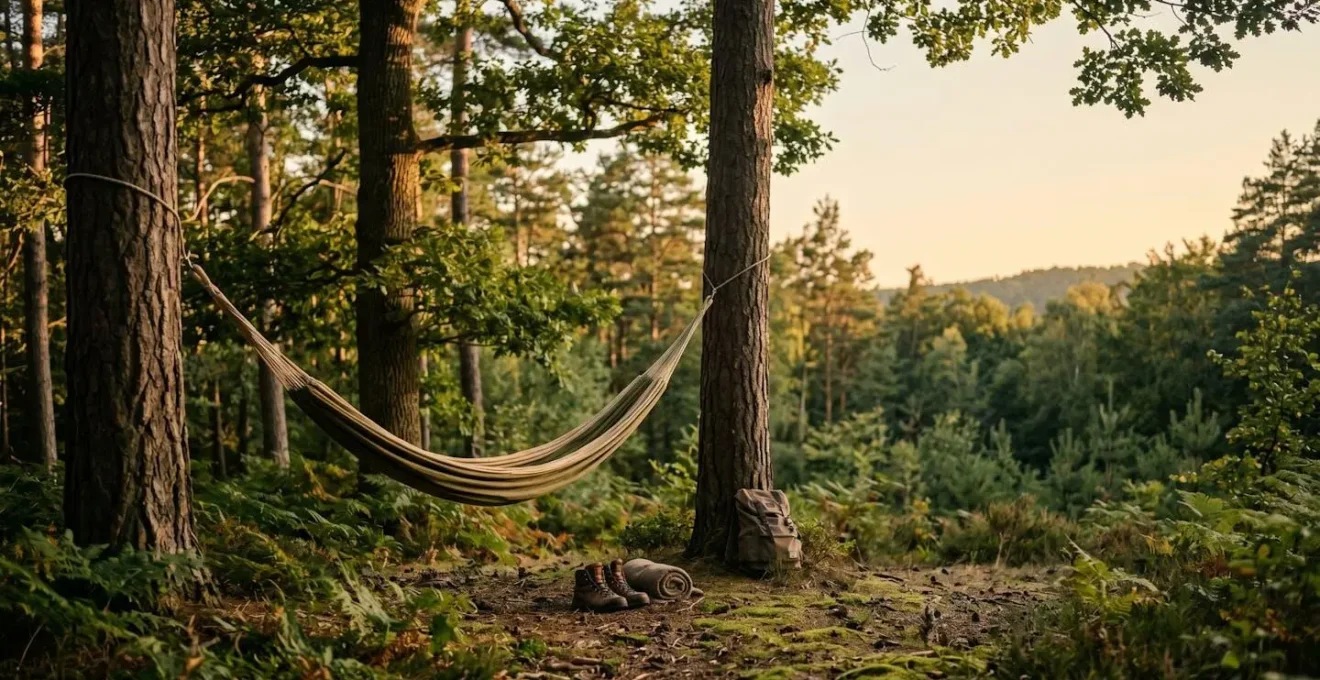
Contrary to popular belief, the freedom celebrated in naturism is not derived from the simple act of being naked, but from the profound psychological and social shifts that this act triggers.
- It systematically dismantles sexual tension through a neurological process called habituation, turning the novel into the normal.
- It erases visual cues of wealth, status, and identity, forcing human interaction onto a more authentic and egalitarian plane.
Recommendation: To understand naturism, one must look beyond the body and analyze the predictable mechanisms that liberate the mind from its cultural conditioning.
The concept of social nudity often collides with a deeply ingrained cultural wall. For many curious onlookers, the line between naturism and exhibitionism appears blurred, shrouded in misconceptions about sexuality and public display. The immediate question that arises is almost always the same: isn’t it inherently sexual? This skepticism is understandable, as society spends immense effort codifying and managing nudity, almost exclusively within private or erotic contexts. The common understanding is that to be naked among strangers is to invite or project a sexual narrative. This is the first and most significant hurdle for anyone exploring the philosophy.
Many advocates attempt to counter this by simply stating, « it’s not sexual, it’s about freedom, » or « it’s about connecting with nature. » While true, these statements are often too abstract to be convincing. They describe a destination without providing a map. They fail to explain the tangible, observable mechanisms that allow a group of naked strangers to coexist in a completely non-threatening, desexualized environment. The real « why » is not a mystical feeling but a series of predictable psychological, sociological, and physiological events that unfold when clothing is removed in a specific, agreed-upon context.
This exploration will not just repeat the platitudes. Instead, it will deconstruct the very machinery of naturist freedom. We will delve into the neuroscience of desensitization, the sociology of status, and the biology of our sensory relationship with the world. We will analyze how the absence of fabric systematically neutralizes sexual tension, how it acts as a powerful social leveler, and how it rewires our perception of self and others. The goal is to move past what naturism *is* and reveal *how it works* on the human mind and body, demonstrating that its core tenet is the liberation from mental constructs, not just physical garments.
To fully grasp these interconnected ideas, this article is structured to guide you through each layer of the naturist philosophy. From the neurological impact of nudity to the practical etiquette that underpins it all, you will discover the clear and logical framework that separates this practice from mere exhibitionism.
Summary: Naturist Philosophy: The Mechanics of Freedom
- Why the absence of clothing neutralizes sexual tension in social settings?
- How direct skin contact with wind and sun alters your sensory perception?
- The « social leveling » effect: How nudity removes status symbols
- Club vs Resort: Which enforces the family-friendly philosophy strictly?
- When the awkwardness fades: The psychological timeline of undressing
- Why exposure to diverse bodies reduces social media comparison stress?
- Why phytoncides from trees lower human cortisol levels?
- FKK Guidelines: What Are the Strict Rules Beginners Often Break?
Why the absence of clothing neutralizes sexual tension in social settings?
The primary mechanism that defuses sexualization in a naturist environment is a powerful psychological principle: habituation. Our brains are wired to react strongly to novelty, especially when it involves social taboos like nudity. This initial reaction, often a mix of curiosity, anxiety, and arousal, is driven by a surge in dopamine. However, this response is not sustainable. When the stimulus—in this case, the sight of naked bodies—becomes constant, predictable, and non-threatening, the brain begins to reclassify it from « novel and exciting » to « normal and background. »
This process isn’t just a feeling; it’s a measurable neurological event. The initial « charge » of seeing nudity fades as the brain learns that in this specific context, it is not a prelude to sexual activity. The environment is explicitly non-sexual, with families present, people reading books, playing games, or simply talking. This social context provides powerful cues that override the default erotic interpretation of nudity. As one’s brain adapts, the novelty wears off, and so does the automatic sexual association.
As leading researchers in the field of sexual response have noted, the power of a stimulus is directly tied to its rarity and context. By making nudity ubiquitous within a defined social space, its power to exclusively signal sexuality is diluted. This is explained by a key insight from a study on neurological responses:
Constant, non-sexual exposure to nudity diminishes the novelty factor, thereby reducing the dopaminergic response associated with sexual arousal
– Koukounas and Over, Novelty, conditioning and attentional bias to sexual rewards
Ultimately, the continuous exposure leads to a cognitive reframing. The body is no longer seen as a collection of sexualized parts but as a whole, functional, and natural entity. This is the first and most crucial step towards the freedom naturism promises: freedom from the hyper-sexualized lens through which our culture often views the human form.
How direct skin contact with wind and sun alters your sensory perception?
Beyond the psychological and social dimensions, naturism is a deeply physiological experience. It is a reawakening of our largest sensory organ: the skin. In our daily lives, the skin is perpetually muffled, its direct connection to the world mediated by layers of fabric. We feel the texture of cotton, wool, or polyester, not the environment itself. This constant barrier dulls a vast spectrum of sensory input. Naturism removes this filter, allowing for a complete sensory recalibration.
When you are unclothed in a natural setting, your perception of the environment becomes intensely immediate and nuanced. You begin to notice subtleties that were previously invisible. You can feel the slight change in temperature as a cloud passes overhead. You can distinguish the gentle caress of a light breeze from the stronger push of a gust of wind. The warmth of the sun is no longer a generalized heat but a focused energy you can feel being absorbed directly by your skin. Walking from a sunny spot into the shade provides a sudden, refreshing coolness that is far more profound than when experienced clothed.
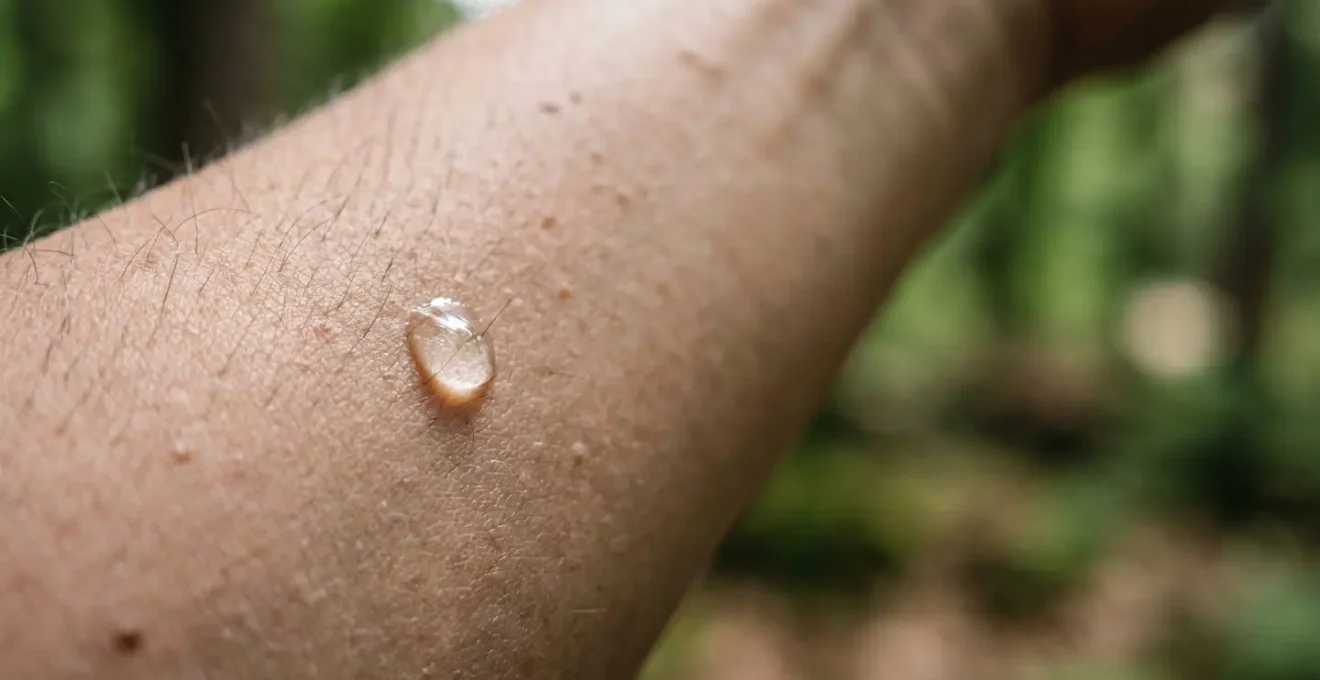
This heightened awareness extends to all elements. The feeling of cool lake water enveloping your entire body, without the clingy mediation of a swimsuit, is a fundamentally different and more liberating sensation. Even the air itself seems to have a texture and temperature that varies from moment to moment. This constant stream of rich, unfiltered sensory information grounds you firmly in the present moment, pulling your awareness away from abstract worries and anchoring it in direct, physical reality. It is a form of mindfulness, practiced not through conscious effort, but as a natural consequence of being fully present and receptive to the world.
The « social leveling » effect: How nudity removes status symbols
In everyday society, clothing is our primary uniform and billboard. It communicates our profession, our wealth, our taste, our cultural affiliations, and our desired identity. A designer suit signals corporate power, a ripped band t-shirt signals a subculture allegiance, and a luxury watch signals financial success. We use these symbols to perform our identity and to quickly categorize others. This process is so automatic that we are often unaware of its pervasive influence on our interactions.
Naturism short-circuits this entire system. By removing clothing, it removes the most immediate and powerful signifiers of social and economic status. In a naturist setting, the CEO and the plumber, the lawyer and the artist, are visually indistinguishable. The scaffolding of social hierarchy collapses, and with it, the prejudices and assumptions that accompany it. You cannot judge a person by the brand of their clothes if they are not wearing any. This phenomenon is what sociologists call a « social leveling effect. »
The foundational sociologist Erving Goffman articulated how deeply these symbols are woven into our social fabric, acting as a language to define our position relative to others.
Status symbols categorize society, and maintain boundaries between categories—they designate position through specialized means of displaying one’s position
– Erving Goffman, Symbols of Class Status, The British Journal of Sociology
Clothing as a Social Performance Mechanism
Sociological analysis demonstrates that clothing functions as a primary symbol mechanism to communicate ideas and values. Dress serves as a constant, visual signifier of social status, roles, and cultural belonging. When this entire semiotic system is removed, the established channels of communication are eliminated. This forces interaction to be based on personality, conversation, and character rather than on a performed identity mediated through material symbols. The person is revealed, not the persona.
This stripping away of external markers forces a fundamental shift in how people interact. Conversations are based on genuine interest, not on perceived status. Friendships are formed based on shared values and personalities, not on social or economic alignment. This creates a uniquely egalitarian atmosphere where human connection can occur on a more authentic and direct level. The freedom experienced here is freedom from prejudice, from categorization, and from the pressure to perform a specific social role.
Club vs Resort: Which enforces the family-friendly philosophy strictly?
For a newcomer, the terms « naturist club » and « naturist resort » might seem interchangeable, but they often represent fundamentally different organizational structures and philosophies. Understanding this distinction is crucial, as it directly impacts how the core naturist ethos of a non-sexual, family-friendly environment is maintained and enforced. The key difference lies in governance and purpose: one is driven by ideology, the other by commerce.
A traditional naturist club is typically a non-profit, member-owned organization. The members themselves are the guardians of the club’s philosophy. They elect a board, set the rules, and are collectively responsible for maintaining the atmosphere. Because the organization’s primary purpose is to provide a safe space for its members to practice naturism, there is a strong incentive to strictly enforce the rules of conduct—such as those against gawking or inappropriate behavior. Prospective members often go through a vetting process. This model prioritizes the purity of the philosophy over profit.

A naturist resort, on the other hand, is a for-profit business. Its primary goal is to attract customers and generate revenue. While most resorts are committed to maintaining a safe and respectful environment to protect their brand and ensure repeat business, the dynamic is different. The « customer is always right » mentality can sometimes clash with the need to enforce strict behavioral codes. Enforcement is handled by paid staff, not by a community of peers. While many resorts are excellent and family-friendly, the commercial incentive can, in some cases, lead to a more relaxed interpretation of the rules to avoid alienating paying guests.
Therefore, for those seeking the most rigorous application of the non-sexual, community-oriented philosophy, a member-owned club is often the stricter environment. It is a community policing itself to protect a shared ideal. A resort is a business providing a service. Both can offer wonderful experiences, but their underlying structures create different systems of accountability for upholding the core principles of naturism.
When the awkwardness fades: The psychological timeline of undressing
For the uninitiated, the single greatest barrier to trying naturism is the anticipation of awkwardness. The thought of being the « only one feeling weird » can be paralyzing. However, psychology and neuroscience provide a clear and reassuring timeline for how this anxiety predictably dissolves. The process involves a fascinating interplay between our primal brain and our rational mind.
Phase 1: The Amygdala Hijack (Minutes 0-10). The moment you undress, your amygdala—the brain’s threat-detection center—is likely to fire up. It has been conditioned for years that public nudity is a vulnerable and socially dangerous act. This can trigger a fight-or-flight response: increased heart rate, shallow breathing, and a feeling of intense self-consciousness. This is the peak of the awkwardness. You might feel an urge to cover yourself or retreat. This is a completely normal and expected biological reaction.
Phase 2: Prefrontal Cortex Assessment (Minutes 10-30). While your amygdala is sounding the alarm, your prefrontal cortex—the center for rational thought and social assessment—is busy gathering data. It observes that nobody is staring. It sees people of all shapes, sizes, and ages going about their day. It notices that the social atmosphere is relaxed and non-threatening. As neuroscience research on habituation shows, this is a critical phase where the rational brain begins to contradict the primal fear signal. As one study notes, the amygdala’s initial fear/anxiety response is gradually overridden by the prefrontal cortex, which assesses the social environment and concludes there is no threat.
Phase 3: Habituation and Acceptance (30+ minutes). As the prefrontal cortex wins the argument, the brain begins to habituate. The novelty wears off, the dopamine response平ates, and the amygdala’s alarm bells go silent. You begin to forget you are naked. Your focus shifts from your own body to your surroundings, the conversation you’re having, or the book you’re reading. The awkwardness doesn’t just lessen; it evaporates completely. This timeline is remarkably consistent, and understanding it can transform a moment of anticipated terror into a manageable and temporary phase of adjustment.
Why exposure to diverse bodies reduces social media comparison stress?
One of the most insidious aspects of modern digital life is the relentless pressure of social media comparison. We are inundated with a highly curated, filtered, and often surgically enhanced stream of « perfect » bodies. This creates a deeply distorted perception of what is normal, leading to widespread body dissatisfaction. As comprehensive survey data from the UK reveals, this is a public health issue, with 20% of adults feeling shame and 37% of teenagers feeling upset about their body image.
Naturism provides a powerful, real-world antidote to this digital poison. It replaces the « distorted dataset » of social media with a real, unfiltered, and beautifully diverse dataset of human bodies. In a naturist setting, you are exposed to people of all ages, shapes, sizes, colors, and abilities. You see bodies with scars, stretch marks, wrinkles, and asymmetries. You see bodies that are tall, short, thin, and heavy. In short, you see reality.
This exposure works to statistically redefine your perception of « normal. » The impossibly narrow ideal presented online is replaced by a broad, inclusive, and realistic spectrum. This process has been validated even in the digital realm, as a study from UNSW Sydney shows.
The Power of a Diverse Visual Diet
Research published by UNSW Sydney in the journal *Body Image* found that even brief daily exposure to body-positive social media content, celebrating a wide range of body types, significantly improved young women’s body satisfaction. This simple act of following accounts that showed more realistic diversity helped recalibrate their perception of normal and reduce harmful appearance comparisons. Naturism takes this principle out of the screen and into the three-dimensional world, amplifying its effect immensely.
When you see hundreds of different « normal » bodies, your own body ceases to be an object of scrutiny and comparison. You begin to see it as simply one variation among many. The pressure to conform to an unattainable ideal diminishes because you have firsthand visual proof that this ideal is a statistical anomaly, not the norm. This is not just about « learning to love yourself »; it’s about fundamentally rewiring your brain’s comparative framework through direct, empirical evidence.
Why phytoncides from trees lower human cortisol levels?
The deep sense of calm and well-being reported by naturists is often attributed to the simple pleasure of being in nature. However, there is a specific, measurable biochemical process at play that goes far beyond mere psychological enjoyment. This process involves invisible, airborne compounds called phytoncides, which are antimicrobial organic compounds released by plants and trees to protect themselves from pests and disease.
When we are outdoors, especially in a forested or wooded area, we are not just breathing air; we are inhaling a complex cocktail of these phytoncides. Research originating from Japan, where the practice of « Shinrin-yoku » or « forest bathing » is well-established, has demonstrated that inhaling these compounds has a direct and profound effect on human physiology. Specifically, it has been shown to significantly reduce the concentration of cortisol, the body’s primary stress hormone.
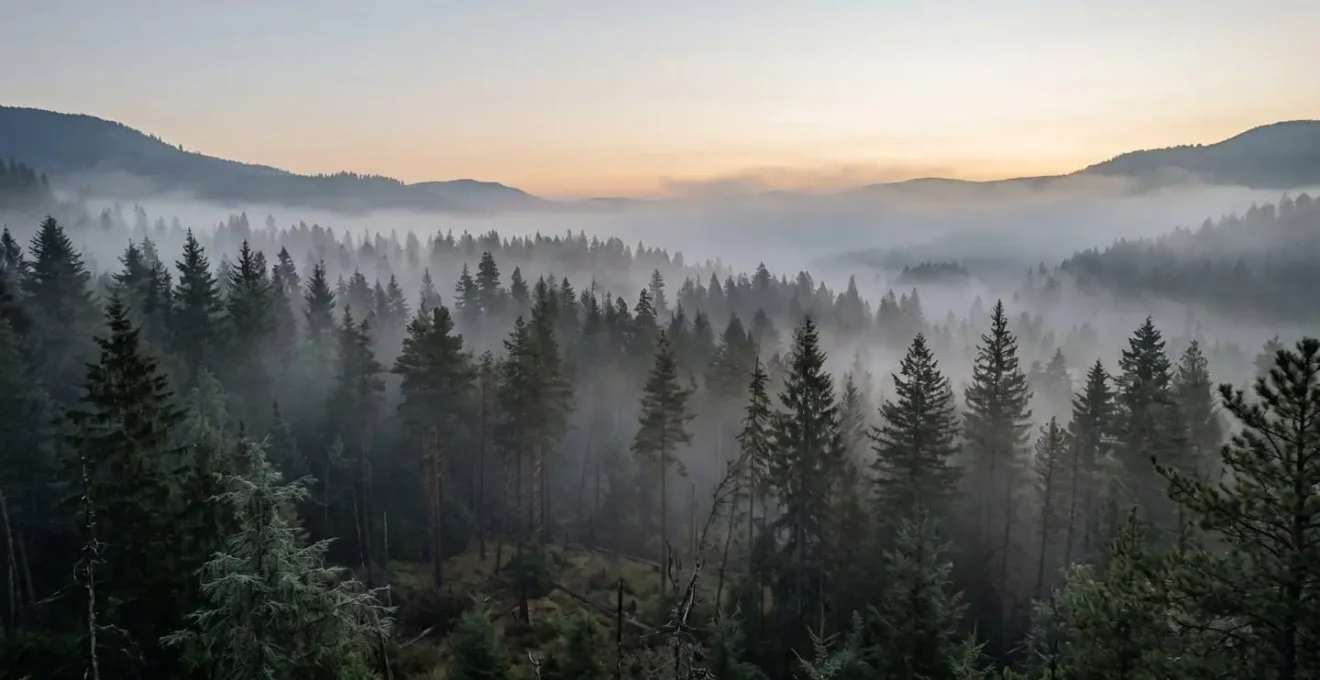
The connection to naturism is twofold. First, naturist environments are almost always located in natural, green settings, maximizing exposure to these beneficial compounds. Second, the absence of clothing means a larger surface area of the skin is exposed to the air, potentially increasing the absorption and sensory experience of this natural atmosphere. A landmark study from Chiba University in Japan provided concrete evidence of this effect.
The study found that both walking in and simply viewing a forest setting resulted in a significant reduction in stress levels. Specifically, as noted in a summary of the research, a 15.8% decrease in cortisol levels was observed after walking in a forest compared to an urban setting. This physiological de-stressing is a key component of the « freedom » that naturism offers—freedom from the chronic, low-grade stress that characterizes much of modern urban life. It’s a scientifically validated relaxation that comes simply from being present, unclothed, in a plant-rich environment.
Key takeaways
- The freedom in naturism stems from psychological mechanisms like habituation, which neutralizes the novelty and sexual charge of nudity over time.
- By stripping away clothing, naturism acts as a great social equalizer, removing the status symbols that create division and forcing interaction on a more authentic, human level.
- Exposure to a wide diversity of real bodies in a non-sexual context provides a powerful antidote to the toxic comparison culture fueled by social media, recalibrating one’s own body image.
FKK Guidelines: What Are the Strict Rules Beginners Often Break?
The philosophical ideals of naturism—desexualization, social equality, and respect—do not materialize out of thin air. They are actively cultivated and protected by a clear set of etiquette rules. These guidelines, particularly prominent in the German « Freikörperkultur » (FKK) or Free Body Culture movement, are not arbitrary restrictions. As historical analysis shows, they are carefully designed social engineering tools intended to create and maintain a non-sexual, respectful atmosphere.
For a beginner, these rules are the practical roadmap to integrating smoothly and ensuring the comfort of all. Breaking them, even out of ignorance, can disrupt the fragile social contract that makes the naturist environment possible. The rules function as the guardrails that allow freedom to flourish safely. Understanding and adhering to them is a sign of respect for the philosophy and the community.
While specific rules can vary slightly between locations, a few core principles are universal and are the ones most commonly overlooked by newcomers. Mastering this basic etiquette is the final step in transitioning from a curious observer to a respectful participant, fully embracing the spirit of the practice. It is the practical application of all the philosophical concepts discussed.
Your Essential FKK Etiquette Checklist: Points to Verify
- Master the Gaze: The single most important rule. You look at people, not at bodies. Make eye contact, interact with the person. Avoid staring, scanning, or « ogling » at all costs. This is the primary tool of desexualization.
- Practice Towel Integrity: Always bring a towel and always sit on it. Whether on a bench, a sauna seat, or a lawn chair, your towel is the only thing that should make contact with the surface. This is a fundamental rule of hygiene and respect for shared spaces.
- Assume No Photography: The default rule is that photography and videography are strictly forbidden to protect everyone’s privacy. If you must take a picture (e.g., of your own family), ensure no one else is in the background and ask for explicit permission if necessary.
- Don’t Isolate or Creep: Engage with the community normally. Don’t hide in the bushes or lurk at the edges of a group. Normal social behavior is expected. A simple « hello » goes a long way in signaling friendly, non-threatening intent.
- Respect Nudity Zones: Understand the local rules for attire. In « textile-free » zones like pools or saunas, being nude is mandatory. Conversely, in areas like a restaurant or reception, you may be required to wear a sarong or be clothed. Adhere to the specific context.
These rules are the practical embodiment of the entire naturist philosophy. They are the mechanisms that actively build the trust and safety required for a community to experience freedom together. To see them not as limitations but as facilitators is to truly understand the core of naturism.
Ultimately, embracing the naturist philosophy is an invitation to experience this unique form of freedom firsthand. The most profound understanding will not come from reading but from participating. To put these concepts into practice, the next logical step is to find a recognized AANR (American Association for Nude Recreation) club or a similar reputable organization in your region and experience this liberating environment for yourself.