In summary:
- Direct confrontation often fails; a diplomatic approach using campsite rules as a neutral party is more effective.
- Distinguish between acceptable « happy noise » and « disrespectful noise » that violates shared space.
- Before approaching others, assess your own « acoustic footprint » to ensure you’re leading by example.
- Know the clear safety red lines (aggression, property damage) that require immediate contact with park rangers.
- Proactive steps, like vetting a campground’s noise policy enforcement before booking, are your best first defense.
The gentle hum of crickets, the crackle of a dying fire, the whisper of wind through the pines—this is the soundscape we seek when we trade city life for a tent. But this tranquility can be instantly shattered by the booming bass of a Bluetooth speaker or loud conversations from the next site over, long after the sun has set. For many campers, especially those between 30 and 60 who value both peace and community, this situation creates a stressful dilemma: suffer in silence or risk an angry confrontation that ruins the weekend for everyone?
The common advice is often simplistic and unhelpful. You’re told to « just go talk to them » or « be polite, » but these suggestions lack a crucial blueprint for navigating a tense, real-world encounter. The fear of being perceived as the « fun police » or, worse, escalating a minor annoyance into a major conflict, can be paralyzing. The alternative, simmering with resentment inside your tent, is hardly a vacation. This binary choice between aggressive confrontation and passive frustration is a false one. There is a third, far more effective path.
The true key to resolving campsite noise isn’t about winning an argument; it’s about mastering the art of strategic de-escalation. This guide reframes you from a frustrated victim into a skilled « campsite diplomat. » The core principle is to remove personal accusation from the equation entirely. Instead of making it a « me vs. you » problem, you will learn to use the campsite’s own rules as a neutral third party, facilitating a conversation that is firm, fair, and focused on restoring the shared peace that everyone came to enjoy. This article will walk you through the psychology of noise conflicts, provide concrete scripts for communication, and equip you with a complete toolkit for prevention, intervention, and, when necessary, escalation.
This guide provides a structured approach to managing noise issues with social intelligence. We will explore why aggression backfires, how to leverage rules diplomatically, and how to know when it’s time to call for backup, ensuring your outdoor experience remains peaceful and restorative.
Summary: A Diplomatic Guide to Campsite Noise
- Why aggressive confrontation escalates noise rather than stopping it?
- How to use the campsite rules as a neutral third party argument?
- The difference between « happy noise » and « disrespectful noise »
- When to call security: The safety red lines you shouldn’t cross
- How to check your own sound footprint (music, voices, dogs)?
- Why earplugs are the single most important gear for hotel converts?
- How to verify strict « no-noise » policies before booking?
- Yosemite to Dolomites: How to Secure Spots at Iconic Sites 1 Year Ahead?
Why aggressive confrontation escalates noise rather than stopping it?
The instinct to march over and angrily demand quiet is understandable, but it’s the single most counterproductive action you can take. The primary reason is psychological: an aggressive approach is perceived not as a reasonable request, but as a personal attack. This immediately triggers a defensive « fight or flight » response in the other party. Instead of considering the merit of your complaint, their brain focuses on defending their ego and their right to enjoy their vacation. The conversation is no longer about noise; it’s about a perceived challenge to their autonomy.
This dynamic is rooted in the very reason people go camping. Industry research reveals that 43% of campers prioritize relaxation and escaping stress. When you confront someone aggressively, you introduce the very social stress they are trying to leave behind. They may double down on their behavior out of spite, turn the volume up, or become verbally hostile. You’ve now replaced a noise problem with a social conflict, which is far more stressful and harder to resolve. A successful outcome depends on preventing the other party from ever feeling personally targeted.
Furthermore, an aggressive tone assumes malicious intent when, most of the time, the issue is a lack of awareness. Sound travels differently in open, quiet environments. A conversation level that seems normal around their campfire can be clearly audible 50 feet away. They may simply be oblivious to their acoustic footprint. A hostile opening robs them of the chance to correct their behavior willingly and instead forces them into a defensive posture from which it’s difficult to back down without losing face. A diplomatic approach gives them an « out » by assuming good intentions first.
How to use the campsite rules as a neutral third party argument?
The masterstroke of a campsite diplomat is to never make the complaint personal. Instead of it being about *your* annoyance, it’s about a shared agreement everyone consented to when they checked in. The campsite’s « quiet hours » policy is your most powerful tool—a neutral, objective third party that isn’t emotionally invested. Framing your request around the rules transforms you from a complaining neighbor into a fellow rule-follower helping to maintain community standards.
Your approach should be friendly, brief, and non-accusatory. Wait for a natural pause in their activity, approach with a calm demeanor and a slight smile, and use a script that references the rules, not your feelings. The goal is to create a sense of « we’re in this together. »
Here are some examples of what this sounds like in practice:
- The Friendly Reminder: « Hey there, sorry to bother you. Just wanted to give a friendly heads-up that I think the campground’s quiet hours just started at 10. Have a great night! »
- The Fellow Rule-Follower: « Hi folks, how’s it going? I was just checking the camp map, and it looks like they have quiet hours from 10 PM to 7 AM. We’re all just trying to follow the rules here. »
- The « Am I Wrong? » Approach: « Excuse me, I’m a bit new to this campground. Do you know if quiet hours have started yet? I thought I saw a sign about it being 10 PM. »
In each case, you are not saying « You are too loud. » You are saying, « The rules exist. » This allows the other party to lower their volume without admitting fault to you directly; they are simply complying with the campground’s policy. This face-saving maneuver is critical. If the polite reminder doesn’t work, your next step is not further confrontation, but a quiet report to the camp host or ranger, who can then enforce the rules you’ve already referenced.
The difference between « happy noise » and « disrespectful noise »
Not all sound in a campground is a problem. Part of the communal experience is hearing the sounds of others enjoying the outdoors. This is « happy noise »: the laughter of children playing during the day, the murmur of a family’s dinner conversation, or the soft strumming of a guitar in the late afternoon. These are the signs of a vibrant, living campground, and they are generally acceptable because they exist within reasonable social and temporal boundaries.
This introductory paragraph sets the stage for the visual metaphor of sound traveling through a natural environment, where some sounds blend in while others intrude.
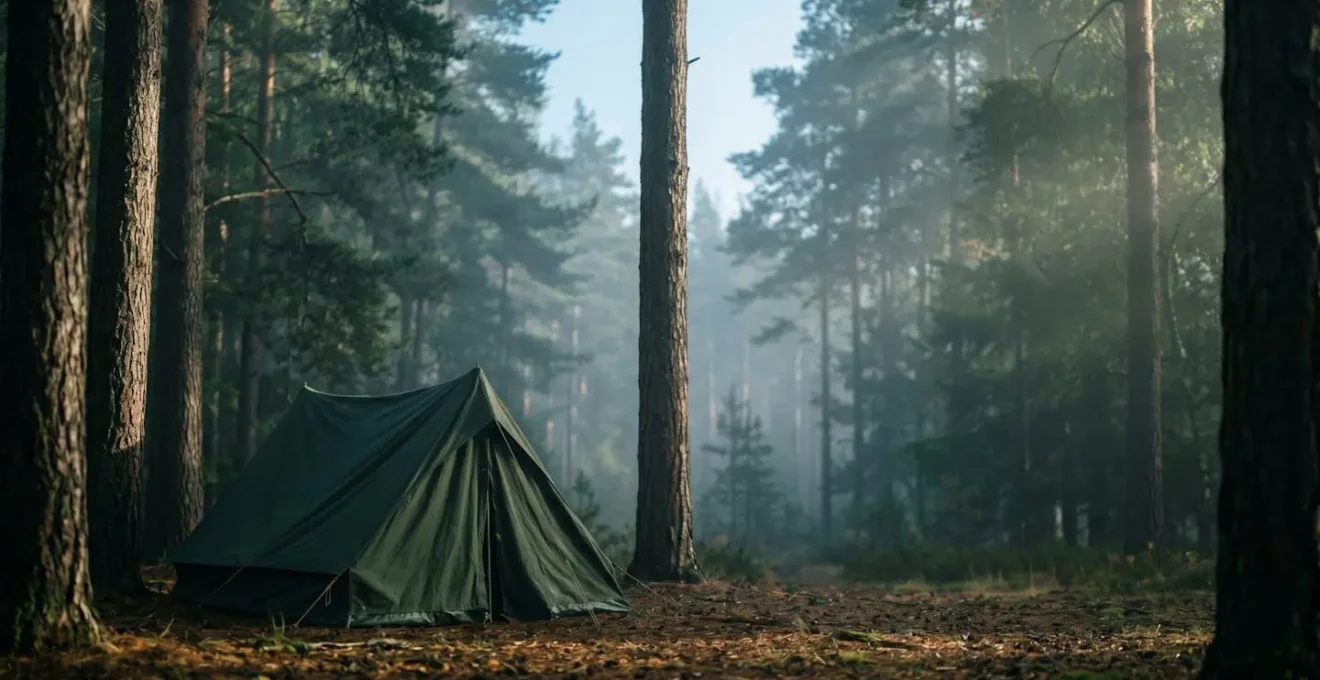
As this image suggests, sound interacts with the environment. « Disrespectful noise » is sound that aggressively intrudes upon that environment and the personal space of others. The distinction isn’t just about volume; it’s about context. The three key factors that turn happy noise into disrespectful noise are Time, Content, and Consistency. Loud music with explicit lyrics after 10 PM is clearly disrespectful. A generator running for hours on end is another. Research on camping noise pollution shows that a constant noise level of over 40 decibels—roughly the level of a library—can significantly disrupt the restorative effects of nature. Happy noise is transient and fits the time of day; disrespectful noise is invasive and shows a lack of consideration for the shared environment.
When to call security: The safety red lines you shouldn’t cross
The diplomatic approach is designed for handling standard inconsiderate behavior. However, there are situations where your personal safety and the safety of others take precedence over social niceties. It is crucial to recognize the « safety red lines » where you should immediately disengage and contact the park ranger, camp host, or local law enforcement. Your role as a diplomat ends when a potential safety threat begins. Do not attempt to mediate these situations yourself.
Key indicators that a situation has crossed from a nuisance into a potential danger include aggressive or threatening language, especially if combined with slurred speech indicating heavy intoxication. The sounds of objects being thrown, glass breaking, or any form of property damage are clear signals to call for help. Most critically, any noise that sounds like a physical or domestic dispute, such as screaming, crying, or sounds of a struggle, requires immediate intervention from trained authorities. Your priority is to get yourself to a safe location and provide information to professionals.
Before making the call, take a moment to gather specific, objective information if it is safe to do so. This will help the rangers respond effectively. Do not put yourself at risk to gather these details.
Your Safety Checklist: When to Escalate Immediately
- Document Key Details: From a safe distance, note the campsite number, the time, the number of people involved, and the specific behaviors or sounds (e.g., « Site 24, 11:30 PM, yelling and breaking bottles »).
- Identify Safety vs. Nuisance: Is it just loud music, or is there aggressive language and sounds of property damage? Slurred speech and hostility are red flags.
- Recognize Dispute Indicators: Any noise involving screaming, sounds of a physical confrontation, or someone clearly in distress requires an immediate call. Do not hesitate.
- Follow Contact Protocol: Call the park ranger or campground staff emergency number. Provide your location and the precise location of the incident with the details you gathered.
- Understand the Response: Be aware that rangers will typically issue a formal warning as a first step. Your report is the critical catalyst for this official intervention, which may prevent further escalation.
How to check your own sound footprint (music, voices, dogs)?
The foundation of being a credible campsite diplomat is self-awareness. Before you can address the noise of others, you must be confident that your own camp is a model of good etiquette. This means actively managing your « acoustic footprint »—the range and impact of the sound your site produces. In the wide-open spaces of a campground, sound travels much farther and more clearly than in a typical urban or suburban environment. What feels like a reasonable volume at your fire pit could be an intrusive presence two sites over.
The simplest and most effective way to gauge your noise level is the « walk-away test. » Once you have your music playing or your group is in conversation, walk to the edge of your designated campsite, and then take another 20 paces towards your nearest neighbor. Can you still clearly hear the music or conversation? If you can make out lyrics or specific words, you are almost certainly too loud. The goal is for your sound to be contained within the immediate vicinity of your own site. This same principle applies to playing instruments or singing; test the distance your sound travels.
Technology can also be an ally. Modern portable Bluetooth speakers are often designed for outdoor use, but their power can be a double-edged sword. To be a good neighbor, use speakers with directional sound capabilities, positioning them so the sound is aimed into your campsite, not out towards others. Keep them low to the ground rather than at ear level. Finally, remember that even your voice has a footprint. Be mindful of late-night conversations; a laughing, animated discussion can carry a surprising distance. The ultimate rule is simple: if in doubt, turn it down.
Why earplugs are the single most important gear for hotel converts?
For campers accustomed to the solid, sound-insulating walls of a hotel room, the first night in a tent can be a jarring experience. A tent’s thin nylon walls offer a visual and weather barrier, but they provide almost zero acoustic insulation. You will hear everything: the neighbor’s late-night card game, a dog barking two rows over, the early-riser starting their diesel truck at 5 AM. This is why for anyone transitioning from hotels to camping, a high-quality pair of earplugs is not a luxury—it’s the single most critical piece of gear for a good night’s sleep.
Earplugs are your last line of personal defense against ambient noise. While the diplomatic strategies in this guide are for resolving disruptive behavior, earplugs are for managing the unavoidable, low-level « happy noise » of a functioning campground. They empower you to take control of your own peace without needing to interact with anyone. However, not all earplugs are created equal, and the right choice depends on your specific needs for noise reduction and comfort, especially for side-sleepers.
The following table provides a comparison of common earplug types to help you choose the best fit for ensuring sleep quality during your camping trips.
| Earplug Type | Noise Reduction (NRR) | Comfort for Side-Sleepers | Best Use Case |
|---|---|---|---|
| Foam Earplugs | High (29-33 dB) | Moderate | Blocking all sound completely |
| Silicone Earplugs | Moderate (22-27 dB) | High | Comfortable long-term wear |
| Wax Earplugs | Moderate (20-25 dB) | High | Moldable custom fit |
| High-Fidelity (Musician’s) | Lower (15-20 dB) | Very High | Lowering decibels while maintaining sound clarity |
How to verify strict « no-noise » policies before booking?
The most effective way to handle a noise problem is to prevent it from ever happening. This proactive approach begins long before you pack your tent: it starts with diligent research when you book your campsite. Not all campgrounds are created equal when it comes to noise. Some cater to a party-oriented crowd, while others are explicitly managed as quiet, family-friendly retreats. Your job as a campsite diplomat is to become an expert at identifying the latter.
Start by thoroughly reviewing the campground’s website, paying close attention to the « Rules and Regulations » section. Look for specific language about quiet hours. According to the National Park Service, most campgrounds post quiet hours, typically from 10 PM to 6 AM. But the existence of a rule is not enough; you need to investigate its enforcement. Instead of asking a reservation agent, « Do you have quiet hours? » ask a more strategic question: « How are quiet hours enforced on a busy holiday weekend? » The answer will reveal whether the policy has teeth or is merely a suggestion.
For an even clearer picture, ask a targeted question that signals your intent: « We’re looking for a very quiet experience. Would you describe your campground as a peaceful, family-friendly place on a typical Saturday night? » This forces a more honest answer than a simple yes/no. Additionally, consider the type of campground. Remote, spacious national forest campgrounds are inherently less likely to have noise issues than tightly packed RV resorts located near popular attractions. Choosing your environment strategically is the ultimate proactive move.
Key Takeaways
- The goal is de-escalation, not confrontation. Use campsite rules as a neutral third party to remove personal conflict.
- Proactive prevention is your best tool. Vet a campground’s noise enforcement policy before you book a site.
- Know the difference between « happy noise » and « disrespectful noise, » and be aware of the safety red lines that require calling a ranger.
Yosemite to Dolomites: How to Secure Spots at Iconic Sites 1 Year Ahead?
While the previous sections have focused on reactive and proactive strategies for dealing with noise, the ultimate master-level technique is strategic site selection. The question of securing spots at world-renowned locations like Yosemite or the Dolomites may seem unrelated to noise, but it’s intrinsically linked. These iconic parks are in such high demand that they operate on hyper-competitive, lottery-based, or six-to-twelve-month advance booking systems. This intense competition has a powerful side effect: it filters for a certain type of dedicated, rule-abiding camper.
Campers who plan a year ahead to secure a coveted spot in Yosemite Valley or a rifugio in the Dolomites are typically deeply invested in the outdoor experience. They are there for the natural beauty and the challenge, not for a weekend party. Consequently, the culture at these sites is overwhelmingly one of respect for the environment and for fellow visitors. Rule enforcement by park staff is famously strict and efficient because preserving the park’s integrity is paramount. Quiet hours are not a suggestion; they are a rigidly enforced regulation.
Therefore, learning the systems to book these high-demand locations is the ultimate noise-avoidance strategy. It involves diligent research on sites like Recreation.gov (for U.S. National Parks) or the specific alpine club websites in Europe. It means knowing the exact second that reservations open and having your information ready to go. While it requires significant effort, the payoff is a virtual guarantee of a peaceful environment surrounded by like-minded individuals. You trade the stress of potential conflict resolution for the upfront stress of booking logistics—a trade many seasoned campers are more than willing to make for guaranteed tranquility.
By shifting your mindset from that of a victim to that of a strategic, socially-aware diplomat, you can protect your peace without sacrificing your vacation. Armed with this toolkit of prevention, de-escalation, and informed decision-making, you are now fully equipped to ensure your next camping trip is defined by the sounds of nature, not by a feud with your neighbors.