
In summary:
- Success in a German FKK setting is not about confidence, but about mastering a strict system of non-verbal protocols for hygiene and space.
- Your towel is the single most important tool; it is a required barrier between your body and any shared surface.
- Technology like smartphones is heavily restricted in public areas to protect privacy and maintain a non-voyeuristic atmosphere.
- Being clothed in designated nude areas is often a more significant social error than being naked.
The thought of a first visit to a German Freikörperkultur (FKK) campsite can be daunting. For many tourists, the primary fear isn’t the nudity itself, but the dread of committing a cultural faux pas. You’ve likely heard the generic advice: « don’t stare, » « be respectful, » « just relax. » While well-intentioned, this advice is frustratingly vague. It fails to address the specific anxieties of a first-timer stepping into a highly structured social environment.
The truth is that FKK culture, particularly in its Germanic origins, is not a chaotic free-for-all. It’s a sophisticated system built on precise, unwritten rules. But what if the key to overcoming social anxiety wasn’t found in vague encouragements, but in understanding the logic behind these strict protocols? This guide moves beyond platitudes to give you the operational codebook. We will dissect the non-verbal language of FKK etiquette, from towel usage to smartphone bans, revealing a system designed to ensure comfort, hygiene, and equality for all.
By mastering these specific rules, you won’t just avoid embarrassment; you will understand the ‘why’ behind the culture. This knowledge transforms you from an anxious outsider into a confident participant who appreciates the deep sense of freedom that comes from shared respect and understanding.
This article provides a detailed breakdown of the essential, and often surprising, rules that govern FKK campsites. By understanding this structured etiquette, you can navigate your first experience with confidence and ease.
Summary: FKK Guidelines: The Unwritten Rules for Beginners
- Why Smartphones Are Strictly Banned in Pool Areas (and How They Check)?
- How the « Bubble of Space » Is Larger in Nude Interactions?
- The « Textile Error »: Why Dressing up for Dinner Can Be Offensive?
- Sunglasses Etiquette: Where to Look When Talking to a Naked Stranger?
- When Nature Reacts: How to Handle Involuntary Reactions Discreetly?
- Why a Standard Bath Towel Is Too Small for Full Protection?
- Why « FKK » Signs Are Sometimes Just a Subtle Color Change on a Post?
- First Time at a Nudist Campsite: How to Overcome Social Anxiety in 1 Hour?
Why Smartphones Are Strictly Banned in Pool Areas (and How They Check)?
In the age of constant connectivity, the most jarring rule for a newcomer is often the strict prohibition of smartphones and other camera-enabled devices in shared spaces like pools, saunas, and sunbathing lawns. This isn’t a suggestion; it’s a foundational pillar of trust within the FKK community. The core principle is the absolute protection of privacy. In an environment of shared vulnerability, the mere potential for a photograph to be taken, accidentally or intentionally, shatters the sense of safety that makes naturism possible. The rule ensures that everyone can relax without fear of their image being captured and shared without consent.
Enforcement is not left to chance. Many established FKK resorts have a clear non-verbal protocol. It’s common for venues to operate under a strict ‘no cameras in public areas’ policy. The check-in process often includes a polite but firm procedure to neutralize the threat:
- The Sticker System: Upon arrival, you may be given small, opaque stickers and instructed to place one over your phone’s front and back camera lenses.
- Visible Compliance: This sticker is not just for you; it’s a clear, visible signal to everyone else that your device is « safe » and that you are respecting the community’s code.
- Retained Functionality: This clever system allows you to keep your phone for other uses (like reading or checking messages discreetly) while demonstrating your commitment to the privacy of others.
Attempting to circumvent this system is the fastest way to be removed from the premises. The community’s trust is paramount, and the no-photography rule is non-negotiable. This is the first and most critical piece of modern FKK etiquette to master.
How the « Bubble of Space » Is Larger in Nude Interactions?
In everyday life, personal space is a fluid concept. In an FKK environment, it becomes a well-defined and rigorously observed rule. You will quickly notice that the « bubble of space » around individuals and groups is significantly larger than in the clothed world. This isn’t about being unfriendly; it’s a cornerstone of the non-verbal protocol that ensures comfort and reduces potential awkwardness. By maintaining a greater physical distance, you automatically signal respect and a non-intrusive presence.
This expanded personal territory is especially important when setting up your spot on a beach or lawn. Rushing to place your towel a few feet from someone else is a major etiquette breach. Experienced naturists recommend maintaining a distance of 10-20 feet from others when choosing your location. This creates a natural grid of privacy and makes it clear that your focus is on your own relaxation, not on observing your neighbors. The visual effect is one of respectful, organized harmony.
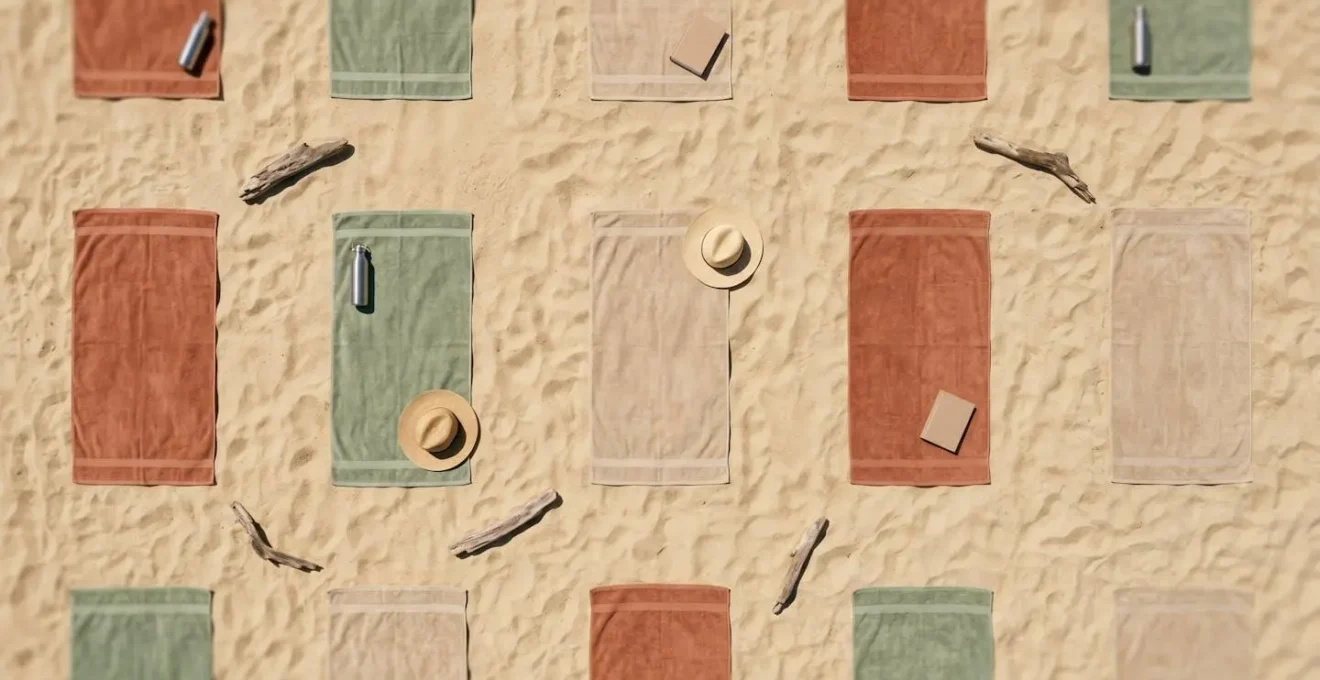
As the image above illustrates, this isn’t about isolation but about creating clear, comfortable boundaries. This generous spacing is a physical manifestation of mutual respect. It allows for conversation and interaction to happen organically and by invitation, rather than by forced proximity. When walking through the campsite, be mindful to walk around established groups and their towels, not through them. This simple act of deference to another’s space speaks volumes about your understanding of FKK culture.
The « Textile Error »: Why Dressing up for Dinner Can Be Offensive?
For a beginner, one of the most counter-intuitive rules is the « textile error. » In a well-meaning attempt to be polite or modest, you might consider putting on a shirt for dinner or wearing swim trunks by the pool. In a dedicated FKK zone, this is often a significant social mistake. The entire philosophy of Freikörperkultur is built on equality and shared vulnerability. Clothing, in this context, reintroduces a barrier and a sense of hierarchy or judgment that nudity removes.
Being clothed in a nude-only area can be perceived in several negative ways. It can imply that you are uncomfortable with your own body or, worse, that you are judging others’. It can also be interpreted as voyeuristic, as if you are there to observe rather than participate, creating an « us vs. them » dynamic. As one analysis of FKK culture notes, in mandatory nude zones, clothing breaks the social contract and can lead to polite but firm intervention from staff or other guests who feel the shared atmosphere of trust has been violated.
Of course, rules vary. Some resorts are « clothing-optional, » while others have designated « textile-free » (textilfrei) areas where nudity is mandatory. Common textile-free zones include saunas, pools, and specific beach sections. For activities like dinner or bar visits, you are typically required to sit on your towel, but nudity is the default. The key is to observe and adapt. If everyone in the restaurant is nude and sitting on their towel, do the same. Choosing to dress up in this situation doesn’t mark you as polite, but as someone who doesn’t understand the local culture.
Sunglasses Etiquette: Where to Look When Talking to a Naked Stranger?
The first conversation with a stranger while you are both naked can feel like a social minefield. The natural question is: where do I look? The fear of one’s gaze being misinterpreted is a major source of anxiety. The FKK community has developed a sophisticated, unspoken etiquette to navigate this, and it starts with your face. Staring is the cardinal sin of naturism, but avoiding eye contact can seem rude. The key is to manage your gaze in a way that is both respectful and natural.
Sunglasses, while practical in the sun, can be a barrier to trust. They obscure your eyes, making it impossible for others to know where you are looking. Therefore, the first step in a polite interaction is to remove your sunglasses or push them up onto your head. This act of transparency immediately establishes a person-to-person connection. From there, you can employ a technique that allows for natural, non-threatening eye contact:
- Establish Connection: Begin by making direct eye contact to acknowledge the person you are speaking with.
- Practice the Triangle Gaze: Keep your focus on the person’s face. Let your gaze move naturally from one of their eyes to the other, and then briefly down to their mouth as they speak. This shows you are engaged in the conversation.
- Scan the Environment: It is perfectly normal and acceptable to let your eyes drift away from the person to scan the wider environment—the trees, the pool, the sky. This is much more natural than a fixed, intense stare.
- Focus on Listening: The ultimate technique is active listening. When you are genuinely focused on the content of the conversation, your brain has less capacity to be distracted, and your gaze will naturally stay focused on the speaker’s face.
The goal is to treat the conversation exactly as you would in the clothed world. You are talking to a person, not a body. By consciously managing your gaze and removing the ambiguity of sunglasses, you signal respect and focus, allowing for a comfortable and normal social exchange.
When Nature Reacts: How to Handle Involuntary Reactions Discreetly?
One of the most profound fears for many first-time male naturists is the possibility of an involuntary physical reaction. The anxiety surrounding this is often far worse than the reality. The FKK community is mature and understands basic human physiology. These reactions are seen not as a social or sexual event, but as a simple, reflexive biological occurrence. The governing principle here is one of operational discretion: the event is handled quietly, without drama, by both the individual and the community.
If you experience an involuntary erection, the community’s unwritten rule is to pretend not to notice. Veterans have seen it all before and understand it’s not a reflection of intent. Your responsibility is to handle it discreetly. The key is to act casually and purposefully, without drawing attention to yourself. An effective « Discretion Action Plan » involves a few simple steps:
- Do Not Acknowledge: The worst thing you can do is show embarrassment or try to apologize. Simply ignore it.
- Change Position: Casually roll onto your stomach if you are lying down, or adjust the position of your towel on your lap if you are sitting.
- Use the Environment: A quick and perfectly acceptable solution is to go for a swim. The cool water is often a simple and effective remedy.
- Shift Focus: Get up and walk to a different location or engage in a new activity. The change in focus and physical state will usually resolve the situation quickly.

The community’s etiquette is a two-way street. Just as you should be discreet about your own reactions, you must extend the same courtesy to others. If you notice it happening to someone else, you look away and pretend you saw nothing. This mutual pact of discretion is what maintains a comfortable and non-sexualized atmosphere for everyone.
Why a Standard Bath Towel Is Too Small for Full Protection?
If there is one golden rule in FKK culture, it is the towel rule. A towel is not just for drying off; it is the most essential piece of equipment for maintaining social hygiene. The non-negotiable principle is that your bare skin should never touch a shared surface. This applies to sauna benches, restaurant chairs, poolside loungers, and any other communal seating. As naturist etiquette experts emphasize, carrying a towel and using it as a barrier is the most fundamental rule of all. Forgetting your towel is a far greater error than any social awkwardness.
This is why a standard-sized bath towel is often inadequate. For proper FKK etiquette, your towel must be large enough to provide a complete barrier for your entire body when sitting or lying down. This means it needs to cover the surface from behind your head and back down to your heels. A small towel that only covers your buttocks is not sufficient and will immediately mark you as a novice. Experienced naturists often employ a « two-towel system » for optimal hygiene and convenience.
Action Plan: The Two-Towel System
- The Primary Towel: Bring one very large beach towel, ideally around 2 meters (over 6 feet) in length. This is your « sitting » towel, used exclusively as a barrier on loungers, benches, and chairs.
- The Secondary Towel: Pack a second, smaller towel. This is your « drying » towel, used only for drying off after a swim or shower.
- Hygiene Benefit: This system prevents you from sitting on a damp, sandy towel after a swim, and ensures your primary barrier towel remains clean and dry for communal surfaces.
- Social Benefit: A large towel physically enforces your personal space bubble, and using the two-towel system subtly signals to others that you are an experienced naturist who understands and respects the culture.
- Check for Consistency: Always ensure the large towel provides full coverage, especially in wooden saunas where hygiene is of utmost importance.
This system isn’t just practical; it’s a profound sign of respect for the community and the shared facilities. It shows you are proactive about hygiene and aware of the most important unwritten rule of the FKK world.
Why « FKK » Signs Are Sometimes Just a Subtle Color Change on a Post?
When you first arrive at an FKK resort, you might expect to see large, clear signs delineating the « nude » and « clothed » zones. However, you will often find the opposite. High-quality European FKK resorts prioritize a natural, relaxing ambiance and actively avoid loud, institutional signage that would detract from the feeling of being in nature. This aesthetic philosophy means that the markers for different zones can be remarkably subtle and easy to miss if you don’t know what to look for.
Instead of a large « Nude Beach This Way » sign, the boundary might be indicated by a simple, non-verbal cue. This aligns with the culture’s preference for an integrated, unobtrusive experience. First-time visitors should be aware that a zone change can be marked by:
- A painted band of color on a wooden trail post.
- A small, engraved stone placed at a path junction.
- A subtle change in the pathway material, such as from gravel to wood chips.
- The complete absence of a sign, where the boundary is simply understood by convention.
This subtlety can be a source of anxiety, as you may worry about accidentally being clothed in a nude-only area or vice versa. Therefore, your two most reliable tools are the resort map and your own observation. Upon check-in, study the map carefully to understand the layout of the different zones. Then, as you explore, pay close attention to the behavior of others. If you cross an unmarked boundary and suddenly everyone around you is naked, it’s the clearest sign you have entered a textile-free zone. Trust the behavior of the community as your most accurate guide.
Key Takeaways
- The Towel Is Law: Your most critical piece of equipment is a large towel to create a complete hygienic barrier on all shared seating—no exceptions.
- Space Is Respect: Maintain a significantly larger personal bubble than in the clothed world. Generous distance is a non-verbal sign of respect.
- When in Doubt, Observe: The community’s behavior is your best guide. Observe clothing norms, zone boundaries, and social interactions to understand the local etiquette.
First Time at a Nudist Campsite: How to Overcome Social Anxiety in 1 Hour?
Even with a full understanding of the rules, the initial moment of disrobing can trigger a powerful wave of social anxiety. Your mind races with self-conscious thoughts, and it feels like every eye is on you. The good news is that this feeling is almost universal for first-timers, and it is remarkably short-lived. In fact, many guides for new visitors report that you should expect to feel anxious for about 30 seconds, after which the stress and tension rapidly begin to melt away as you realize nobody is paying you any special attention.
The key to accelerating this process is to have a structured plan. Instead of standing around awkwardly, you can follow a simple 1-hour acclimatization routine designed to shift your focus from your own self-awareness to the environment and activities around you. This purposeful approach helps to distract the anxious part of your brain and normalize the experience quickly.
- Minutes 0-15 (Familiarization): Keep your clothes on and take a relaxed tour of the grounds. Locate the key areas: the pool, the restaurant, the bathrooms. Building this mental map reduces the feeling of being in an alien environment.
- Minutes 15-30 (The Threshold): Return to your own designated spot (your campsite, your lounger). Organize your towels and belongings. When you feel ready, disrobe at your own « home base. » Don’t feel pressured to do anything immediately; simply sit or lie down and read a book. This is crossing the threshold of discomfort in a safe, controlled space.
- Minutes 30-45 (Purposeful Journey): Give yourself a simple, low-stakes task. Walk to the water’s edge and back. Walk to the other end of the pool. The purpose of the journey gives you a focus other than your own nudity.
- Minutes 45-60 (Engaging Activity): The final step is to become absorbed in an activity. Go for a swim, join a game of volleyball, or become deeply engrossed in your book. Once your brain is engaged in a task, it has fewer resources to dedicate to feeling anxious. You will often forget you are naked entirely.
By following this routine, you are taking control of the experience. You are not passively waiting for the anxiety to fade; you are actively dismantling it by proving to your own brain that the environment is safe, normal, and non-judgmental.
Armed with this practical code of conduct, you can approach your first FKK experience not with apprehension, but with the quiet confidence of an informed participant. The goal is to spend less time worrying about the rules and more time enjoying the unique sense of freedom and community that FKK culture offers. Your next step is to embrace the experience, knowing you have the tools to do so respectfully.