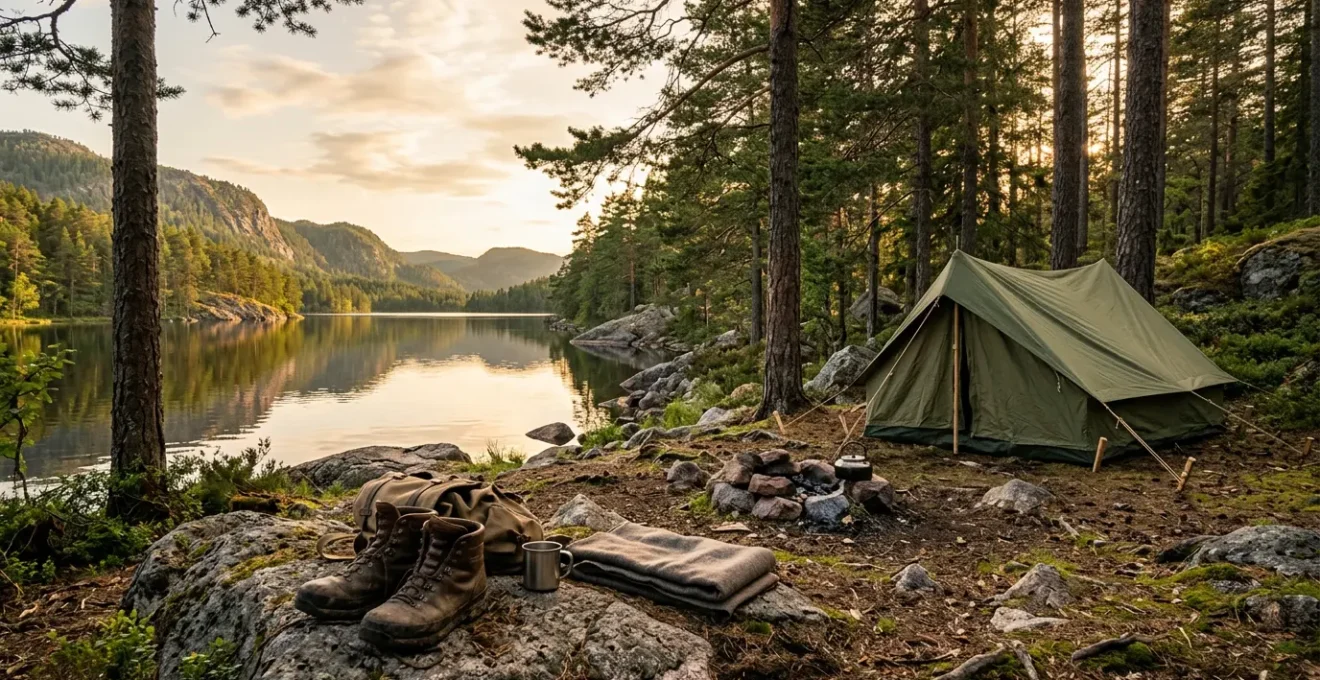
Improving body image isn’t about positive thinking; it’s a deep neurobiological reset triggered by disconnecting your body from the constant pressure of social judgment.
- Social naturism removes clothing as a status symbol, neutralizing comparison and fostering acceptance of diverse, real bodies.
- Forest bathing (Shinrin-Yoku) uses natural compounds from trees to physiologically lower cortisol, the primary stress hormone that exacerbates body anxiety.
Recommendation: To begin this journey, find a designated naturist space to experience this shift firsthand and integrate short, mindful nature walks into your weekly routine.
In a world saturated with curated images and relentless self-scrutiny, the mirror can often feel like an adversary. Many of us are caught in a draining cycle of comparison, striving for an unattainable ideal that erodes our self-worth. The common advice is to practice positive affirmations, unfollow triggering social media accounts, or simply « learn to love yourself. » While well-intentioned, these cognitive-based strategies often feel like fighting a battle of willpower against a deeply ingrained emotional response.
But what if the most profound path to healing our relationship with our bodies wasn’t found in a self-help book or a therapist’s office, but in the heart of nature? What if the simple act of camping, when approached with intention, could offer a powerful neurobiological reset that dismantles the very foundations of body-related anxiety? This isn’t about generic advice to « get some fresh air. » It’s about specific, immersive practices that leverage the environment to change our internal chemistry and perception.
This guide moves beyond the platitudes to explore the science-backed reasons why camping, through the lens of social naturism and forest bathing, accelerates the journey to body acceptance. We will uncover how these experiences directly counter the psychological and physiological stressors that fuel poor body image, offering a faster and more sustainable path to feeling at home in your own skin. It’s time to trade the mirror for the forest and discover a more authentic reflection of yourself.
To navigate this transformative approach, this article breaks down the key mechanisms at play. The following sections will guide you through the psychological shifts and practical steps that make nature an unparalleled therapeutic environment for body image healing.
Summary: How Camping Fosters Radical Body Acceptance
- Why exposure to diverse bodies reduces social media comparison stress?
- How to transition from textile swimming to skinny dipping progressively?
- The judgment fear that prevents 40% of people from trying naturism
- Solo naturism vs group activities: Which builds confidence faster?
- When to visit communal showers: Avoiding peak hours for beginners
- Why the absence of clothing neutralizes sexual tension in social settings?
- Why phytoncides from trees lower human cortisol levels?
- Shinrin-Yoku: How to Practice Forest Bathing for Proven Stress Reduction?
Why exposure to diverse bodies reduces social media comparison stress?
Our modern crisis of body image is largely fueled by a skewed reality. Social media feeds and advertising present a hyper-curated, impossibly narrow range of body types, training our brains to see normal human variation as flawed. This constant exposure creates a powerful cognitive bias where we compare our real, unedited selves to a digital fantasy. Camping, especially in a naturist context, shatters this illusion by creating what psychologists call a « normalization effect. »
When you are surrounded by people of all ages, shapes, sizes, and abilities, your brain receives a powerful dose of reality. You see bodies that are strong, soft, scarred, wrinkled, and unique—bodies that are living, functional, and perfectly imperfect. This exposure to authentic diversity actively rewires your perception. According to social comparison theory, we constantly evaluate ourselves against others. By changing the « others » from filtered influencers to a realistic cross-section of humanity, you fundamentally alter the comparison. The stress of not measuring up dissipates because the yardstick has been broken. This shift fosters a state of body neutrality, where the body is seen less as an ornament to be judged and more as a functional vessel for experiencing life.
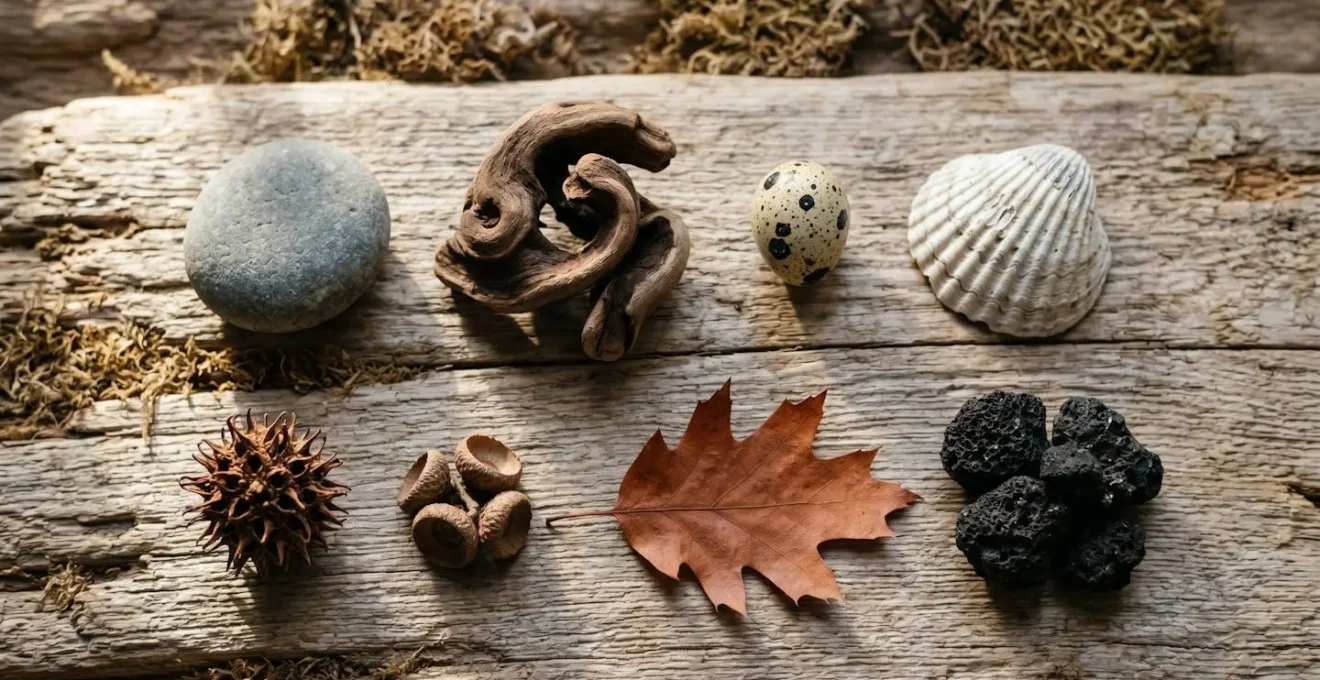
This visual metaphor of varied natural elements, each unique yet harmonious, captures the essence of this experience. Just as no two stones or shells are identical, the beauty lies in their diversity. In a naturist environment, the social pressure to conform vanishes, replaced by an unspoken acceptance of human variety. Your own body, with its unique history and form, finds its place within this natural spectrum, finally free from the impossible standards of a digital world.
How to transition from textile swimming to skinny dipping progressively?
The idea of skinny dipping can be intimidating, evoking a fear of vulnerability. However, the path to embracing this liberating experience isn’t about a sudden, shocking leap. As a therapist, I always recommend a gentle, progressive approach that respects your comfort levels. The goal is to slowly expand your boundaries, allowing your mind and body to adapt at a pace that feels safe and empowering. This process of « social de-armoring » is about reclaiming your body as a natural part of you, not an object on display.
Start small and in private. Find a secluded cove on a quiet beach at dawn, a private lake on a camping trip, or even a friend’s private pool at night. The first step is simply to experience the sensation of water on your bare skin without the audience. Focus on the physical feeling—the freedom of movement, the temperature of the water. This initial step is purely for you. As you become more comfortable, you can gradually increase the level of exposure. Perhaps try a designated « clothing-optional » beach during a very quiet time, like early on a weekday morning. You might choose to simply sunbathe topless at first, keeping a wrap nearby for comfort. The key is progressive exposure, a therapeutic technique used to overcome anxiety by tackling challenges in small, manageable steps.
Naturism predicted, preceded, or caused increases in positive body image, an effect mediated by decreases in social physique anxiety.
– Dr. Keon West, Journal of Happiness Studies research on naturist activities
This research underscores the « why » behind the process. Each small step you take reduces the grip of social physique anxiety—that fear of being judged for your appearance. By taking control of the process, you are not just shedding clothes; you are methodically shedding a layer of socially conditioned fear, paving the way for a more authentic and accepting relationship with your body.
The judgment fear that prevents 40% of people from trying naturism
The single greatest barrier to experiencing the benefits of naturism is a deep-seated fear of judgment. We are conditioned to believe that our unclothed bodies will be scrutinized, compared, and found wanting. This fear is a powerful inhibitor, preventing millions from accessing an activity that could profoundly improve their self-esteem. The irony, however, is that the reality of social naturism is the polar opposite of this fear. It is one of the few social contexts where judgment based on appearance is actively neutralized.
The anticipation of judgment is almost always worse than the reality. In established naturist settings, there is an unspoken social contract of respect and acceptance. People are there to relax, connect with nature, and enjoy a sense of freedom, not to critique others. The focus shifts away from aesthetics and towards shared experience. This is not just anecdotal; research consistently shows that the environment is one of acceptance, and the benefits to body image are rapid and significant.
Case Study: Goldsmiths University’s Naturist Event Research
In a series of groundbreaking studies, researchers from Goldsmiths University of London attended naturist events to measure their psychological impact. Participants were assessed before getting undressed and again at the end of the event. The findings were remarkable: attendees experienced immediate and significant improvements in body-image, self-esteem, and overall life satisfaction. Crucially, the researchers discovered that the most important factor in this boost was not being seen naked, but rather the act of seeing other normal, non-idealized naked bodies. This exposure to reality was the primary catalyst for self-acceptance.
This study powerfully demonstrates that the fear of judgment is a cognitive distortion. The very act that we fear—exposing our « imperfect » selves—is what triggers the healing process. By stepping into a naturist environment, you are not stepping onto a stage to be judged, but into a community that provides the antidote to judgment: radical, unconditional acceptance of human diversity.
Solo naturism vs group activities: Which builds confidence faster?
While solo naturism—like a private swim or a secluded sunbathe—is an excellent starting point for getting comfortable in your own skin, the most accelerated path to building lasting body confidence comes from group activities. This may seem counter-intuitive, as a group setting implies more people to « judge » you. However, the psychological mechanism at play is far more powerful: social reinforcement and normalization.
In a solo setting, you are still alone with your own thoughts and internalized critic. The experience is peaceful but doesn’t directly challenge the social-evaluative fears that fuel poor body image. In a group naturist setting, something transformative happens. You become one of many. Your body is no longer the sole focus of your attention; it simply exists within a diverse tapestry of other bodies. This repeated exposure leads to desensitization. The initial self-consciousness fades and is replaced by a sense of belonging and normalcy. Seeing that no one is staring, judging, or comparing creates a powerful feedback loop that actively dismantles your inner critic.
The consistency of this exposure is key. Research from Goldsmiths University on naturist participation found that the psychological benefits plateau after about 20 naturist events per year. This suggests that regular, repeated immersion in a group setting is what solidifies the gains in self-esteem and body image. Each event reinforces the message: « You are safe here. You are accepted as you are. Your body is normal. » Solo naturism is the rehearsal; group naturism is the performance that proves your fears were unfounded and builds true, resilient confidence.
When to visit communal showers: Avoiding peak hours for beginners
For many newcomers to campsite or naturist club life, the communal shower block can feel like the final frontier of vulnerability. It’s a purely functional space, yet it can trigger significant anxiety. As with all steps on this journey, the key is to approach it strategically and gently, transforming a moment of potential stress into a simple, non-eventful part of your routine. The most effective strategy is timing.
Avoid the « rush hours. » At a typical campsite, these are predictable: early morning (7-9 AM) as everyone wakes up, and early evening (5-7 PM) as people return from a day of activities. These are the times when the facilities will be most crowded. Instead, aim for the off-peak hours. The middle of the afternoon (around 2-4 PM) is often the quietest period. People are out hiking, swimming, or relaxing at their sites. Alternatively, a later evening shower (after 9 PM) can also offer more privacy as most families have settled in for the night.
Beyond timing, adopting a task-focused mindset is crucial. Your mission is not to socialize or to be seen; it is to get clean. Prepare in advance: have your towel, toiletries, and fresh clothes ready to go. Walk in with purpose, find a vacant spot, and focus on the mechanics of showering. Keep your attention on the task at hand—the warm water, the soap, the feeling of being clean. This focus leaves little mental space for self-conscious thoughts. You’ll quickly realize that everyone else is there for the same practical reason. It’s a functional space, not a social one, and approaching it with this mindset removes its perceived power.
Why the absence of clothing neutralizes sexual tension in social settings?
A common misconception about social naturism is that it must be a highly sexualized environment. In reality, the opposite is true. The absence of clothing systematically dismantles the very signals and codes that create sexual tension in our everyday « textile » world. Clothing is often used, consciously or not, as a tool for signaling status, wealth, and sexual availability. A designer brand, a revealing cut, or a power suit all send potent social messages. When this entire language is removed, a different form of communication takes over.
In a naturist setting, everyone is on a level playing field. Without the armor of fashion, you are left with your shared humanity. The context shifts from one of evaluation and potential courtship to one of community and authenticity. This process of de-sexualization allows people to connect on a more personal level, based on conversation, shared interests, and personality, rather than on appearance-based cues. The body becomes a simple fact of human existence, not a billboard for social or sexual intent. This creates an environment of profound psychological safety.
Communal nudity seemed to make people feel less anxious about how others viewed their bodies which, in turn, made them appreciate their own appearance even more.
– Dr. Keon West, Journal of Sex Research study on communal naked activity
This insight from Dr. West highlights the core mechanism. The reduction in anxiety is a direct result of this de-sexualized context. When the pressure to perform, attract, or compete is removed, a space of shared vulnerability opens up. This vulnerability, paradoxically, fosters trust and a deeper sense of connection, neutralizing the social static and allowing for genuine human interaction, free from the tension that clothing so often creates.
Why phytoncides from trees lower human cortisol levels?
The calming effect of a walk in the woods is not just a poetic notion; it’s a measurable biochemical phenomenon. One of the most powerful mechanisms behind this is the presence of airborne organic compounds called phytoncides. These are essentially the essential oils that trees, particularly conifers like pines and cypresses, release into the air as a defense mechanism against pests and disease. When we walk through a forest, we are breathing in a complex cocktail of these therapeutic molecules.
When phytoncides enter our respiratory system, they trigger a cascade of positive physiological responses. Research has shown that inhaling these compounds leads to a significant increase in the activity of our natural killer (NK) cells, a crucial type of white blood cell that fights off tumors and infections. But for body image and stress, the most important effect is their impact on the endocrine system. Exposure to phytoncides has been proven to markedly decrease the concentration of cortisol in our saliva. Cortisol is the body’s primary stress hormone, and chronically elevated levels are linked to anxiety, inflammation, and a host of other negative health outcomes that exacerbate feelings of poor body image.
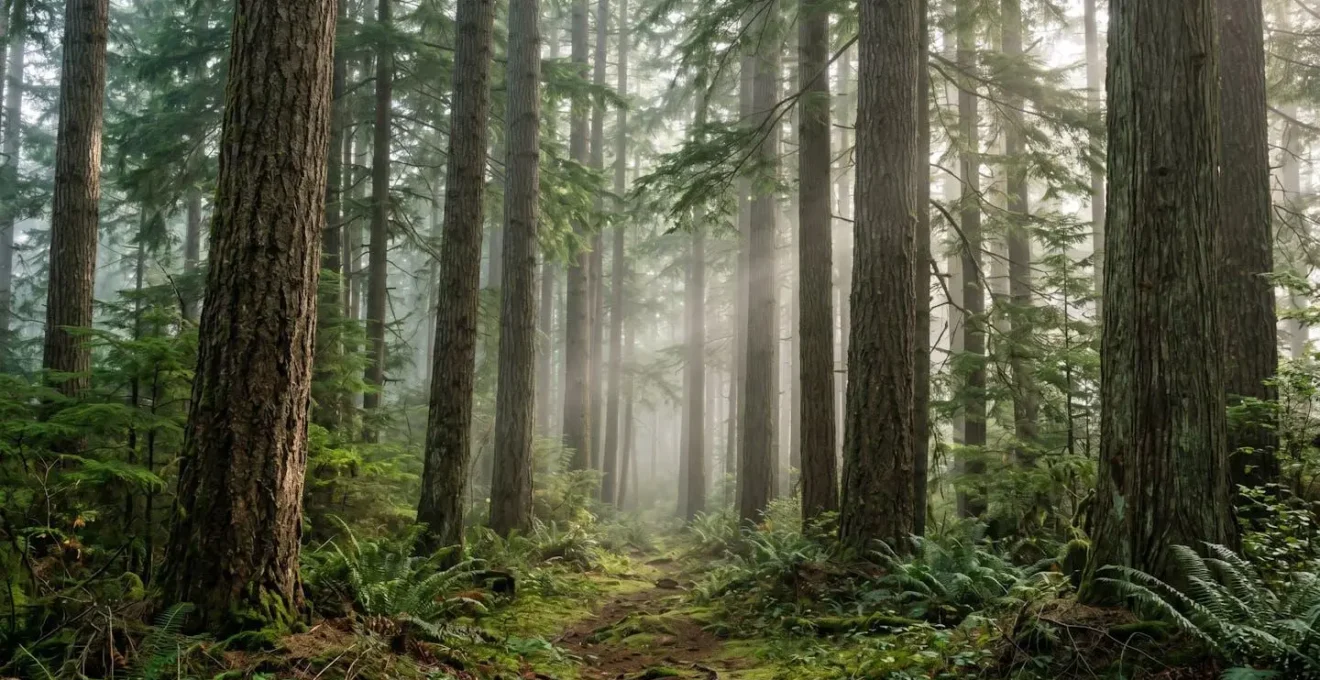
By simply being in a forest environment, you are engaging in a passive form of aromatherapy that directly combats stress at a chemical level. This isn’t a placebo effect; it’s your body responding to the natural medicine of the forest. The reduction in cortisol creates a state of calm and safety, making it easier to break free from the cycle of anxious self-evaluation and connect with a more peaceful inner state.
Key takeaways
- Real-world exposure to diverse bodies in a non-judgmental setting is the most powerful antidote to the curated, unrealistic ideals of social media.
- Social naturism fosters body neutrality by removing clothing as a marker of status or sexual intent, allowing for genuine human connection.
- Forest bathing is a science-backed practice where inhaling natural compounds (phytoncides) from trees measurably lowers the stress hormone cortisol.
Shinrin-Yoku: How to Practice Forest Bathing for Proven Stress Reduction?
Shinrin-Yoku, or « forest bathing, » is the Japanese practice of mindfully immersing oneself in the atmosphere of the forest. It is not about hiking or exercise; it is a slow, meditative practice designed to engage all five senses and maximize the therapeutic benefits of being among trees. The goal is to consciously connect with the natural world, and in doing so, to calm your nervous system and reduce stress. The practice is simple, accessible, and its benefits are scientifically proven.
A landmark 2010 study published in *Environmental Health and Preventive Medicine* demonstrated that forest bathing participants experienced significantly lower cortisol levels, reduced blood pressure, and a decreased heart rate compared to participants in an urban environment. This confirms that the practice is a potent antidote to the chronic stress that so often underlies body dissatisfaction. To practice Shinrin-Yoku, you simply need to slow down and pay attention. It’s about noticing the details you would normally rush past.
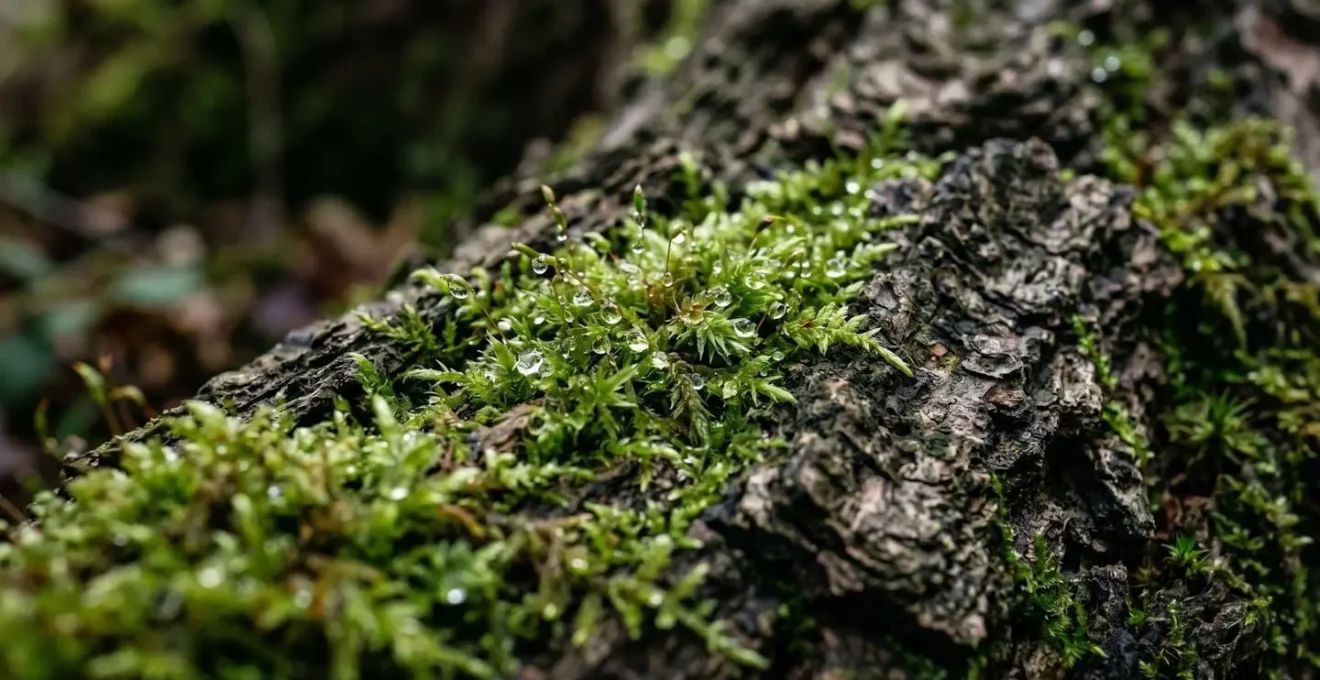
The practice invites you to look closely, as in the image above. Observe the intricate patterns of moss on a tree trunk. Feel the texture of the bark. Listen to the sound of the wind in the leaves. Smell the damp earth. By focusing your attention outward on the sensory details of the forest, you quiet the internal chatter of your mind, including the critical voice that judges your body. It is a powerful form of mindfulness, grounded in the real, tangible world.
Your Action Plan for an Effective Forest Bathing Session
- Find your place: Choose a quiet forest, park, or trail where you won’t be rushed. The location itself is your primary therapeutic tool.
- Disconnect and observe: Turn off your phone. Spend the first few minutes simply standing still, listing five things you can see, four sounds you can hear, and three things you can feel (like the breeze on your skin).
- Deepen the senses: Walk slowly and without a destination. Stop to touch the texture of a leaf or tree bark. Close your eyes and focus on your breathing, smelling the air deeply.
- Practice mindful reflection: Find a comfortable place to sit for 10-15 minutes. Notice your internal state without judgment. How does your body feel? What has shifted in your mind?
- Plan for consistency: The benefits are cumulative. Before you leave, decide when you will return. Scheduling your next session makes it a committed practice, not a one-time event.
By integrating this simple practice into your life, you are not just taking a walk; you are administering a dose of natural medicine. You are actively lowering your stress levels, calming your nervous system, and creating the ideal internal conditions for a more peaceful and accepting relationship with your body.
Your journey to body acceptance doesn’t have to be a battle fought in front of a mirror. By stepping into nature and embracing these practices, you can change your environment, your brain chemistry, and ultimately, your relationship with yourself. Take the first step today: find a trail, plan a camping trip, and give yourself permission to heal in the most natural way possible.