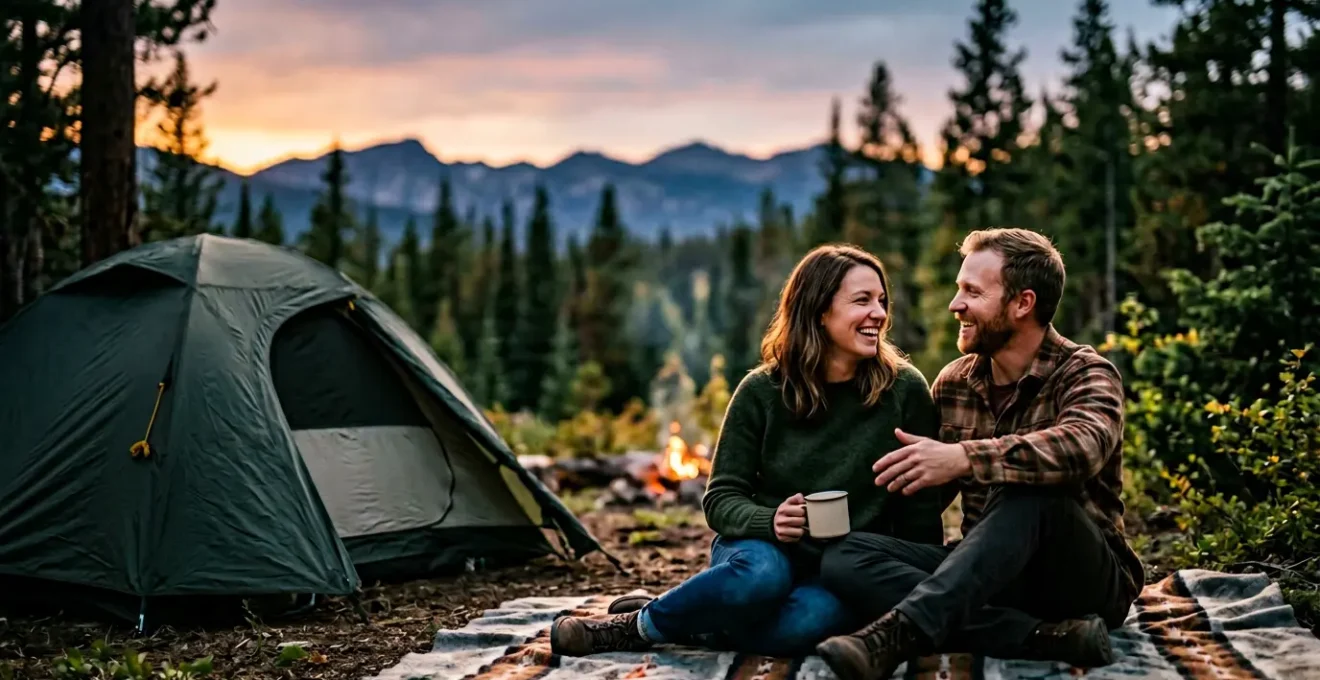
The dream of a romantic camping trip often ends in arguments because couples focus on the destination, not the psychological dynamics of the journey.
- Success isn’t accidental; it requires intentionally designing the experience to minimize friction and manage energy.
- Common pitfalls like itinerary overload and decision fatigue actively sabotage intimacy before it has a chance to flourish.
Recommendation: Shift your focus from planning activities to structuring the trip itself—from limiting drive time to implementing the 60/40 rule for downtime—to create an environment where connection can happen naturally.
You’ve seen the picture: a happy couple, wrapped in a blanket, sipping coffee as the sun rises over a misty lake. It’s the dream of a romantic camping trip—a perfect escape to disconnect from the daily grind and reconnect with each other. Yet, for many, the reality involves tense arguments over map directions, silent frustration while setting up the tent, and a feeling of being more distant than ever by day three. The problem isn’t the camping; it’s the lack of a blueprint for intimacy in an unstructured environment.
Conventional advice often misses the point. You can pack the fanciest meal or find the most breathtaking viewpoint, but if your shared « decision-making battery » is drained, you won’t enjoy it. The usual tips treat the symptoms, not the cause. They suggest you should « work together » without explaining how the very act of shared, low-stakes problem-solving in the wild can create positive behavioral patterns, or « procedural memories, » that you bring back home.
But what if the key to rekindling intimacy wasn’t in the grand romantic gestures, but in the subtle, intentional structure of the trip itself? What if you could engineer an experience that actively reduces friction and creates genuine, unforced space for connection? This is not about a more luxurious tent or a better cooler. It’s about understanding the psychology of a shared journey and using the outdoor environment as a tool to consciously rewire your dynamic as a couple.
This guide moves beyond generic tips to provide a strategic framework. We will explore the science behind why shared tasks build resilience, how to manage your energy to preserve it for connection, and why the logistical choices you make before you even leave the house are the most critical for setting your trip up for success.
Summary: A Strategic Guide to a Camping Trip That Builds Your Bond
- Why Shared Outdoor Tasks Reduce Relationship Friction Back Home
- How to Set Up a Private Outdoor Dining Experience Without Bugs
- The Itinerary Overload That Leads to Arguments on Day 3
- Isolated Pitch vs Resort Amenities: What Do Couples Really Need?
- When to Schedule Downtime: The 60/40 Rule for Couples
- How to Upgrade a Standard Glamping Package for a Romantic Proposal
- The « 2-2-2 Rule »: Why Limiting Driving to 200 Miles Saves Your Mood
- Finding True Silence: Why Adults-Only Campsites Are Worth the 30% Premium?
Why Shared Outdoor Tasks Reduce Relationship Friction Back Home
The common advice to « work together » when camping often feels cliché, but there’s a deep psychological mechanism at play that most people overlook. When you and your partner successfully navigate a novel challenge, like pitching a tent in the wind or starting a fire in damp conditions, you aren’t just getting a task done. You are co-creating a positive procedural memory. This is a shared mental blueprint for successful collaboration under pressure. Unlike talking about problems, this is a lived experience of overcoming an obstacle together, which builds a powerful sense of « we-ness. »
This isn’t just a feeling; it’s a transferable skill. Research published in the journal Tourism Analysis found that camping provides a unique context to maintain and evolve relationships. The study highlights that engaging in these collaborative activities creates a foundation for managing friction in everyday life. When a stressful situation arises back home—a leaking faucet, a difficult decision about finances—your brains can subconsciously access that memory of « we figured out the tent, we can figure this out too. » It replaces a pattern of blame with a pattern of partnership.
Think of it as a low-stakes training ground for your relationship. The small, manageable problems of the campsite—purifying water, cooking a meal on a single burner—force you to communicate, negotiate roles, and celebrate small victories. These successes build a reservoir of goodwill and a proven track record of your combined competence. It fundamentally shifts the dynamic from two individuals facing problems to a unified team capable of finding solutions. That shift is the real, lasting souvenir you bring home.
How to Set Up a Private Outdoor Dining Experience Without Bugs
One of the most potent opportunities for romance while camping is a shared meal under the stars. However, nothing shatters the mood faster than a swarm of mosquitoes. A truly intimate outdoor dining experience requires a proactive, layered defense system, not just a last-minute spray of DEET. The goal is to create a comfortable bubble where you can focus on each other, not on swatting insects. It’s about using nature’s own properties to your advantage to create an ambiance that is both beautiful and functional.
Forget harsh chemical smells. Your strategy should engage the senses positively. Aromatic woods in the fire, simmering herbs, and thoughtful timing are your greatest allies. This approach transforms bug prevention from a chore into a ritual that enhances the romantic atmosphere. Below is a step-by-step process for creating your pest-free sanctuary.
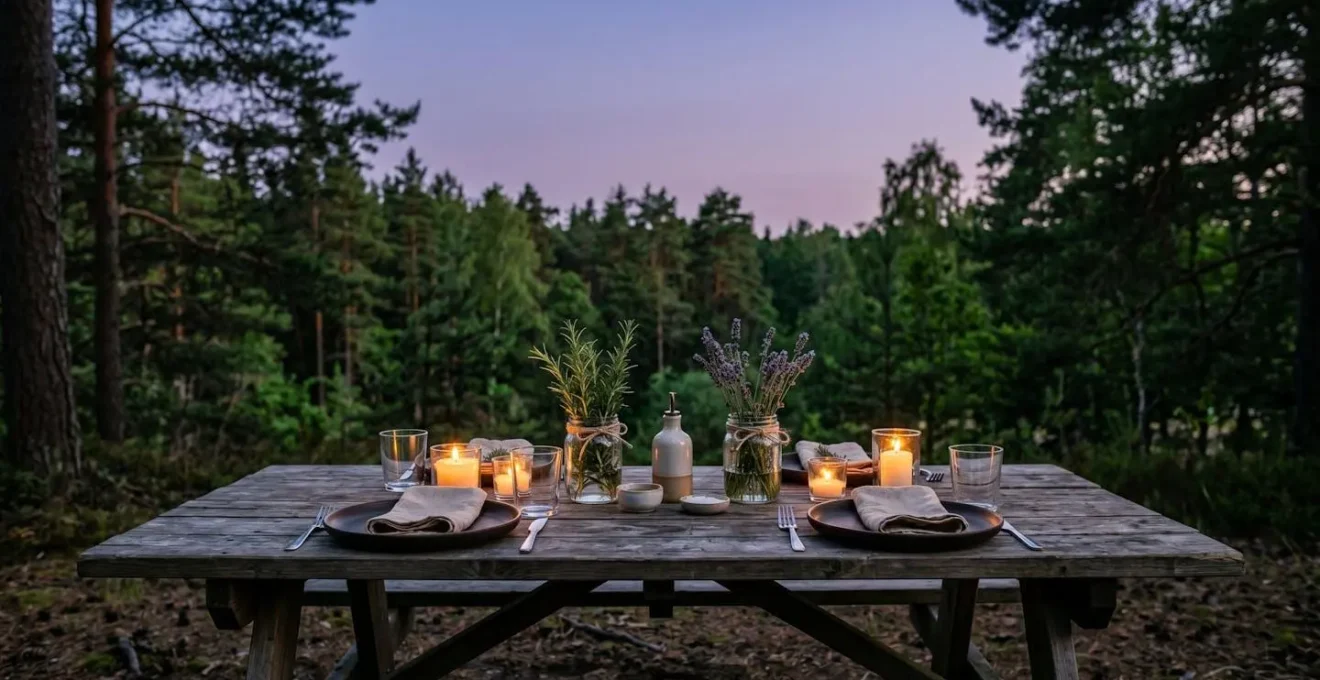
As you can see, the right setup feels intentional and immersive. It uses natural elements to build a sense of seclusion and comfort. This isn’t just about keeping bugs away; it’s about crafting a memorable, multi-sensory moment. Here is how to achieve it:
- Create a Skin Barrier: Start with personal protection. Apply a picaridin-based lotion to your skin. It offers protection similar to DEET but is often non-greasy and has a much milder scent, so it won’t interfere with the aroma of your food or the natural surroundings.
- Use an Aromatic Fire: About 30 minutes before you plan to eat, add cedar or piñon wood to your campfire. These woods release aromatic oils as they burn that are natural insect repellents and create a wonderfully rustic ambiance.
- Simmer a Scent Pot: Near your dining table, gently simmer a small pot of water with sprigs of rosemary, lavender, and a few lemon slices. This creates a beautifully fragrant cloud that masks human scents and actively deters many flying insects.
- Time Your Dinner Wisely: Most mosquitoes have a peak activity period right at sunset. Plan your meal for about 30-45 minutes after the sun has fully set. This allows the main wave to pass, leaving you to dine in greater peace.
- Establish a Perimeter: For maximum protection, use a permethrin-treated screen tent if you have one. Alternatively, place a few citronella candles in a wide circle around your dining space to create a final defensive perimeter.
The Itinerary Overload That Leads to Arguments on Day 3
Day three is often when the cracks begin to show on a couple’s trip. The initial excitement has worn off, and the accumulated stress of small decisions and constant activity culminates in arguments over seemingly trivial things. This isn’t a sign that you’re incompatible; it’s a classic case of itinerary overload. We often feel a pressure to maximize every moment of a vacation, packing it with hikes, activities, and sightseeing. This backfires by depleting our finite « decision-making battery. » Every choice, from which trail to take to what to eat for lunch, drains this mental resource, leaving us irritable and with low impulse control.
The pressure is compounded by our own high expectations. We invest time and money into a trip, creating an implicit demand for it to be « perfect. » As the experts at Couples Therapy Inc. astutely observe, this sets a dangerous trap. They note:
Slight setbacks feel crushing when the expectation is that everything should go perfectly. Vacations often come with elevated expectations and pressure to have an ideal time.
– Couples Therapy Inc., Why Do Couples Fight on Vacation? Research Article
When you’re already running on a low decision-making battery, a « crushing » setback could be as minor as realizing you forgot the coffee filters. Furthermore, research confirms that the planning phase itself can be a major source of stress. A 2012 exploratory study revealed that for many, trip planning was rated as the most stressful aspect of a vacation. If you arrive at the campsite already stressed from over-planning, you’re starting with a half-empty battery. The solution is counter-intuitive: do less to enjoy more. Build empty space into your itinerary and consciously protect your shared mental energy.
Isolated Pitch vs Resort Amenities: What Do Couples Really Need?
One of the most fundamental decisions you’ll make is choosing between a secluded, primitive campsite and a campground with resort-style amenities. There’s no single right answer; the best choice depends entirely on your relationship’s current stage and your goal for the trip. Making the wrong choice can introduce unnecessary stress, while the right one can create the perfect container for connection. An isolated site offers unparalleled privacy, but it demands a high degree of self-reliance and confidence in your partnership. A resort-style campground lowers the logistical stress, but introduces the potential for noise and distractions.
To make an informed decision, you need to have an honest conversation with your partner. Are you seeking a challenge to overcome together, which can be incredibly bonding? Or do you need a comfortable, low-stress environment where the basics are handled, freeing up your mental energy to focus on each other? A recent comparative analysis helps break down the trade-offs, providing a clear framework for this conversation.
| Factor | Isolated Primitive Site | Resort/Amenity Campground |
|---|---|---|
| Privacy Level | Maximum acoustic and visual privacy for vulnerable conversation | Moderate privacy with nearby campers |
| Security Comfort | Requires high internal security and confidence in relationship | External security (staff, lights, other people nearby) |
| Logistics Stress | Higher self-reliance needed (water, facilities) | Lower stress with amenities (showers, potable water, store) |
| Best For | Established couples ready for deep connection without distractions | New camping couples or those needing comfortable transition |
| Connection Potential | Uninterrupted intimacy and stargazing opportunities | Comfortable base for relationship-building activities |
Ultimately, the question isn’t « what is more romantic? » but « what does our relationship need right now? » For a couple new to camping or feeling fragile, the security and convenience of a resort can remove barriers to connection. For a seasoned couple looking to deepen their bond away from all worldly distractions, the silence and shared responsibility of an isolated site might be the perfect catalyst. Choose the environment that serves your relationship’s goal for this specific trip.
When to Schedule Downtime: The 60/40 Rule for Couples
The most overlooked element of a romantic trip is empty space. In our quest for a « productive » vacation, we forget that intimacy doesn’t flourish on a schedule; it emerges in the quiet moments in between activities. The key to creating these moments is to actively manage your collective energy using the 60/40 rule. This framework suggests dedicating no more than 60% of your waking hours to « active » pursuits (hiking, cooking, exploring) and reserving at least 40% for « passive » connection.
Passive connection is a vital but misunderstood concept. It doesn’t mean you have to be locked in deep conversation for hours. It can be « alone-together » time, like reading in separate chairs by the fire or quietly watching a sunset. This state allows you to recharge as individuals while still sharing a space, which is especially crucial for introverted partners. It removes the pressure to constantly perform or entertain, allowing a more natural and comfortable intimacy to surface.
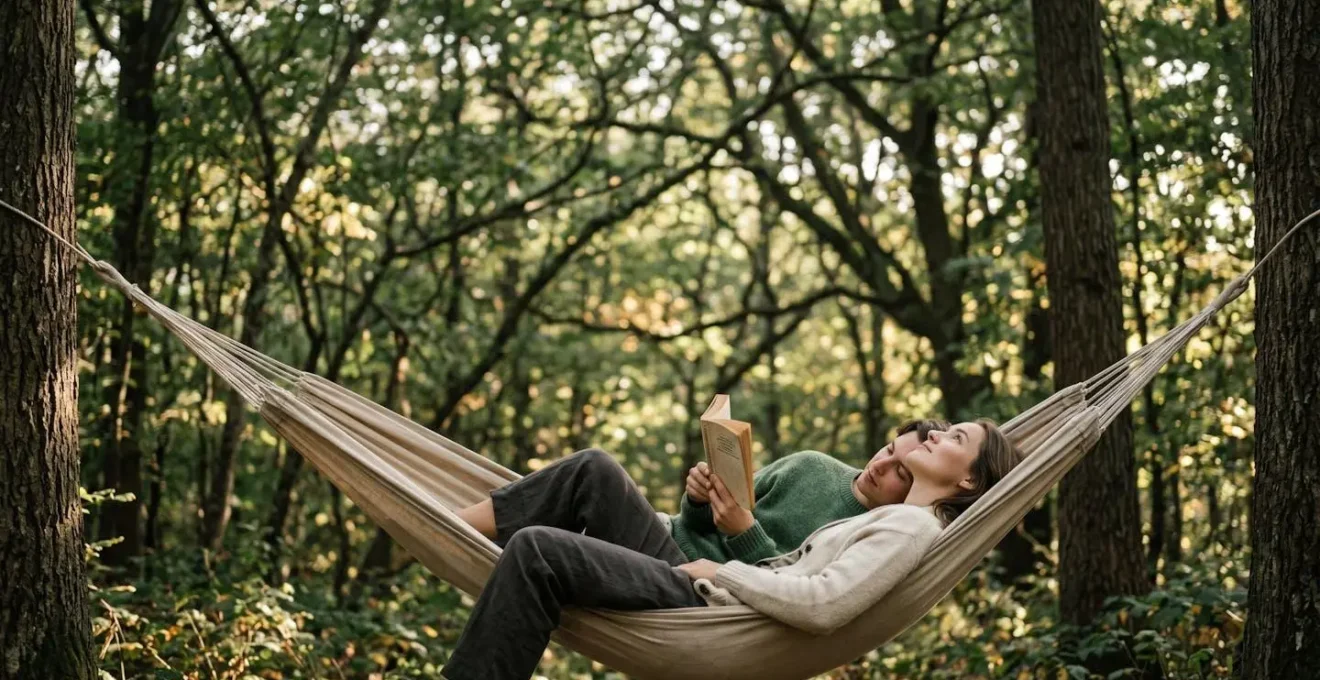
This image perfectly captures the essence of passive connection—a state of relaxed, shared presence without the need for words. It’s in these moments of quiet contentment that the stress of daily life truly melts away, making space for affection and vulnerability. To ensure you build this into your trip, you need a clear, actionable plan.
Your Action Plan: The 60/40 Energy Management Framework
- Allocate Your Time: Before the trip, agree to allocate a maximum of 60% of waking hours to active pursuits like hiking, cooking, or setting up camp. This consciously preserves your energy for intimacy.
- Reserve Your Connection: Commit a minimum of 40% of your time to passive connection. This includes both « alone-together » downtime (like reading) and interactive downtime (like conversation games or stargazing).
- Bookend Your Days: Implement a mandatory rule: the first 30 minutes after waking and the last hour before sleep are device-free connection zones. This protects the most vulnerable parts of the day from outside distraction.
- Audit Your Morning Ritual: A morning bookend could be as simple as having coffee in silence while watching the sunrise, allowing conversation to emerge organically rather than being forced by a schedule.
- Check Your Evening Wind-Down: An evening bookend could involve a « Highs, Lows, Hopes » conversation by the fire’s embers, ensuring your last priority of the day is connecting with each other.
How to Upgrade a Standard Glamping Package for a Romantic Proposal
A glamping trip is already a romantic gesture, but for a milestone moment like a proposal, you can elevate a standard package into an unforgettable, multi-sensory experience. The secret is to move beyond the visual and engage all the senses to create powerful, lasting « sensory anchors. » This involves pre-arranging specific details with the glamping site to make the moment feel both surprising and deeply personal. It’s about hijacking a standard package and infusing it with your unique relationship story.
Instead of relying solely on the beauty of the location, you will be curating an environment that triggers nostalgia, comfort, and love. This requires a bit of covert coordination with the site staff, but the payoff is a proposal that feels deeply considered and emotionally resonant. The goal is to create a moment where every detail, from the music in the air to the scent of the room, says « I know you. »
Here are some specific strategies to transform a glamping tent into a personal sanctuary for your proposal:
- Auditory Anchoring: Pre-arrange with the glamping site to have a specific meaningful song—perhaps from your first date or a favorite shared memory—playing softly on a portable speaker as you arrive. This immediately engages auditory memory and sets an emotional tone.
- Olfactory Anchoring: Bring a custom scent diffuser (or ask the site to set one up) with a fragrance that you want to become « your scent. » The sense of smell is powerfully linked to memory, and this will create a lasting olfactory anchor for this moment.
- Taste Memory Reinforcement: Coordinate with the staff to have the exact champagne or wine from your first date chilled and waiting. Replicating a specific taste can transport you both back to the beginning of your story.
- The « Decoy Itinerary »: Create a plausible, standard itinerary for the day (e.g., « 5 pm: guided nature walk »). The real plan involves « unexpectedly » discovering a pre-staged proposal spot during that walk, making the moment a true surprise.
- A Lasting Symbol: Ask if the glamping package can be upgraded to include planting a native tree on the property, marked with a discreet commemorative plaque. This creates a permanent, living symbol of your commitment that you can revisit for future anniversaries.
- Visual Ambiance: Work with the site to have extra LED string lights hung from nearby trees or inside the tent, timed to turn on at the proposal moment, creating a magical and intimate visual spectacle.
The « 2-2-2 Rule »: Why Limiting Driving to 200 Miles Saves Your Mood
The romantic trip you’ve planned can be sabotaged before you even arrive at the campsite. The culprit is often a long, grueling drive that leaves both partners exhausted, hungry, and irritable. This is why many experienced traveling couples swear by a variation of the « 2-2-2 Rule »—limiting travel to roughly 2 hours or 200 miles at a time. While it might seem restrictive, this principle is a powerful tool for preserving the positive energy your trip needs to thrive.
Driving isn’t a passive activity. It requires constant focus, micro-decisions, and navigation, all of which drain your mental resources. As one analysis on vacation stress in Psychology Today explains:
Driving is not passive; it consumes significant mental resources. Arriving at a campsite with a depleted decision-making battery is a recipe for arguments over simple tasks.
– Vacation Stress Research, Psychology Today – Vacation Stress Analysis
Arriving with a « depleted battery » means you have no patience for the inevitable small challenges of setting up camp. Finding the right spot, leveling the tent, and starting dinner become sources of major conflict instead of shared activities. Limiting the drive ensures you arrive with your mental and emotional reserves intact, ready to be a partner, not an adversary. This principle directly impacts your ability to connect; research from the Journal of Marriage and Family suggests that relationship satisfaction can improve by up to 20% with quality, uninterrupted time together—time that is impossible to have when you’re drained and stressed from a long haul.
Choosing a campsite closer to home isn’t a compromise; it’s a strategic investment in the quality of your time together. You’re trading a few extra hours of « away » for a higher likelihood of actual connection. The goal isn’t to get as far away as possible, but to arrive in a state where you can be present with your partner.
Key Takeaways
- A camping trip is a powerful tool for connection, but it’s the intentional design—not the location—that guarantees success.
- Structure creates freedom. Rules like the 60/40 downtime ratio aren’t restrictive; they are essential for preserving the energy required for intimacy.
- View small outdoor challenges not as obstacles, but as opportunities to build shared « procedural memories » of successful collaboration that you can bring back to your daily life.
Finding True Silence: Why Adults-Only Campsites Are Worth the 30% Premium
In the search for connection, one of the scarcest resources is silence. Not just the absence of noise, but the absence of external demands. This is why, for a couple seeking to truly rekindle intimacy, an adults-only campsite can be worth every cent of its typical 30% price premium. The value isn’t in luxury; it’s in what is strategically removed: the sounds of other people’s children, the visual distractions of family activities, and most importantly, the psychological weight of your own parental role if you have kids.
For couples with children, a standard « family » campground never allows you to fully step out of your roles as « Mom » or « Dad. » Your senses are always on alert for a child’s cry or a potential hazard. An adults-only environment provides a rare and essential opportunity to be just partners again. It removes the layer of constant, low-level vigilance that parenthood demands, freeing up a significant amount of mental and emotional bandwidth. This newfound energy can then be reinvested into your own connection.
Moreover, the atmosphere is fundamentally different. The ambient soundscape is one of nature and quiet conversation, not shrieks and games. This acoustic privacy creates a safe container for vulnerable conversations that might feel impossible to have at a bustling family resort. You can speak freely without worrying about little ears or being interrupted. You are paying a premium for an environment specifically curated for adult interaction and relaxation. It’s an investment not in a campsite, but in the quality of the psychological space you will share.
For couples without children, the benefit is a guaranteed escape from the high-energy chaos that family campsites can sometimes entail, ensuring your quiet, romantic weekend isn’t disrupted. In either case, paying the premium is a conscious decision to prioritize the couple dynamic above all else. It’s an explicit statement that for this trip, your connection is the single most important agenda item.
A truly romantic camping trip is a microcosm of a healthy relationship. It requires planning, communication, shared effort, and the wisdom to know when to simply be still together. The goal isn’t just to have a great weekend away, but to return home with a renewed sense of partnership, a toolkit of collaborative memories, and a deeper understanding of what you both need to thrive. The silence of nature has a way of helping you hear each other again. Start planning your intentional escape today and rediscover the partner you fell in love with.