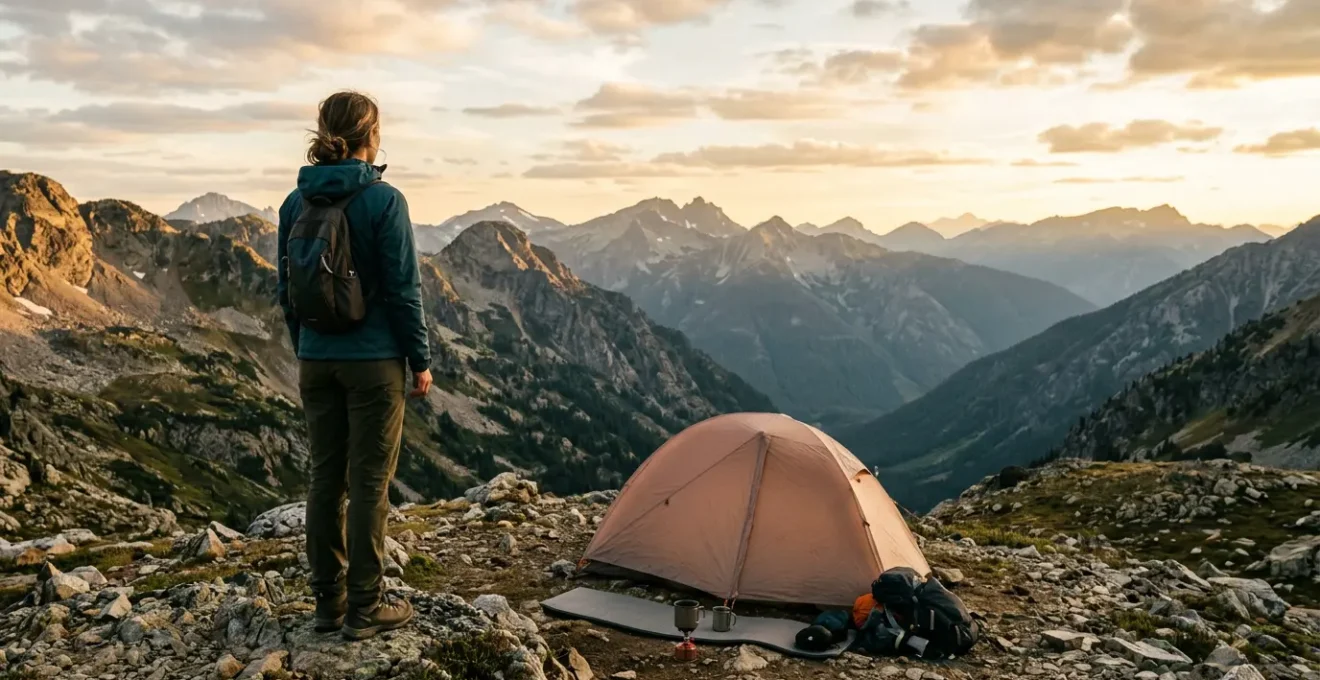
True safety for a solo female camper isn’t found in a can of pepper spray, but in a carefully built system of competence that shifts control back to you.
- Proactive site selection using professional security principles is far more effective than reactive defense.
- Mastery of core skills like navigation and advanced first aid replaces fear with genuine confidence and self-reliance.
Recommendation: Begin with a ‘graduated exposure’ plan, moving from managed campgrounds to wild camping only as your skills and confidence grow.
The idea of camping alone as a woman often conjures a familiar, unhelpful narrative. It’s a story laced with caution, focused on external threats and what could go wrong. Well-meaning advice floods in: carry a weapon, get a big dog, don’t look like you’re alone. While rooted in a desire to protect, this advice frames the wilderness as a place of fear and you as a potential victim. It misses the entire point of the experience: empowerment, solitude, and self-discovery.
This guide deliberately rejects that fear-based narrative. We won’t be talking about which self-defense tool is best. Instead, we’re shifting the conversation from reactive defense to a proactive system of safety built on one thing: competence. Real, lasting security in the wild doesn’t come from a checklist of gear, but from a stack of skills. It’s about understanding your environment, mastering your tools, and making informed decisions from a place of knowledge, not anxiety.
The true key to solo camping safety is transforming your mindset from « How do I defend myself? » to « How do I create a situation where I don’t have to? » This is about building situational control and a deep-seated self-reliance that no piece of equipment can replace. We will explore how to choose a campsite that naturally deters visitors, why knowing how to use a map is more powerful than just owning a GPS, and how to manage the internal challenges, like loneliness, that are often the biggest hurdles. This is your journey to becoming not just a visitor in the wilderness, but a capable and confident resident.
This article is structured to build your competence layer by layer, from the psychological benefits of solo travel to the hard skills that create true anti-fragility. Follow along to build your own proactive safety system.
Summary: A Competence-Based Approach to Solo Female Camping
- Why solo camping accelerates decision-making skills?
- How to share your location without draining your battery?
- The campsite selection error that invites unwanted visitors
- Managed campsite vs wild camping: Where should a solo beginner start?
- How to deal with loneliness during the first night alone?
- Why 90% of commercial kits lack adequate bleeding control tools?
- Paper map vs Satellite beacon: Which is the ultimate safety net?
- Navigating Unmarked Trails: How to Avoid Getting Lost without GPS?
Why solo camping accelerates decision-making skills?
The first and most profound benefit of solo camping isn’t about survival; it’s about cognitive growth. In our daily lives, we’re overwhelmed by micro-choices that lead to decision fatigue. Camping, by its nature, strips these away, allowing the decision-making parts of our brain to rest and recharge. According to research on camping and cognitive recovery, this reduction in choice overload is crucial for mental resilience. It creates a space for a different, more potent kind of thinking to emerge.
When you’re alone in the wilderness, you become the sole operator of your life. Every decision, from where to pitch your tent to when to turn back on a trail, rests entirely on your shoulders. There is no one to defer to, no one to second-guess your judgment. This forces a level of accountability and presence that is rare in modern life. You must assess changing weather, manage your resources, and solve problems as they arise. This isn’t stressful; it’s empowering. You are not just following a plan; you are actively creating it in real-time.
This constant loop of assessment, choice, and consequence is a powerful accelerator for building decision-making confidence. You learn to trust your own intuition and analysis because you see the direct results of your choices. As the OutdoorsmanToolkit analysis on the subject notes, « Solo camping forces you to make decisions and solve problems without relying on others. » This process builds a robust self-reliance that extends far beyond the trail, strengthening your ability to lead and make confident choices in all areas of your life.
How to share your location without draining your battery?
Telling someone your plan is a cornerstone of outdoor safety, but in the digital age, this often translates to live location sharing. While reassuring for loved ones, this practice can be a critical liability for a solo camper’s most precious resource: their phone battery. The constant pinging of GPS is a notorious power drain, and the problem gets exponentially worse in the backcountry. In fact, comprehensive tests on location sharing battery consumption reveal that GPS use can shorten battery time by as much as 38% in areas with weak signals—exactly the kind of environment you’ll be in.
Relying on constant tracking creates a false sense of security while actively depleting your primary communication and navigation tool. The competent approach is not to track constantly, but to establish a smart, battery-conscious communication protocol. This means switching from a passive safety model (someone else watching you) to an active check-in system that you control. This preserves battery for when you truly need it: in an emergency or for a scheduled update.
To do this effectively, you need a pre-trip strategy. A far more sustainable method involves using airplane mode as your default setting and only deactivating it briefly at pre-arranged times (e.g., 8 AM and 8 PM) to send an « I’m OK » message with your coordinates. This method is part of a larger power-budgeting strategy for your electronics.
Here are some key tactics to implement:
- Use airplane mode with brief, scheduled deactivations for location updates instead of constant tracking.
- Switch from high-accuracy GPS mode to battery-saving mode in your phone’s location settings when precision isn’t critical.
- Limit background app refresh for all non-essential apps before you leave cell service.
- Always carry a small, fully charged power bank and establish a daily power budget for essential check-ins only.
The campsite selection error that invites unwanted visitors
When choosing a place to sleep for the night, a common instinct for a solo camper is to find the most hidden, secluded spot possible. The logic seems sound: if no one can see me, no one can bother me. This is, however, the single most dangerous error you can make. It violates a core principle of security design used by architects and police worldwide: Crime Prevention Through Environmental Design (CPTED). One of its key pillars is « Natural Surveillance, » which is the exact opposite of hiding.
The biggest error is choosing a spot that is too concealed, violating the principle of Natural Surveillance. Natural surveillance involves placing features and people in spaces to maximize visibility.
– CPTED Security Principles, Crime Prevention Through Environmental design
A completely hidden tent doesn’t prevent discovery; it simply ensures that if someone with bad intentions *does* stumble upon you, there are no other eyes or ears around to witness or deter their behavior. It creates a zone of privacy for a potential perpetrator. The goal is not to be invisible, but to be strategically visible. You want to select a site that gives you clear sightlines of approaching paths (prospect) while still providing a backdrop that protects you from being seen from behind (refuge). Think like a strategist, not a hider.
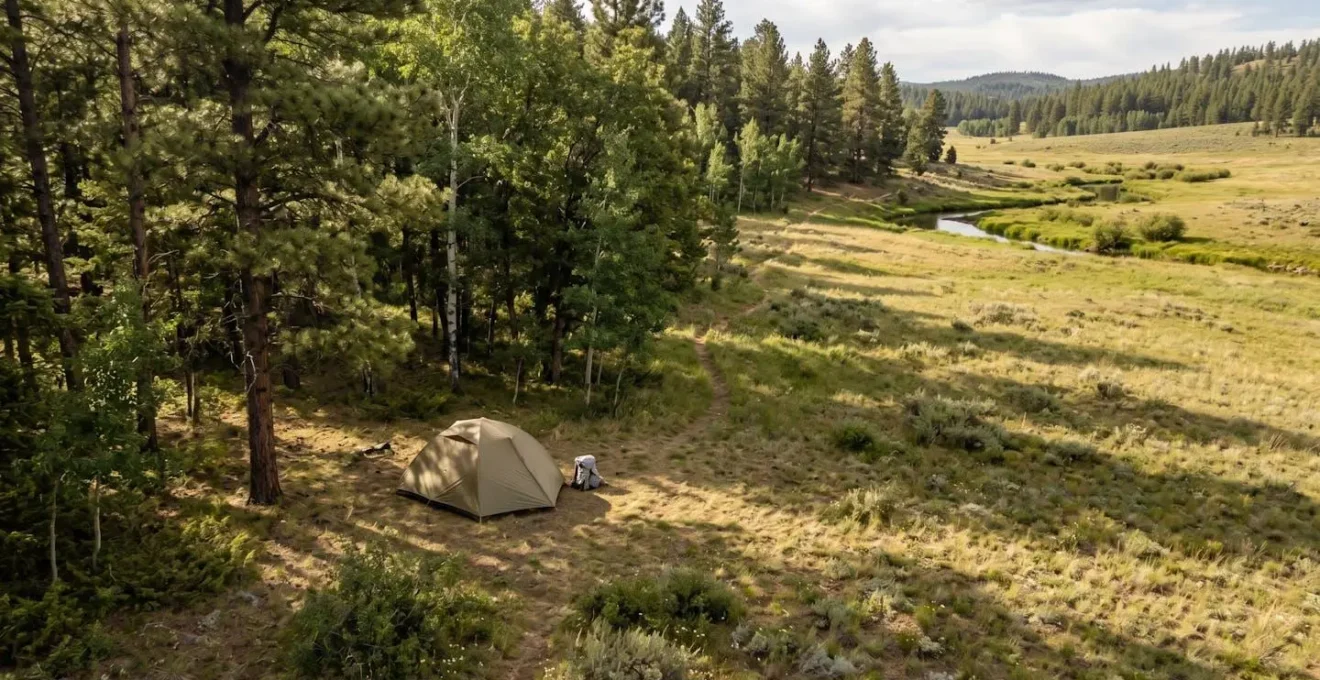
As the image demonstrates, an ideal campsite might be positioned just inside a treeline, overlooking an open meadow or a section of the trail. From this vantage point, you can see anyone coming from a long way off, giving you ample time to react. Simultaneously, you are visible enough that anyone approaching knows they can also be seen, which is a powerful psychological deterrent. Avoid camping directly on trails, in tight valleys, or in dense undergrowth where your situational awareness is compromised. Your campsite choice is your first and most powerful act of proactive safety.
Managed campsite vs wild camping: Where should a solo beginner start?
The romantic image of solo camping is often one of wild, untamed nature. But for a beginner, jumping straight into deep wilderness is a recipe for anxiety and potential failure. Empowerment comes from success, and success is built incrementally. The most effective and sustainable way to become a confident solo wild camper is through a process of « Graduated Exposure, » starting in environments with high safety nets and progressively moving to more autonomous settings as your skills and confidence grow.
This approach isn’t about admitting weakness; it’s about being strategic. A managed campground is not a « lesser » form of camping; it’s a training ground. It’s where you can fumble with your new tent in the rain without the added stress of being miles from help. It’s where you learn your cooking system, your sleep setup, and your personal rhythms in a controlled environment. This is the foundation of your competence stack. Once you’ve mastered your gear and basic routines, you can move to the next stage.
This journey from a state park to true backcountry self-reliance is a well-documented path. A notable case study involved a solo female camper who methodically visited 62 Minnesota state parks in one year. She described these initial trips in managed campgrounds as crucial for building the foundational confidence and equipment familiarity needed before she even considered more remote, wild camping locations. This progression is not just about physical skills; it’s about psychological conditioning.
The following framework, based on a model from analysis of solo camping progression, provides a clear path to building competence and confidence.
| Stage | Environment Type | Key Skills to Master | Psychological Focus | Duration Recommendation |
|---|---|---|---|---|
| Stage 1 | Managed Campground | Gear setup, cooking systems, basic camp routine | Building confidence with equipment in safe environment | 1-2 nights, close to home |
| Stage 2 | Semi-Primitive Site | Water filtration, fire building, weather assessment | Practicing independence with safety net nearby | 1-2 nights, moderate distance |
| Stage 3 | Wild Camping (Familiar Area) | Navigation, site selection, self-reliance protocols | Experiencing true solitude while managing anxiety | 1 night initially, familiar terrain |
How to deal with loneliness during the first night alone?
For many aspiring solo campers, the biggest fear isn’t bears or strangers—it’s the profound silence of the first night alone. Every snap of a twig can feel amplified, and the darkness can seem overwhelming. This feeling is often labeled as loneliness, but it’s essential to reframe it. As wilderness psychology research points out, there’s a critical difference: « Loneliness is a feeling of isolation and disconnection… in contrast, solitude is a state of being alone without feeling lonely. It is a peaceful and reflective experience. » Your goal is to transform the former into the latter.
This transformation from loneliness to solitude doesn’t happen by accident. It’s an active process of engaging your mind and senses to ground yourself in the present moment, rather than letting your thoughts spiral into anxiety. An idle mind in a new, dark environment will invent its own threats. The key is to give it a job to do. Establishing a clear, methodical evening routine is your most powerful tool. Tasks like setting up your tent, filtering water for the morning, preparing your meal, and organizing your pack create purpose and structure, leaving less room for fear to creep in.
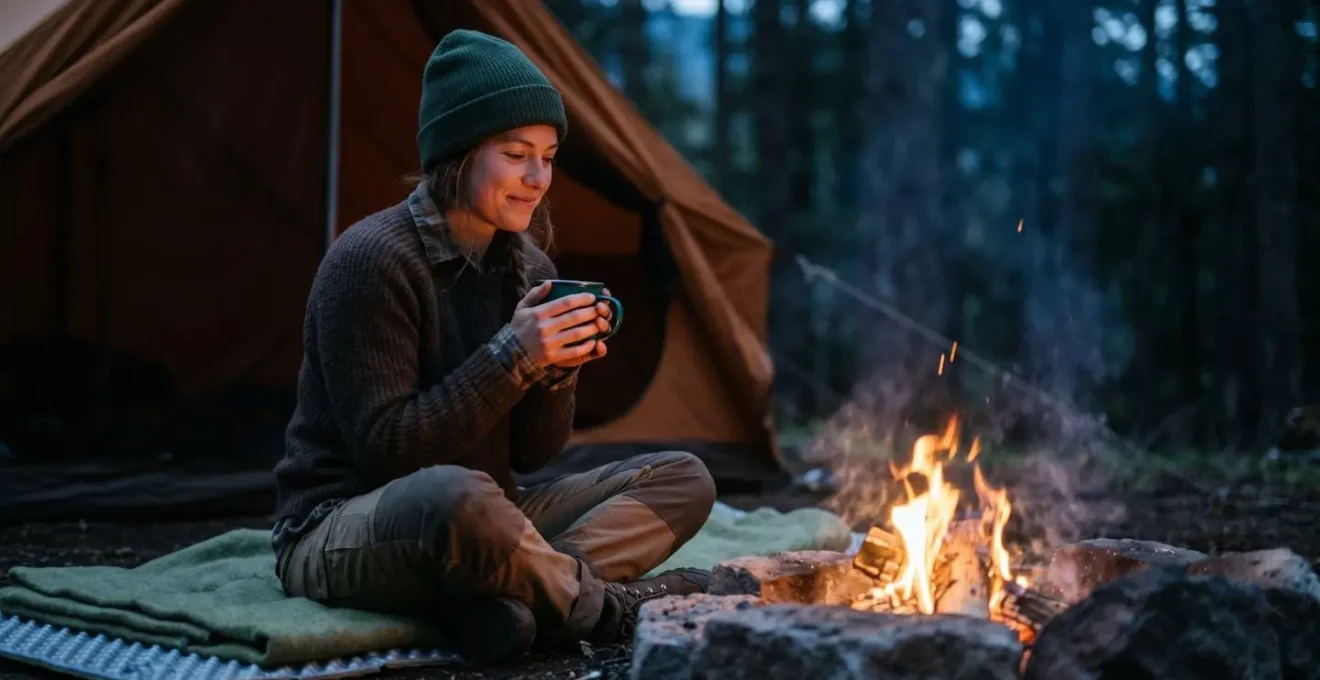
Beyond tasks, you can practice active mindfulness through sensory engagement. Instead of passively listening for danger, actively listen for the details of your environment. This grounds you in reality and demonstrates that you are in control of your focus. A powerful technique, based on principles outlined in studies on nature and well-being, is to systematically engage each sense. This turns a potentially anxious experience into a rich, mindful one, building a positive association with being alone in nature.
- Identify and mentally note three distinct sounds (wind, water, an insect’s hum).
- Locate and focus on three different natural scents (pine, damp earth, campfire smoke).
- Touch and observe three different textures (rough bark, a smooth stone, the fabric of your tent).
- Practice ‘active mindfulness’ by narrating your observations aloud to quiet anxious internal chatter.
Why 90% of commercial kits lack adequate bleeding control tools?
A standard, off-the-shelf first-aid kit can create a dangerous illusion of preparedness. Most are designed for minor scrapes, blisters, and headaches—the common discomforts of daily life, not the life-threatening emergencies that can occur in the remote wilderness. The single most critical deficiency in over 90% of these commercial kits is the complete absence of tools for controlling catastrophic bleeding. A deep laceration from an axe slip or a fall on a sharp rock can become fatal in minutes, long before any help can arrive.
This is a critical area where building real competence means going beyond the pre-packaged solution. Relying on a basic kit is outsourcing your safety. Building your own trauma module is taking ownership of it. This isn’t about being paranoid; it’s about respecting the environment and understanding the statistical realities of serious outdoor injuries. The « Stop the Bleed » initiative has proven that immediate intervention by bystanders is the most critical factor in surviving severe hemorrhage.
As a solo camper, you are your own first responder. Your kit must reflect this reality. This means augmenting your standard first-aid supplies with a few specialized, high-quality items designed specifically for trauma. Equally important is the knowledge to use them. Buying a tourniquet is useless if you’ve never practiced applying it. Watch certified training videos, take a course if you can, and practice on your own leg at home until the motions become muscle memory. In a high-stress situation, you will not rise to the occasion; you will fall back on your level of training.
Your First-Aid Kit Bleeding Control Audit
- Tourniquet: Does your kit include a certified tourniquet (like a C-A-T or SOF-T) and have you practiced one-handed application?
- Pressure Bandage: Have you added an Israeli or emergency pressure bandage for direct, sustained pressure?
- Hemostatic Gauze: Do you have hemostatic gauze (like QuikClot) for packing deep wounds where a tourniquet cannot be applied?
- Training: Have you completed a « Stop the Bleed » course or watched certified training videos from a reputable source?
- Accessibility: Are these critical items in an easily accessible pouch on the outside of your pack, not buried at the bottom?
Paper map vs Satellite beacon: Which is the ultimate safety net?
In the conversation about solo safety, a debate often arises between traditional skills and modern technology. Nowhere is this clearer than in the comparison between a paper map and compass versus a satellite beacon or Personal Locator Beacon (PLB). Many see the beacon—a device that can send an SOS signal from anywhere on earth—as the ultimate safety net. While it is an invaluable tool, relying on it as your *primary* safety net is a strategic error that can actually increase risk.
A satellite beacon is a tactical rescue tool. It is a single-function device for a worst-case scenario: you are immobilized or in a life-threatening situation and cannot self-rescue. A map and compass, by contrast, are strategic navigation tools. They are used for the entire duration of your trip to maintain situational awareness, make informed route choices, and prevent you from getting lost in the first place. As one experienced solo camper puts it, « GPS is helpful, but I never depend on it entirely. Batteries die, signals fade, and screens can crack. I always carry a detailed map of the area and a compass—and I make sure I know how to use both. »
Relying solely on a beacon can create a « safety paradox, » where its presence may unconsciously encourage riskier behavior. True empowerment and anti-fragility come from building the self-reliance to navigate your way out of a difficult situation, not from simply owning a button to call for help. The ultimate safety net is not a single piece of gear, but a layered system where your skills are the primary defense and technology is the final backup.
This table breaks down the distinct roles and value of each tool in your proactive safety system.
| Tool | Primary Function | Failure Points | Empowerment Level | Best Use Scenario |
|---|---|---|---|---|
| Paper Map & Compass | Strategic navigation and situational awareness | User skill dependent; requires practice and knowledge | High – builds self-reliance and anti-fragile capability | Planning routes, maintaining orientation, general navigation in variable conditions |
| Satellite Beacon (PLB) | Tactical emergency rescue communication | Battery life, subscription status, satellite reception, single point of failure | Medium – creates safety paradox; may encourage riskier behavior | Immobilizing injury, severe medical emergency, lost beyond self-rescue capability |
| Combined Approach | Layered safety system | Minimized through redundancy | Highest – self-reliance with emergency backup | All solo wilderness scenarios; each tool in correct role |
Key Takeaways
- True wilderness safety is a proactive system built on competence, not a reactive checklist of fears.
- Mastery of core skills (navigation, first aid, site selection) is more empowering and effective than relying on gear alone.
- Start with a « Graduated Exposure » plan, building confidence and skills in managed environments before attempting wild camping.
Navigating Unmarked Trails: How to Avoid Getting Lost without GPS?
The pinnacle of self-reliance in the wilderness is the ability to navigate confidently without a digital screen. GPS devices and phone apps are convenient, but they are fragile points of failure. Batteries die, screens crack, and signals can be unreliable in deep canyons or dense forests. When your technology fails, your knowledge is all you have left. Learning to use a topographic map and compass is not an outdated, nostalgic skill; it is the fundamental basis of all navigation and the core of a truly resilient safety system.
This skill transforms you from a passenger following a digital line to the pilot of your own journey. It forces you to engage with the landscape on an intimate level, to read the contour lines, identify ridges and valleys, and understand how the terrain unfolds around you. This is situational awareness in its purest form. It’s the difference between knowing *where* you are and understanding *why* you are there. This deeper understanding allows you to make smarter decisions, anticipate challenges, and even find your way when you are off the trail entirely.
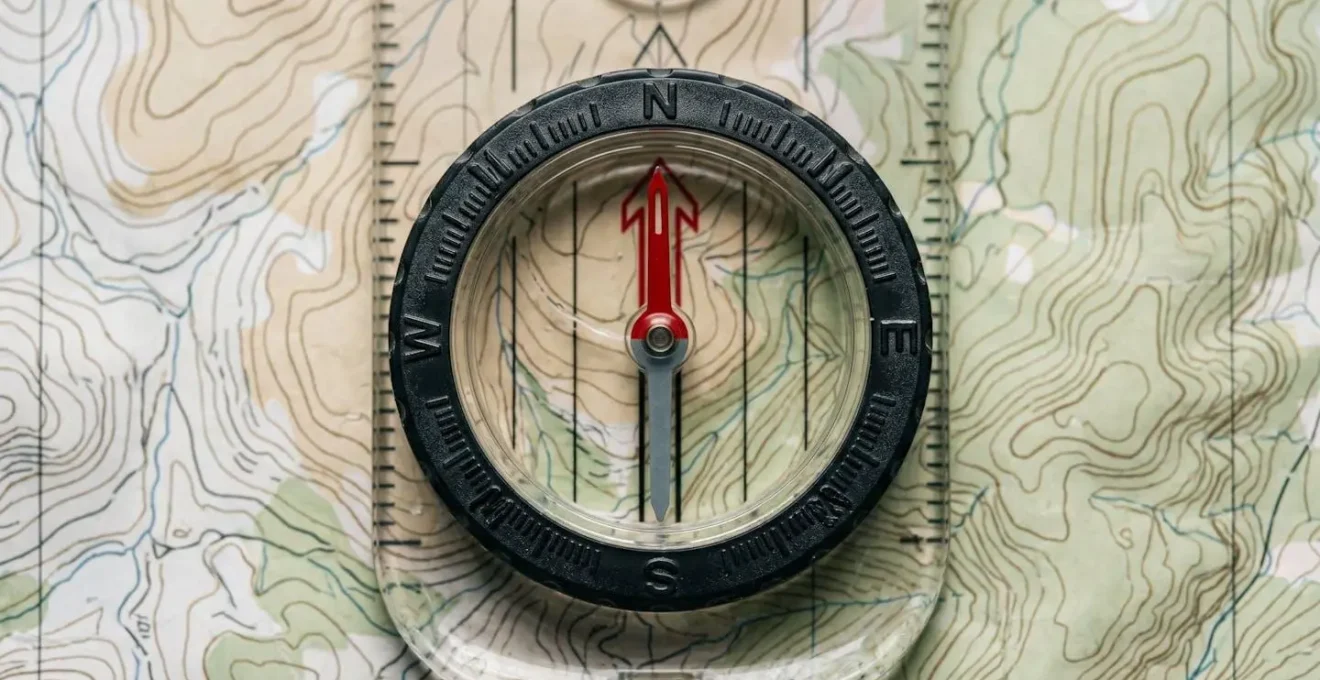
Mastering this craft takes practice, but the techniques used by professional navigators are accessible to anyone. It begins with simple exercises like orienting your map to the terrain and progresses to more advanced strategies for tracking your position and finding your way in complex environments. These are not just abstract techniques; they are practical tools for building a cognitive map of your surroundings, making you independent of any single piece of technology.
Here are professional techniques you can start practicing on your next hike:
- Practice ‘Handrailing’: Follow linear features like streams, ridgelines, or forest edges as natural guides.
- Calculate your personal pace count: Walk a measured 100 meters, count your steps, and use this to estimate distance traveled.
- Use ‘Aiming Off’: When heading to a point on a linear feature (like a bridge on a river), deliberately aim to one side so you know which way to turn when you hit the river.
- Read landscape indicators: Observe how vegetation changes with elevation and which way slopes face.
- Mark waypoints mentally: Create memorable associations with distinctive terrain features every 15-20 minutes to build a mental map of your route.
Your adventure begins not when you conquer a mountain, but when you decide you are capable of trying. The wilderness is not something to be feared and defended against; it is a classroom for building the most profound trust you will ever have—trust in yourself. Start by taking one small, manageable step. Buy a topographic map of a local park, learn to identify three types of trees, or spend one night in a managed campground close to home. Build your competence, and the world will open up to you. The wilderness is waiting.