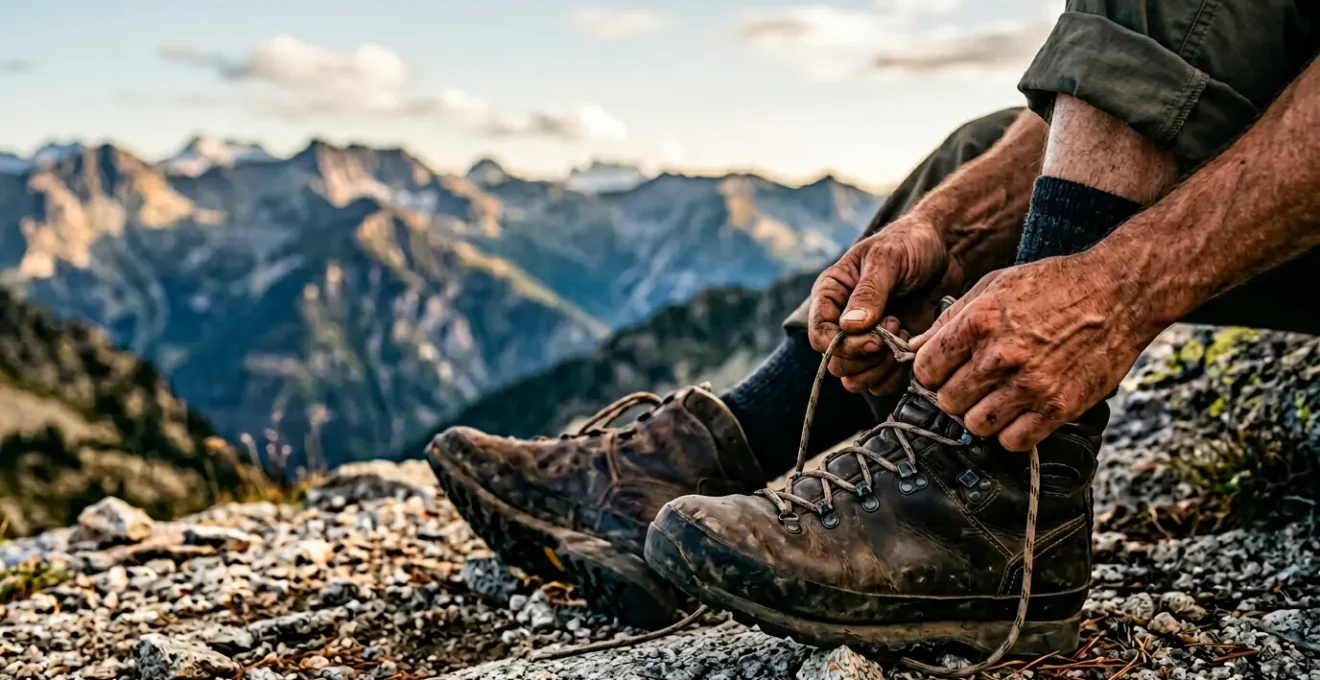
The primary cause of hiking blisters is not a poor boot choice, but the clinical failure to manage the dynamic in-boot environment of friction, moisture, and pressure.
- Cotton socks create a catastrophic friction-moisture matrix, while improperly sized boots fail to accommodate the natural foot volume expansion that occurs during a hike.
- Ignoring the initial « hotspot » warning sign triggers a predictable cascade failure, rapidly progressing from minor discomfort to a trip-ending open wound.
Recommendation: Adopt a system of proactive micro-management. Prioritize moisture-wicking socks, size boots for your swollen evening foot, and ensure your blister prevention kit is immediately accessible to treat hotspots within seconds, not minutes.
The prevailing narrative around hiking blisters is often a simple checklist: break in your boots, wear good socks, and carry bandages. Yet, countless well-prepared hikers still find their treks derailed by debilitating foot trauma. The core issue lies in a fundamental misunderstanding of the problem. Preventing blisters is not about passively following tips; it is an active, clinical discipline. It requires treating the space inside your boot as a dynamic system—an « in-boot environment »—where the interplay of friction, moisture, and pressure must be constantly managed.
Most debilitating blisters do not even form on the first day. In fact, comprehensive trail data reveals the majority of blisters occur on day 2 of a hike, when cumulative stress and unaddressed micro-traumas reach a critical threshold. This guide moves beyond generic advice to provide a technical framework for foot preservation. We will analyze the material science of socks, the biomechanics of foot swelling, and the psychological factors that turn a minor navigational error into a major foot injury. The goal is to shift your mindset from reactive treatment to proactive, systematic prevention.
This article will deconstruct the key mechanical and environmental factors that lead to blister formation. By understanding these principles, you can build a robust defense system to ensure your focus remains on the trail ahead, not the pain beneath your feet. The following sections provide a clinical breakdown of each critical component.
Summary: A Podiatrist’s Framework for Blister-Free Hiking
- Why wearing cotton socks inside boots destroys your feet?
- How to break in leather boots effectively in 2 weeks?
- The sizing mistake: buying for morning feet vs evening swell
- Leather vs Synthetic: Which breathes better in humid heat?
- When to re-waterproof: The visual sign the coating is gone
- The footwear mistake that causes 80% of trail evacuations
- In what order to pack supplies: The ABC priority rule
- Navigating Unmarked Trails: How to Avoid Getting Lost without GPS?
Why wearing cotton socks inside boots destroys your feet?
From a clinical perspective, wearing cotton socks for any strenuous activity is a critical error in managing the in-boot environment. Cotton’s fundamental material property is its hydrophilia; it is an exceptional absorbent. While this is useful for a towel, it is catastrophic inside a hiking boot. A single foot can produce over a cup of sweat on a warm day. Cotton fabric absorbs this moisture and holds it directly against the skin, creating a perfect storm for skin maceration and friction.
Once saturated, cotton fibers lose their structure and loft, collapsing into a dense, abrasive sheet. This dramatically increases the coefficient of friction between the sock and your skin. Every step generates shear force, causing the water-weakened epidermal layers to separate, which is the direct mechanical cause of a blister. The data is unequivocal: a double-blind study confirmed that cotton sock wearers developed twice as many blisters—and blisters three times larger—than those wearing acrylic. The choice is not a matter of comfort preference; it is a matter of material science.

The solution is to use socks made from hydrophobic (water-repelling) fibers like merino wool or synthetic materials (polyester, nylon, acrylic). These fibers do not absorb moisture; they actively wick it away from the skin’s surface to the outer layers of the sock and the boot’s liner, where it can evaporate. This maintains a drier skin surface, which is more resilient to frictional forces and dramatically reduces the risk of entering the friction-moisture matrix that leads to blistering.
How to break in leather boots effectively in 2 weeks?
The term « breaking in » is often misconstrued as a passive process of simply wearing boots until they stop hurting. From a material science and physiological standpoint, it is an active conditioning process for both the boot and your feet. For full-grain leather boots, this process is non-negotiable. Leather is a natural matrix of collagen fibers. The break-in process involves gradually flexing these fibers, softening the leather’s temper, and molding it to the unique topography of your foot—including its bony prominences and flexion points.
A systematic two-week approach is optimal. The goal is to introduce stress incrementally. Begin by wearing the boots indoors for several hours a day for the first 2-3 days. This uses your body heat to begin softening the leather. Progress to short walks on paved surfaces, then to varied terrain with small inclines. Industry analysis suggests a benchmark of walking 15 to 20 miles in the boots before undertaking a serious multi-day trek. This mileage is not arbitrary; it represents the approximate load required to achieve primary conformity in robust leather.
Simultaneously, you are conditioning the skin on your feet. This gradual exposure to pressure and friction stimulates the thickening of the stratum corneum (the outermost layer of the skin), making it more resilient to the shear forces encountered on a long hike. Attempting to rush this process by wearing new, stiff boots on a long hike subjects unprepared skin to intense, localized friction from an unyielding material, virtually guaranteeing blister formation. The two-week schedule allows for a symbiotic adaptation between your foot’s anatomy and the boot’s structure.
The sizing mistake: buying for morning feet vs evening swell
The single most common and critical sizing error is purchasing boots that fit a rested, « morning » foot. The human foot is a dynamic structure that changes in volume throughout the day and under load. During a hike, two factors cause significant swelling: gravity-dependent fluid accumulation (edema) and vasodilation from exertion. This is a normal physiological response, not a pathology. Clinical research shows an increase of up to 8% in foot volume after prolonged weight-bearing activity.
A boot that feels perfectly snug in the store at 10 a.m. will become a compression device by 3 p.m. on the trail. This increased pressure creates multiple points of intense friction, particularly across the forefoot and at the toes. When hikers ask if they should buy boots a size bigger, the precise answer is that they must buy boots that fit their *largest* potential foot size. This is why all professional boot fittings should occur in the late afternoon or after a period of walking, when feet are naturally at their maximum volume.
The fit must be evaluated with the specific hiking socks you intend to wear. A key diagnostic test is to ensure a thumb’s width (approximately half an inch) of space between your longest toe and the end of the boot. This space is not for « wiggle room »; it is a critical buffer to accommodate both foot elongation during the gait cycle and the inevitable end-of-day swelling. Without this space, your toes will slam into the front of the boot on descents (toe bang), leading to subungual hematomas (bruised toenails) and blisters.
Pre-Purchase Boot Fitting Protocol: Key Verification Points
- Foot State Simulation: Shop for boots in the afternoon or after at least 30 minutes of continuous walking to ensure feet are naturally swollen.
- Insole Volume Test: Remove the boot’s insole and stand on it barefoot. If your foot spills over the edges, the boot’s internal volume is insufficient.
- Terrain Simulation: Test the boots on in-store ramps or stairs. Check for excessive heel lift on the incline and for your toes hitting the front on the decline.
- Toe Box Clearance: While wearing your intended hiking socks, ensure there is a thumb’s width of space between your longest toe and the end of the boot.
- Lacing and Lockdown: Lace the boots fully and stand for several minutes. There should be no specific pressure points or areas of pinching.
Leather vs Synthetic: Which breathes better in humid heat?
The debate between leather and synthetic materials often oversimplifies the concept of breathability. Breathability is not a binary property but a measure of a material’s Moisture Vapor Transmission Rate (MVTR). In conditions of high ambient humidity and heat, a hiker’s foot produces a significant amount of sweat, and the boot’s ability to transport this vapor away from the skin becomes paramount.
Full-grain leather, being a natural skin, has microscopic pores that allow for a degree of moisture vapor transfer. However, its MVTR is generally lower than that of modern synthetic mesh panels. The key advantage of synthetics is their engineered structure. Many synthetic boots utilize open-weave mesh fabrics combined with a waterproof-breathable membrane (like GORE-TEX). This system is designed to allow small water vapor molecules (sweat) to escape while blocking larger liquid water molecules (rain).
As the experts at the Advnture Editorial Team note in their analysis:
Leather is skin, so it does offer breathability, and while some synthetic fabrics are not very breathable, generally speaking the fabrics that make up the upper of a pair of hiking boots will allow water vapor to escape
– Advnture Editorial Team, Leather vs synthetic hiking boots comparison guide
However, in extreme humid heat, any breathable system can be overwhelmed. When the outside air is already saturated with moisture, the vapor pressure gradient necessary to drive sweat out of the boot is reduced. Furthermore, if the outer fabric of the boot becomes saturated with water (a phenomenon known as « wetting out »), the breathable membrane is effectively blocked, trapping sweat inside. In these specific conditions, lightweight synthetic boots with large, non-membrane mesh panels often provide the best ventilation, sacrificing waterproofness for maximum air exchange.
When to re-waterproof: The visual sign the coating is gone
The waterproof integrity of modern hiking boots relies on two systems working in tandem: an internal waterproof membrane (e.g., GORE-TEX) and an external Durable Water Repellent (DWR) coating. The membrane is the primary barrier, but the DWR coating is crucial for maintaining breathability and preventing the boot from becoming waterlogged. The DWR is not what makes the boot waterproof; it prevents the outer fabric from absorbing water in the first place.
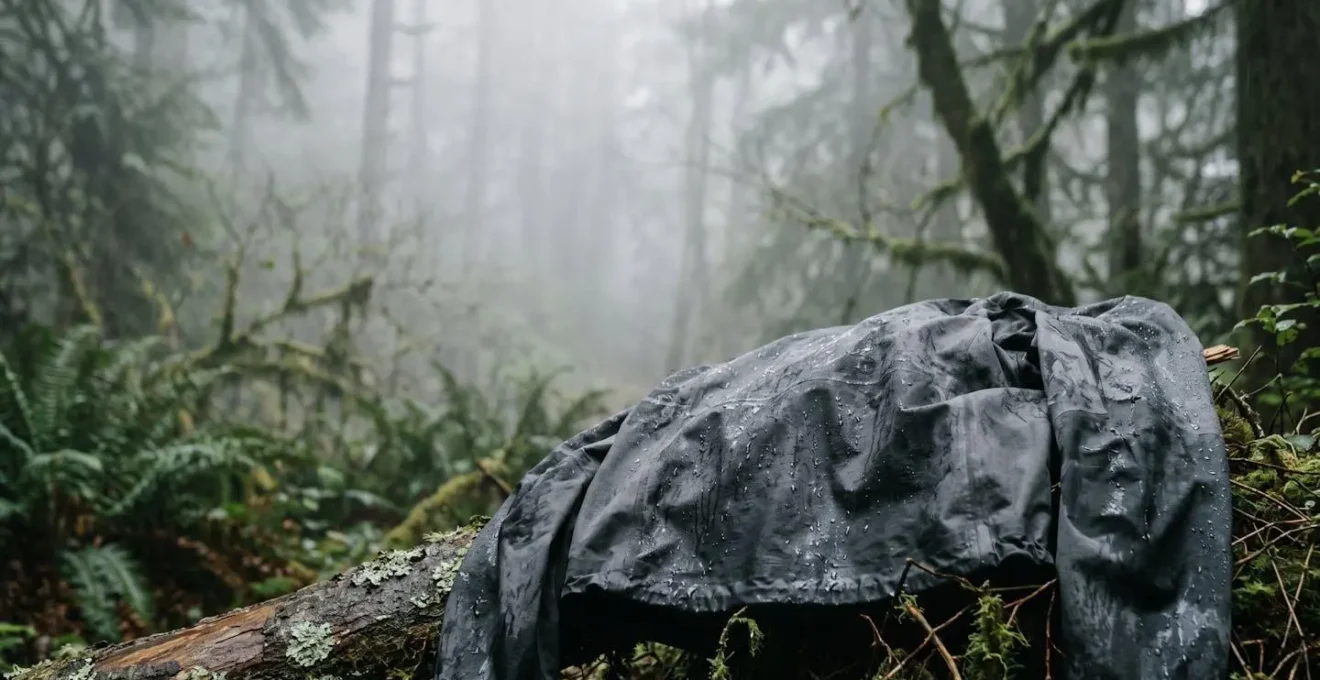
The definitive visual sign that your DWR coating has failed is the loss of hydrophobicity. A functional DWR finish causes water to bead up and roll off the surface of the boot’s upper material. When the coating wears off due to abrasion, dirt, and washing, you will observe a phenomenon called « wetting out. » Instead of beading, water will soak into the outer fabric, darkening its color and saturating the material. While the internal membrane may still prevent water from reaching your foot, a wetted-out boot is heavy, cold, and its breathability is severely compromised.
To test your DWR, simply sprinkle or spray a small amount of water onto the clean, dry surface of your boots. If the water beads up into distinct droplets, the DWR is still functional. If the water spreads out and soaks in, it is time to re-apply a waterproofing treatment. It is a critical maintenance error to wait until your feet get wet. Proactive re-waterproofing—typically after every few major trips or whenever you notice wetting out—is essential for preserving the boot’s performance, particularly its ability to breathe by keeping the outer layer dry.
The footwear mistake that causes 80% of trail evacuations
While gear failure and poor sizing contribute, the single most critical mistake—the one that escalates a minor issue into a trip-ending medical situation—is the failure to address a hotspot immediately. A hotspot is not a blister; it is the crucial pre-blister stage, a localized feeling of warmth or stinging that signals intense, ongoing friction. From a clinical viewpoint, this is the final warning sign before the epidermis separates and fills with fluid.
Case Analysis: The Catastrophic Cascade of the Ignored Hotspot
Trail documentation and rescue reports reveal a predictable four-stage progression that turns a manageable problem into a disaster. Stage 1 (Hotspot) often appears within the first few miles but is commonly dismissed by hikers wanting to « push through » or not inconvenience the group. If hiking continues, Stage 2 (Blister Formation) occurs as shear forces cause epidermal layers to separate and fill with serum. The pain intensifies from a sting to a sharp ache. Persisting further leads to Stage 3 (Rupture), where the blister breaks inside the dirty, abrasive environment of the boot, creating an open wound. This is the point of no return. Stage 4 (Infection & Evacuation) becomes a high risk, as bacteria colonize the wound, leading to severe pain, cellulitis, and the potential need for evacuation. The fundamental error is not the initial friction, but the systematic failure to act during Stage 1, a problem that can be resolved in 60 seconds with preventive tape or a patch.
The mistake is psychological as much as it is physical. It is the cognitive bias of « summit fever » or the social pressure of not wanting to slow down. However, stopping for one minute to apply Moleskin, athletic tape, or a specialized blister patch to a hotspot is infinitely more efficient than spending an hour dealing with a fully formed, painful blister, or days recovering from an infected wound. Treating a hotspot is prevention; treating a blister is damage control.
In what order to pack supplies: The ABC priority rule
A comprehensive blister prevention kit is useless if it is buried at the bottom of a 60-liter pack. The principle of proactive micro-management dictates that treatment supplies must be as accessible as a water bottle. The time between identifying a hotspot and applying treatment should be measured in seconds, not minutes. Therefore, how you pack is as important as what you pack.
An effective packing strategy follows the « ABC » priority rule, designed for immediate access and proactive care:
- A for Accessibility: Your primary blister kit—containing pre-cut strips of athletic tape or moleskin, antiseptic wipes, and specialized blister bandages—must be stored in a location reachable without removing your pack. This means a hip belt pocket, a shoulder strap pouch, or an external side pocket. This removes the psychological barrier of having to stop, drop your pack, and search.
- B for Body Scan: This is a mental packing rule. You must schedule and commit to regular foot « check-ins » every hour. This is a conscious moment to scan for any sign of warmth, rubbing, or discomfort. It is the software to the hardware of your accessible kit.
- C for Cleanse & Change: Pack at least one pair of fresh, dry socks at the very top of your main compartment. Swapping into dry socks during a lunch break is one of the most effective ways to reset the in-boot environment, reducing moisture and restoring cushioning.
This system treats blister prevention not as an emergency procedure but as routine maintenance, like drinking water. The distribution of weight within the pack also plays an indirect role; a stable pack that is centered along the spine reduces compensatory micro-adjustments in your gait, which in turn minimizes unusual friction on the feet. The core principle remains: accessibility is the most important feature of your first-aid supplies.
Key Takeaways
- Blister prevention is an active system of managing the in-boot environment, not a passive checklist.
- Material science is paramount: Hydrophobic (wool/synthetic) socks wick moisture, while hydrophilic (cotton) socks trap it, creating a high-friction environment.
- The « ignored hotspot » is the primary point of failure, triggering a predictable cascade that leads from minor irritation to a potential evacuation scenario.
Navigating Unmarked Trails: How to Avoid Getting Lost without GPS?
At first glance, navigation skills seem unrelated to foot health. However, a clinical analysis of trail emergencies reveals a direct and dangerous correlation between getting lost and sustaining severe foot trauma. The « Lost Hiker Blister Phenomenon » is a recognized pattern where a navigational error creates the perfect storm for catastrophic blister formation.
When a hiker realizes they are lost, a cascade of physiological and psychological responses begins. The stress response triggers an increase in heart rate and perspiration, including a dramatic rise in foot moisture. Simultaneously, psychological panic often leads to a faster, less controlled, and more erratic gait as the hiker rushes to find the trail. This combination—excess moisture, increased friction from a rushed pace on tired feet, and an extended duration of activity beyond the hiker’s conditioning—is a potent recipe for disaster. The in-boot environment degrades rapidly, and the skin’s defenses are quickly overwhelmed.
Therefore, treating navigation as a core component of blister prevention is a mark of an expert hiker. It reframes the purpose of a map and compass. They are not just tools for finding your way; they are tools for controlling your pace, managing your physiological state, and preventing the panic-driven forced march that destroys feet. A disciplined protocol of regular map verification—every 15-20 minutes in complex terrain—is the navigational equivalent of an hourly foot check-in. It prevents the primary error, thereby preventing the entire cascade of negative consequences.
Ultimately, preserving your feet on the trail is the result of a disciplined, proactive system. By managing the in-boot environment, respecting the earliest warning signs, and understanding how even external factors like navigation impact your physiology, you transform blister prevention from a game of chance into a clinical science. To apply these principles effectively, the next step is to assemble a blister prevention kit tailored to this proactive approach.