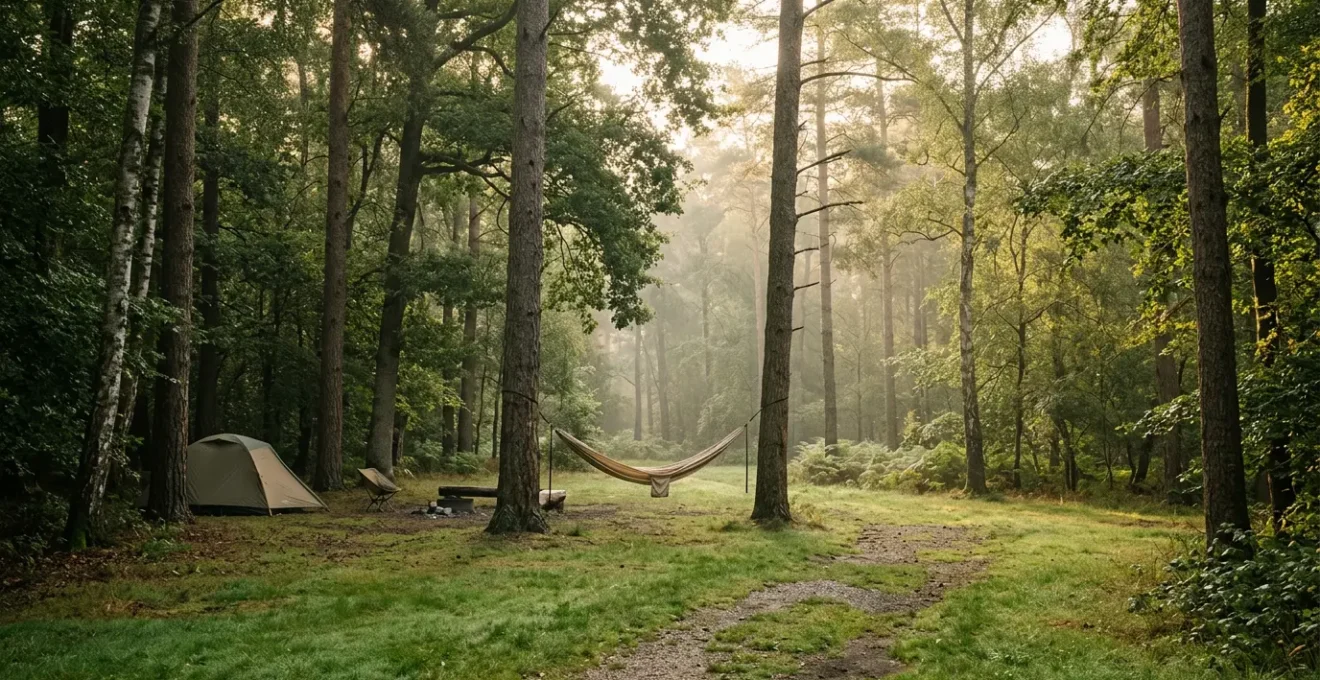
The premium for an adults-only campsite is not about paying to avoid children; it’s a strategic investment in a guaranteed, high-quality sensory and social environment.
- These sites offer quantifiable benefits like improved sleep quality and amenities curated to prioritize peace over play.
- They provide « social predictability, » attracting a clientele with shared expectations for a quiet, respectful atmosphere.
Recommendation: View the higher cost not as a simple expense, but as a calculated purchase of control over your personal space and a tangible return on your well-being.
For the discerning traveler, the search for genuine peace has become the ultimate luxury. In the world of outdoor hospitality, this quest often leads to a specific crossroads: the adults-only campsite. The immediate assumption is that the typical 30% price premium is a simple fee for the absence of children. While partially true, this view misses the fundamental value proposition. The usual advice focuses on generic benefits like « peace and quiet, » but this fails to capture the depth of the experience you are actually purchasing.
The decision to opt for a child-free environment is less about exclusion and more about a strategic choice for inclusion—inclusion into an ecosystem meticulously designed for adult sensibilities. It’s an investment in what can be called sensory sovereignty: the ability to control your immediate auditory and social environment, a luxury rarely afforded in modern life. This goes beyond simply avoiding sporadic noise; it encompasses a predictable atmosphere, a certain social cadence, and amenities designed for relaxation rather than recreation.
But is this curated tranquility truly worth the added cost? The answer lies in understanding the tangible returns on this investment. This guide will deconstruct the value, moving beyond the obvious to analyze the quantifiable benefits to your sleep, the nuances of the social atmosphere, and the critical booking strategies that ensure you receive the peace you’re paying for. We will explore how to verify a site’s promises, compare the experience to other premium options, and ultimately determine the real return on investment for a holiday dedicated to silence.
This article provides a comprehensive analysis for those seeking to understand the true value of an adults-only camping experience. Below is a summary of the key areas we will explore to help you make an informed and strategic decision for your next peaceful escape.
Summary: Decoding the Premium of Adults-Only Camping
- Why child-free zones guarantee 2 extra hours of sleep per night?
- How to verify strict « no-noise » policies before booking?
- Adults-only vs Retirement parks: Which has the better social vibe for 40-somethings?
- The booking mistake that lands you next to a noisy road
- How to negotiate long-stay rates for a month of silence?
- Why being near the pool guarantees noise until midnight?
- When do site fees exceed the cost of property taxes?
- Luxury Glamping vs Traditional Hotel: Which Offers Better Value for $300 a Night?
Why child-free zones guarantee 2 extra hours of sleep per night?
The most immediate and quantifiable return on your investment in an adults-only campsite is sleep. The promise of « extra sleep » isn’t just marketing hyperbole; it’s grounded in the science of sleep disruption. A typical family campsite environment is characterized by unpredictable, high-frequency sounds—children’s games, early morning excitement, late-night crying—that are particularly effective at disturbing sleep architecture. Our brains are hardwired to react to these sounds as potential alerts, preventing us from entering or maintaining the deep, restorative stages of sleep.
The value of a child-free zone lies in its superior acoustic hygiene. The ambient soundscape is more consistent and predictable, dominated by lower-frequency, natural sounds like wind or distant wildlife. This environment drastically reduces the likelihood of abrupt awakenings. The result is not just more time spent in bed, but a significant improvement in sleep quality. You experience longer periods of slow-wave and REM sleep, the stages crucial for physical recovery, memory consolidation, and mental clarity. This is the mechanism behind feeling genuinely rested, not just having slept.
As the Environmental and Sleep Health Research Team highlights in a comprehensive study, the impact of environmental noise is profound and directly affects sleep quality:
Nocturnal noise has been shown to fragment sleep, and as a consequence lead to a redistribution of time spent in the different sleep stages, typically increasing wake and stage 1 sleep and decreasing slow wave sleep and REM sleep, i.e. causing a shallower sleep.
– Environmental and Sleep Health Research Team, PMC Environmental Noise and Sleep Disturbances Study
Therefore, paying a premium for an adults-only site is a direct investment in your physiological well-being. The « two extra hours » are a conservative estimate representing not just quantity, but a profound increase in the restorative quality of your sleep, which translates to higher energy levels and better mental health throughout your holiday.
How to verify strict « no-noise » policies before booking?
The promise of tranquility is the core product of an adults-only campsite, but not all sites deliver on this promise with the same rigor. A label of « adults-only » is a starting point, not a guarantee of silence. True peace of mind comes from verifying the campsite’s commitment to enforcing its policies. The discerning traveler must become a detective, looking for concrete evidence of a culture of quiet, not just a rule in a brochure. This proactive verification is a crucial step in ensuring your investment yields its expected return.
Your investigation should start on the campsite’s website. Look for a dedicated page or a detailed section on « site etiquette » or « rules. » Vague statements like « please be respectful of your neighbors » are a red flag. What you want to see is specificity: clearly defined quiet hours (e.g., 10:00 PM to 8:00 AM), explicit prohibitions on amplified music, and details about the consequences of violations. The next step is to cross-reference this with real-world feedback. Scour online reviews, but do so strategically. Filter for keywords like « quiet, » « peaceful, » and « enforced. » Pay equal attention to negative reviews mentioning « loud, » « party, » or « no staff. »

The final and most critical step is direct communication. Before booking, call or email the management with precise questions. A campsite that is serious about its noise policy will have ready and confident answers. This diligence separates a potentially disappointing holiday from a truly restorative one. It’s about ensuring the environmental curation you are paying for is actively managed and not just a passive label.
Your Pre-Booking Quietness Audit: Key Questions for Campsite Managers
- Ask ‘What is your exact procedure for handling a noise complaint after quiet hours begin?’
- Inquire ‘Are amplified speakers or music of any kind permitted on individual pitches during the day?’
- Request ‘What is the average distance in meters/feet between pitches in your quietest section?’
- Confirm ‘Do you enforce quiet hours with on-site staff, and what are the consequences for violations?’
- Check online reviews filtering for keywords like ‘peaceful,’ ‘enforced,’ ‘quiet,’ versus red flags like ‘lively’ or ‘party atmosphere’
Adults-only vs Retirement parks: Which has the better social vibe for 40-somethings?
For campers in their 40s and 50s seeking peace without complete isolation, the choice often narrows to two options: adults-only (18+) campsites and retirement (55+) parks. While both eliminate noise from children, they offer vastly different social experiences. Understanding these nuances is key to selecting an environment that aligns with your desired social energy. The « better » vibe is entirely subjective and depends on whether you seek flexible social opportunities or a deeply established, quiet community rhythm.
Adults-only campsites cater to a broad demographic, from young couples to active retirees. The social atmosphere is typically event-driven and flexible. You might find scheduled wine tastings, group yoga sessions, or communal fire pits designed to foster interaction among guests who are there for shorter stays. The energy is one of shared vacation-mindedness—people are there to relax but are often open to new connections. The quiet hours are strictly enforced, but the daytime and early evening can be social and moderately active. This environment offers social predictability without being restrictive.
Retirement parks, on the other hand, are built around a more permanent or seasonal community. Data shows that 16.4% of campers are 55 and older, and these parks are their domain. The social structure here is community-driven, revolving around established routines like morning coffee hours, card games, or pickleball leagues. The energy level is generally lower, with a culture that often trends towards early nights. For a 40-something, integrating can be more challenging as social circles may already be well-formed. The tranquility is absolute, but it comes with a more homogenous and settled social dynamic.
The following table breaks down the key differences to help you decide which environment is the best fit for your social and recreational preferences.
| Feature | Adults-Only Campsites (18+) | Retirement Parks (55+) |
|---|---|---|
| Age Demographic | Mixed adults 18-70+ | Predominantly 55+, majority 65+ |
| Social Energy Level | Moderate to active; quiet hours typically 10-11 PM | Lower energy; early-to-bed culture (9-10 PM) |
| Social Structure | Event-driven (scheduled wine tastings, yoga, communal dinners) | Community-driven (established routines, regular social groups) |
| Amenities Focus | Modern aesthetics, craft beverage bars, glamping options, wellness activities | Accessibility features, practical facilities, long-stay infrastructure |
| Typical Stay Duration | Weekends to 1-2 weeks | Extended seasonal stays (months) |
| Atmosphere | Peace without children, but social flexibility | Maximum tranquility, established community rhythms |
The booking mistake that lands you next to a noisy road
You’ve done everything right: you’ve chosen a premium adults-only campsite and verified their strict noise policies. You arrive, ready for a week of blissful silence, only to discover your pitch is just 50 meters from a surprisingly busy country road. The low, constant hum and occasional roar of traffic effectively negates the entire premium you paid for tranquility. This is one of the most common and frustrating mistakes in the pursuit of quiet camping, and it’s entirely avoidable with a bit of digital reconnaissance.
The mistake is trusting the campsite map implicitly and failing to cross-reference it with a satellite view. Campsite maps are marketing tools; they are designed to show amenities and pitch layouts, not to highlight potential external noise sources. The perimeter of the campsite is the most vulnerable area. Roads, neighboring farms with machinery, or even residential properties with dogs can all be sources of noise pollution that are outside the campsite’s control. A beautiful « edge pitch » promising privacy might actually be an « edge pitch » bordering a primary noise source.
The solution is simple but crucial. Once you have a potential pitch number or section in mind, open Google Maps or a similar service. Switch to the satellite layer and zoom in. – Identify all adjacent roads. Are they small access lanes or B-roads that could carry commercial or commuter traffic? – Look for nearby structures. Are there industrial-looking buildings, farms, or even other holiday parks? – Assess the natural barriers. Is there a thick band of mature trees between the perimeter pitches and the road, or is it just a thin hedge?
This simple, five-minute check empowers you to make a truly informed choice. When you call to book, you can then make a specific request: « I’d like a pitch in the ‘Elm’ section, but as far away from the A303 as possible, please. » This demonstrates you’ve done your homework and shifts the responsibility to the booking agent to place you correctly. It’s the final step in securing your sensory sovereignty from both internal and external threats.
How to negotiate long-stay rates for a month of silence?
For those looking to extend a peaceful getaway into a month-long retreat, the standard nightly rate can become prohibitive. The good news is that many independent, adults-only campsites are open to negotiating rates for longer stays, especially during the shoulder seasons. The key to a successful negotiation is not to ask for a « discount, » but to position yourself as the ideal, low-impact guest who provides them with guaranteed income.
Campsite owners value predictability. An empty pitch generates zero revenue, and the process of turning over a pitch every few days involves administrative and cleaning costs. A guest who stays for a month represents a stable, hassle-free block of revenue. Your negotiation strategy should be built around highlighting this value. When you make your inquiry, do so directly with the owner or manager, bypassing online booking platforms that often don’t accommodate custom arrangements. Start by expressing genuine admiration for their site’s tranquil philosophy.
Then, frame your proposal. Explain that you are a quiet, respectful couple (or individual) seeking a peaceful base for an extended period. Mention that you are self-sufficient and require minimal support. This reassures the owner that you won’t be a demanding guest. Instead of asking « Can I get a discount? », try a collaborative approach: « We’d love to make your beautiful campsite our home for the month of September. We are looking for a monthly rate that would be mutually beneficial. Is that something you offer? » Some campsites, like the Dark Ridge Hide Out, explicitly state they are open to this, with hosts noting a willingness to offer a discount for stays of a week or more. This creates an opening for a partnership rather than a simple transaction.
Case Study: The 11-Night Stay Negotiation
A camper at the Dark Ridge Hide Out adults-only campsite provides a perfect example of this principle. The guest initially booked a short trip but fell in love with the peaceful environment. Through direct communication with the owner, they positioned themselves as ideal, quiet campers. This alignment with the site’s ethos facilitated an easy extension to an 11-night stay. The guest’s review noted, « What started out as a short stay turned into an eleven night stay… we will return next year for a longer stay. » This demonstrates how establishing yourself as a desirable guest who values the site’s core principles is the most powerful negotiation tool for securing longer, more affordable stays.
Why being near the pool guarantees noise until midnight?
Within the sanctuary of an adults-only campsite, there are still micro-zones of potential noise. The most common and deceptive of these is the area surrounding the swimming pool. While it may seem like a hub of daytime relaxation, its physical properties make it an acoustic amplifier that can guarantee noise well into the evening, often right up to the start of quiet hours. Choosing a pitch away from the pool is a non-negotiable strategy for those seeking absolute tranquility.
The reason lies in simple physics. Pool areas are constructed almost exclusively of hard, non-porous surfaces: concrete or stone decking, plaster pool walls, and the water surface itself. Unlike grass, trees, and tent fabrics that absorb sound, these materials reflect it. This creates a natural echo chamber. A conversation at a normal volume between two people on one side of the pool can be clearly audible on the other. Every splash, laugh, and clinking glass is amplified and scattered across a wide area. This is a fundamental aspect of the site’s environmental curation that you must account for in your pitch selection.
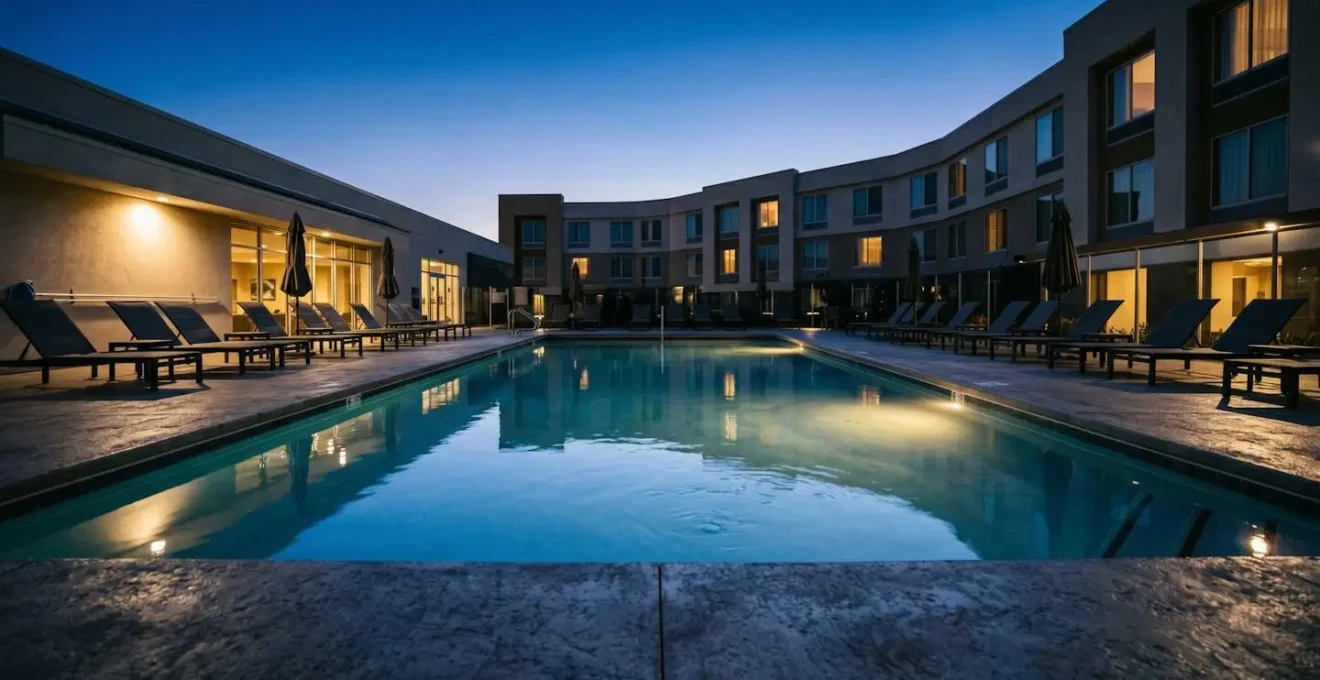
Furthermore, the pool is a natural social magnet. It’s where guests congregate for a final dip or a drink as the sun sets. Even with the best intentions and no loud music, the cumulative sound of multiple quiet conversations in such a reflective environment creates a constant, unavoidable social hum. This activity often persists right up until quiet hours begin at 10 or 11 PM. If your ideal evening involves listening to the crickets from 8 PM onwards, a pitch even 50-100 yards from the pool can be a source of significant auditory intrusion. For maximum peace, request a pitch in a separate, dedicated « quiet zone » or simply as far from the pool and other central amenities as possible.
When do site fees exceed the cost of property taxes?
For those considering long-term or seasonal stays at a premium adults-only campsite, it’s natural to question the financial tipping point. At what stage does the « rent » for a plot of land begin to rival the cost of « owning »? It’s a valid comparison, and understanding the math can help frame the campsite fee not as a sunk cost, but as a deliberate lifestyle expense. The fee can exceed the equivalent of property taxes surprisingly quickly, but it’s crucial to analyze what that fee includes.
Let’s do a simple calculation. According to travel industry data, RV camping averages $30 to $45 per night. Let’s take a premium adults-only site at the higher end, say $60 per night, which may be discounted to $1,500 for a monthly stay. Annually, this would be $18,000 for a full-time pitch. The average annual property tax in the U.S. is around $2,795, though this varies wildly by location. In this scenario, the site fees massively exceed property taxes. However, this comparison is incomplete.
The site fee is not just for the land; it’s an all-inclusive lifestyle package. It covers utilities (water, electric, sewage), groundskeeping, waste disposal, and access to and maintenance of high-end amenities like pools, clubhouses, and fitness centers. Most importantly, it covers the active management of the environment—the enforcement of noise policies and the curation of a peaceful community, which is the very product you are buying. When you factor in the cost of these services if sourced privately, the premium begins to look more like a consolidated utility and lifestyle bill than simple rent.
Ultimately, paying high site fees is a choice to trade the responsibilities and unpredictable costs of property ownership for the convenience and predictable tranquility of a managed community. It becomes a viable financial choice for those who prioritize flexibility, minimal maintenance, and a guaranteed quality of life over building equity in a fixed asset. The fee exceeds property taxes quickly, but it buys a different, and for many, more valuable, product.
Key Takeaways
- The premium for adults-only sites is an investment in a predictable, curated environment, not just an absence of children.
- Verifiable benefits include higher quality sleep due to better « acoustic hygiene » and reduced disruptions.
- True tranquility requires due diligence: verifying noise policies, checking satellite views for external noise, and understanding the acoustic properties of amenities like pools.
Luxury Glamping vs Traditional Hotel: Which Offers Better Value for $300 a Night?
When the budget for a night’s stay reaches the $300 mark, the discerning traveler is faced with a choice: the standardized comfort of a traditional high-end hotel or the immersive experience of a luxury glamping pod, often found within premium adults-only campsites. While both offer comfort, they provide fundamentally different kinds of value. For the seeker of tranquility, glamping often delivers a far greater Tranquility ROI by offering something a hotel cannot: mental space and social control.
A $300 hotel room buys you a climate-controlled, well-appointed box. It’s insulated from the outside world, but it’s also surrounded by a high density of human activity. You share elevators, hallways, and lobbies. Your peace is contingent on the behavior of guests in adjacent rooms, separated only by a thin wall. While comfortable, it’s an experience of manufactured isolation rather than genuine space. Interestingly, despite overall growth in glamping, the 2026 Camping Report reveals that only 3% of campers ages 65 and older have tried it, suggesting this demographic may be underestimating its unique value proposition compared to familiar hotel stays.
A $300 glamping pod, in contrast, buys you a private, detached space with a dedicated outdoor area. It offers direct, unmediated access to nature—unobstructed views, natural soundscapes, and dark skies for stargazing. You have complete control over your social surface area, with no shared indoor spaces or incidental interactions. The experience is designed to dissolve the boundary between comfort and nature, creating unique, memorable moments that a standardized hotel room cannot replicate.
The following breakdown compares the value dimensions of each option, highlighting why glamping can be the superior choice for those prioritizing peace and experiential value over conventional luxury.
| Value Dimension | Luxury Glamping ($300/night) | Traditional Hotel ($300/night) |
|---|---|---|
| Mental Space | Direct access to nature, unobstructed views, natural soundscapes, zero light pollution | Insulated room, climate control, limited or no nature views |
| Social Control | Private entrance, dedicated outdoor space, minimal incidental interactions | Shared elevators, crowded breakfast areas, hallway traffic, lobby interactions |
| Experiential Amenities | Private fire pit, stargazing access, natural trails, outdoor hot tubs, wildlife proximity | Indoor gym, standard pool, concierge, room service |
| Privacy Level | Complete control over social surface area, isolated pods | Thin walls, neighboring rooms, high foot traffic areas |
| Unique Memory Value | Immersive nature experience, once-in-a-stay moments | Standardized hospitality experience |
| Tranquility ROI | High for silence-seekers; minimal human-generated noise | Variable; dependent on other guests and hotel events |
Ultimately, choosing an adults-only campsite is a declaration of priorities. It is an active decision to invest in your well-being, purchasing a curated environment where peace is the primary amenity. By understanding the real value behind the premium—from the science of sleep to the nuances of social dynamics—you can transform a simple holiday into a truly restorative experience. The next logical step is to begin your search with this new strategic perspective. Start by identifying campsites that not only market themselves as « adults-only » but also provide clear, verifiable evidence of their commitment to the tranquility you seek.