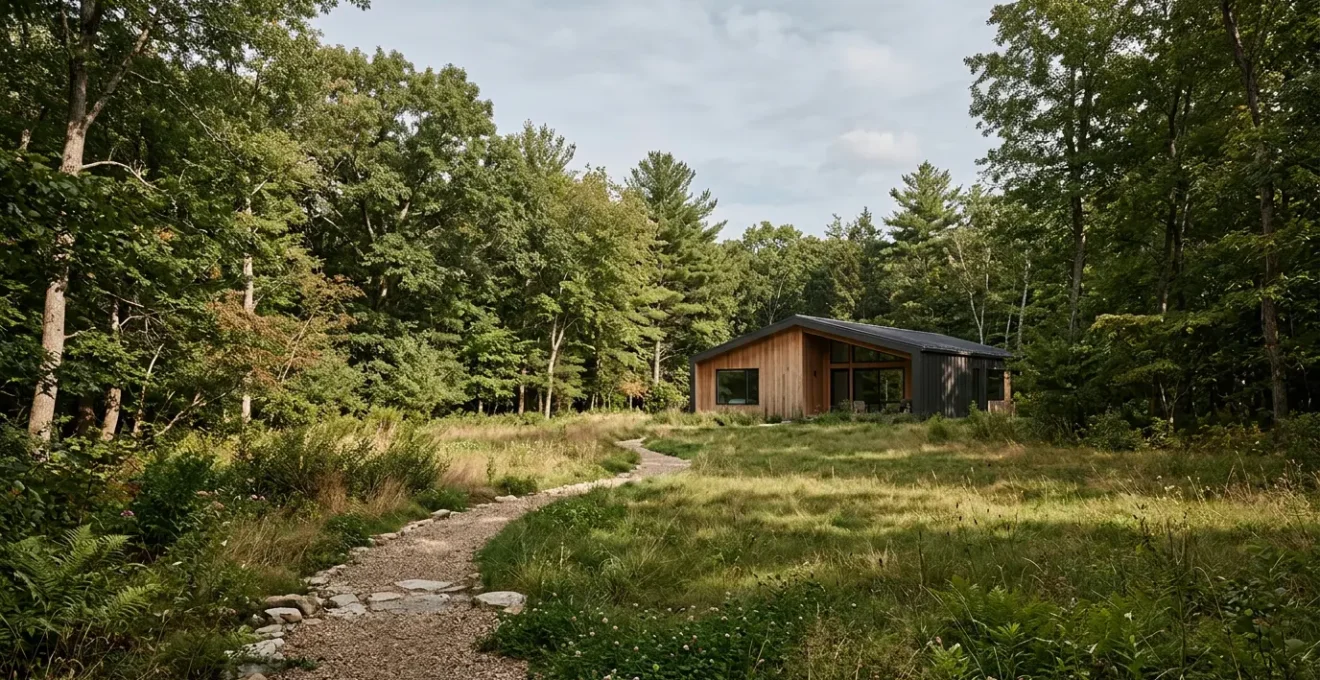
Finding a quiet bungalow isn’t about luck; it’s a solvable problem of strategic analysis that puts you in control.
- Noise comes from predictable ‘operational blindspots’ like waste collection points and hidden footpaths that don’t appear on guest maps.
- Your best tools are digital reconnaissance (using satellite maps to spot unofficial trails) and a timed negotiation protocol to secure a specific unit number.
Recommendation: Treat your bungalow selection like a high-value asset and use the insider tactics in this guide to secure it before you even pack your bags.
You book a family holiday at a bungalow park dreaming of quiet mornings on the deck and peaceful evenings under the stars. The reality? You’re placed next to a high-traffic walkway, with the thump-thump of the pool party soundtrack as your nightly lullaby and the 6 AM clatter of recycling bins as your alarm. The standard advice— »read reviews » or « request a quiet unit »—feels hollow because it lacks a concrete strategy. It leaves the most critical element of your holiday, your peace, entirely to chance.
This approach is fundamentally flawed. You wouldn’t accept a random car from a rental agency, so why accept a random bungalow placement that could make or break your vacation? The secret shared by seasoned travelers and booking insiders isn’t about making polite, vague requests. It’s about shifting your mindset. You must stop thinking like a guest and start thinking like an operations analyst. The key to securing tranquility lies not in what you ask for, but in your ability to perform pre-emptive reconnaissance and identify the resort’s operational blindspots before you arrive.
This guide will equip you with that insider knowledge. We will deconstruct the hidden infrastructure of a typical resort, from the acoustic properties of pool areas to the invisible ‘desire paths’ that generate constant foot traffic. You’ll learn how to analyze a resort map like a strategist, when to time your calls to reception for maximum impact, and how to sequence your family’s day to work *with* the resort’s energy flow, not against it. Forget hope; this is a playbook for guaranteed quiet.
To help you navigate these insider strategies, we have broken down the process into clear, actionable steps. This table of contents will guide you through each critical phase of securing your peaceful retreat.
Summary: A Strategic Guide to Securing a Quiet Resort Bungalow
- Why being near the pool guarantees noise until midnight?
- How to spot the « shortcut » path that creates foot traffic past your deck?
- The odor and glass-bottle noise factor everyone forgets
- New extension vs Old zone: Which has more established shade and privacy?
- When to call reception: Negotiating a specific unit number
- The difference between « happy noise » and « disrespectful noise »
- Sequencing your day: When to schedule high-energy play for better sleep?
- Yosemite to Dolomites: How to Secure Spots at Iconic Sites 1 Year Ahead?
Why being near the pool guarantees noise until midnight?
The most common mistake families make is underestimating the pool’s acoustic footprint. It’s not just the splashing and shouting; it’s an architectural echo chamber. Hard surfaces like concrete decking, glass safety walls, and the water itself are highly reflective, amplifying every sound. In fact, research on aquatic facility noise reveals that peak levels can soar into the 102 to 122 dB range—comparable to a jet take-off. This noise doesn’t politely stop when the sun goes down. Evening entertainment, late-night swimmers, and cleaning crews often extend the auditory assault until midnight or later.
The second, more insidious noise source is the « hidden infrastructure. » Every pool complex has a pump and filtration room. These systems run 24/7, generating a constant, low-frequency hum that can travel through the ground and into the structure of nearby bungalows. While it might be masked by daytime activity, this drone becomes a maddening presence in the dead of night, disrupting sleep for sensitive individuals. These critical operational facilities are almost never marked on guest maps, making them a classic blindspot for the unprepared traveler.
Therefore, a simple « away from the pool » rule is insufficient. You must assess the entire pool complex as a multi-faceted noise generator. Identify not just the main pool, but also any smaller jacuzzis, splash pads, and, most importantly, the likely location of its mechanical heart. A bungalow that seems a safe distance from the water’s edge might be directly adjacent to the pump room, making it one of the loudest spots on the property after dark.
How to spot the « shortcut » path that creates foot traffic past your deck?
Official paved paths on a resort map tell you only half the story. The real flow of human traffic is dictated by ‘desire paths’—the unofficial shortcuts guests create by cutting across lawns and through hedges to get to amenities faster. A bungalow situated along one of these impromptu highways can experience more foot traffic, noise, and loss of privacy than one on a main, paved route. Identifying these before you arrive is a masterstroke of digital reconnaissance.
Your primary tool is the satellite view on Google Maps. Zoom in on the resort with maximum detail and look for what the official map doesn’t show: faint brown or grey lines worn into the green spaces. These are the tell-tale signs of desire paths. A direct, unpaved line of sight between a cluster of bungalows and the pool, restaurant, or beach is a major red flag. If there’s a shortcut to be taken, people will take it, and the grass will show the evidence. This simple check can reveal the true pedestrian flow of the resort.

Next, leverage user-generated content. Scour guest photos on Google Maps and TripAdvisor, but ignore the smiling faces in the foreground. Look at the background details. Do you see worn-down edges on hedges? Gaps in fences that aren’t official gates? People walking across lawns in the distance? These candid shots provide invaluable ground-level intelligence, confirming the trails you spotted from the satellite view. By cross-referencing the official map, satellite imagery, and guest photos, you can build a comprehensive traffic model and blacklist any bungalows located on these noisy, unofficial arteries.
The odor and glass-bottle noise factor everyone forgets
Even if you secure a unit far from the pool and pedestrian shortcuts, you can still fall victim to one of the most overlooked operational blindspots: waste management. The location of dumpsters and the timing of collections can introduce significant noise and odor, particularly in the early morning. The jarring clang of glass bottles being tossed into a recycling bin throughout the day and the pre-dawn arrival of a garbage truck are classic vacation-ruiners. In many areas, municipal data shows that collection trucks operating before 7 AM with loud, beeping reverse alarms are a source of constant resident complaints.
To counter this, you must investigate the resort’s waste logistics. A direct call to the resort with specific questions is essential. Don’t just ask about trash; inquire about the location of all main waste collection points, including general waste, restaurant dumpsters, and, crucially, the large glass recycling bins. Ask for their exact location to be marked on a map you can see. Furthermore, ask for the specific collection schedule—days and, if possible, time windows.
Odor is the silent partner to noise. Ask about the location of restaurant kitchen extractor fans and grease traps. These are often hidden by landscaping but can generate both fan noise and unpleasant smells, especially if your bungalow is downwind. This leads to a critical question most people never think to ask: « What is the prevailing wind direction during the season I’m visiting? » A quick search online can provide this, allowing you to choose a unit upwind from any potential odor sources. Ignoring the resort’s waste and kitchen exhaust flow is an amateur mistake.
New extension vs Old zone: Which has more established shade and privacy?
When presented with a choice, many families instinctively gravitate towards the « new extension » of a resort, assuming modern units mean a better experience. This is a critical trade-off. While the interiors might be fresh, new zones almost always lack the two most valuable assets for a quiet, private holiday: mature landscaping and generous spacing. The sapling trees in a new development will offer zero effective shade for 5-10 years, and the hedges will be sparse, offering direct sightlines onto your deck from every neighbor.
Conversely, the « old zone, » often built 10-20 years prior, boasts what money can’t buy quickly: time. The trees are tall, creating a dense shade canopy that cools the area and the bungalow itself. The hedges are thick and high, forming natural visual and sound barriers. Furthermore, older developments often feature larger plots with more space between units, a luxury that modern, density-optimized layouts have sacrificed. This established greenery is not just for aesthetics; landscaping research confirms that dense evergreen privacy trees provide tangible protection from wind, noise, and visual intrusion.
The decision requires a clear-eyed assessment of your priorities. Are you willing to trade a modern interior and potentially better wall insulation for a sun-scorched, overlooked deck next to a closer neighbor? Or is the external environment of shade, privacy, and natural sound-buffering more valuable? The following matrix breaks down the typical trade-offs.
| Factor | Old Zone Characteristics | New Extension Characteristics |
|---|---|---|
| Shade Coverage | Mature trees (10-20+ years old) provide dense canopy and ground-level cooling | Sapling trees offer zero shade; full sun exposure for 5-10 years |
| Privacy Level | Dense hedges (Leylandii, arborvitae) create visual and sound barriers at ground level | Young plantings with gaps; neighbors have direct sightlines onto your deck |
| Plot Size | Typically larger plots with more space between units | Optimized layouts with units closer together for maximum park density |
| Interior Quality | Dated décor, older appliances, potentially worn furnishings | Modern interiors, new appliances, contemporary design |
| Sound Insulation (Unit) | Older construction may have less effective wall insulation | Superior soundproofing between units with modern building standards |
| Proximity to Facilities | May be closer to original centralized amenities (pool, restaurant) = higher noise | Often positioned farther from central hub, but less natural sound buffering |
When to call reception: Negotiating a specific unit number
The single most powerful action you can take to guarantee a quiet stay is to move from a vague « quiet unit request » to a specific « unit number negotiation. » This requires a combination of prior research and strategic timing. After using digital reconnaissance to identify a few ideal unit numbers (e.g., in an old zone, away from desire paths), you must engage with the resort directly. Vague requests are easy to ignore; a specific, well-justified request is much harder to dismiss.

The timing of your communication is everything. A single call at check-in is too late. You need to follow a multi-step protocol to ensure your request is logged, noted, and actioned. The goal is to be on the mind of the front desk manager when they are actively assigning units, which typically happens a few days before arrival. Use precise and confident language. Instead of « I hope we can have a quiet spot, » say « I have studied the park map and would ideally like unit 742, or another unit in the 740-750 cluster, as we know this area offers the privacy we are looking for. » This signals you are an informed, serious guest, not a casual tourist.
This assertive, well-researched approach fundamentally changes the dynamic. You are no longer a passive recipient of a random assignment. You are an active participant in securing the quality of your stay, treating the bungalow’s location as a non-negotiable asset. Follow this plan to make your request impossible to ignore.
Your Action Plan: Securing a Specific Unit
- Immediately after booking (within 48 hours): Call the resort’s direct booking line. Add your specific unit request (e.g., « Unit 742, or one in the 740-750 cluster ») to your reservation notes, providing a brief justification (e.g., « for privacy and quiet »).
- One to two weeks after booking: Send a polite follow-up email. Restate your request, reference the initial call, and attach any supporting context (e.g., celebrating an anniversary, traveling with a light-sleeping infant).
- Exactly 72 hours before arrival: Make a final confirmation call directly to the front desk. This is the critical window when units are assigned. Politely speak with the on-duty manager and reconfirm your noted preference.
- Use specific language: Always refer to the unit numbers you’ve researched. This demonstrates you’ve done your homework and have a clear, actionable request.
- Frame it as a priority: Convey that the location is a critical component of your holiday experience, not just a minor preference.
The difference between « happy noise » and « disrespectful noise »
Not all noise is created equal, and a key part of a successful resort stay is setting realistic expectations. The goal is not monastic silence, but the absence of intrusive, disrespectful noise. It’s crucial to distinguish between the two. « Happy noise » is the ambient sound of a resort functioning: the laughter of children playing in the pool before 9 PM, the distant, muffled sound of an evening show, the general buzz of people enjoying their holiday. These are temporary, expected sounds that are part of the communal experience.
« Disrespectful noise, » on the other hand, violates personal space and shared community standards. This includes heavy bass from a neighbor’s speaker that you can feel through your walls at midnight, loud and aggressive arguments, or music pointed directly at your deck instead of inward. This type of noise is an invasion, and it’s what the strategies in this guide are designed to prevent. The problem is significant; even in protected natural areas, human activity is a major issue. As Conservation Biologist Rachel Buxton notes in a study on the topic:
Noise pollution doubled sound levels in 63% of protected areas and caused a 10-fold increase in 21%.
– Rachel Buxton, Science Journal Study on Noise in U.S. Protected Areas
If this is happening in national parks, the challenge in a dense bungalow park is even greater. Forward-thinking property managers are tackling this head-on, proving that a distinction can and should be made.
Case Study: The « Quiet Stay Protocol »
A vacation rental management company facing numerous noise complaints implemented a ‘Quiet Stay Protocol.’ They used real-time decibel monitoring systems to track noise levels, allowing them to distinguish between acceptable ambient resort sounds and disrespectful noise like late-night parties. The system enabled staff to de-escalate noise incidents before they violated community standards or required security intervention. By clearly defining and monitoring the difference between « happy » and « disrespectful » noise, they maintained peace with the surrounding community and filtered out nearly 90% of problematic bookings, preserving the experience for all guests.
Sequencing your day: When to schedule high-energy play for better sleep?
Even with the quietest bungalow, your family’s daily rhythm can either support or sabotage your quest for peace. A strategic approach to your schedule, or « Zone Sequencing, » can make a tremendous difference. The concept is simple: align your family’s high-energy activities with the resort’s « Loud Zones » and peak activity times, and reserve your carefully selected « Quiet Zone » bungalow for rest and wind-down periods.
Start the day with a burst of energy. From morning until early afternoon, schedule your time at the pool complex, the waterslide, the playground, or any other high-stimulation area. This allows your kids to be loud and boisterous in an appropriate environment, expending their physical energy during the resort’s busiest hours. The walk back to your bungalow for a midday lunch and rest then serves as a natural, active cool-down period. This quiet time in your private sanctuary allows everyone to recharge away from the peak afternoon heat and crowds.
In the late afternoon, opt for moderate activities near your Quiet Zone, such as a nature walk, a bike ride on a nearby trail, or simply reading on your shaded deck. If there’s an early evening show or activity, you can have one final burst of energy before a deliberate, slow walk back to your bungalow. This ensures that by 8 PM, you are back in your « sanctuary, » and natural energy levels have wound down well before bedtime. This rhythm prevents the classic mistake of overstimulating children right up until bedtime and then expecting them to fall asleep instantly in a new environment.

Key Takeaways
- Securing a quiet bungalow is not luck; it’s a strategy of identifying a resort’s ‘operational blindspots’ (waste disposal, desire paths, pump rooms).
- Use ‘digital reconnaissance’ with satellite maps and guest photos to analyze a resort’s true traffic flow before you book.
- Negotiate for a specific, pre-researched unit number using a timed communication protocol, treating the location as a non-negotiable asset.
Yosemite to Dolomites: How to Secure Spots at Iconic Sites 1 Year Ahead?
The final shift in mindset is to stop seeing a prime bungalow as just another holiday rental and start seeing it for what it is: a scarce, high-demand resource, much like a campsite in Yosemite or a cabin in the Dolomites. The best-located, quietest units in any popular resort are a finite commodity, and they are consistently snapped up by a small group of savvy, repeat bookers who understand the system. They don’t browse; they execute a plan.
Industry analysis shows that the most successful guests book 12 to 18 months in advance, and they do it by going direct. They bypass third-party booking platforms and call the resort’s own booking line on the precise day that reservations open for their target dates. They arrive on « Booking Day » armed with their research: a list of 3-5 specific unit numbers they’ve already identified as being in prime, low-traffic, well-shaded zones. They treat the booking process like securing concert tickets for a sell-out show.
This « insider » approach is available to anyone willing to do the front-end work. It requires diligence in researching the property and discipline in acting the moment the booking window opens. By adopting this professional strategy, you move from the general pool of hopeful tourists into the elite group of informed guests who consistently secure the best inventory. You are no longer leaving your peace and quiet to chance; you are claiming it with strategic precision, a year before you even pack your bags. This is the ultimate expression of taking control of your holiday experience.
To put these strategies into practice for your next vacation, start your digital reconnaissance today. Choose your target resort, analyze its layout using the techniques described, and mark your calendar for the day its booking window opens. This proactive approach is the single most effective step toward guaranteeing the peaceful family holiday you deserve.