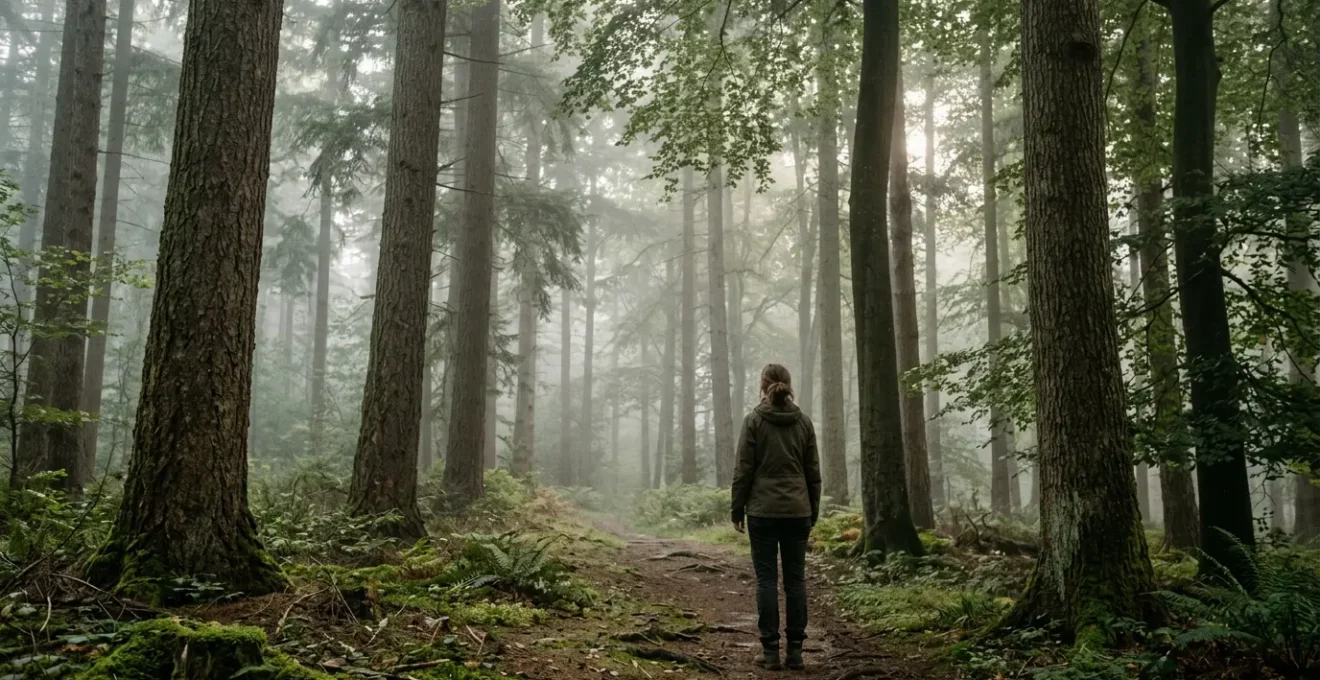
Forest bathing is not just a relaxing walk; it’s a scientifically validated therapeutic practice that uses sensory immersion to actively lower stress hormones and reset your nervous system.
- The air in forests contains natural compounds (phytoncides) that are proven to reduce cortisol levels upon inhalation.
- A structured, slow engagement of all five senses is the key to unlocking the full physiological benefits of the practice.
Recommendation: Instead of focusing on distance or pace, your next walk in nature should prioritize slow, deliberate sensory awareness to initiate a profound state of relaxation.
In the constant hum of urban life, a deep sense of disconnection is a familiar feeling. We are barraged with digital notifications, tight schedules, and a persistent pressure to perform, leaving our nervous systems in a chronic state of high alert. Many seek solace in common wellness advice—meditation apps, exercise routines, or simply « getting some fresh air. » While helpful, these often skim the surface of a much deeper human need for genuine connection with the natural world.
But what if there were a way to transform a simple walk in the woods into a potent, science-backed therapeutic session? This is the promise of Shinrin-Yoku, or « forest bathing. » It moves beyond the generic idea of a nature walk and offers a structured practice of sensory immersion. The true key to its power lies not in the walking itself, but in a deliberate and gentle « biochemical dialogue » with the forest environment. It’s about understanding that nature isn’t just a passive backdrop; it’s an active agent in our well-being.
This guide will not just tell you what to do. It will illuminate the science behind why it works, from the invisible molecules you breathe to the subtle sensations on your skin. We will explore how to properly engage your senses, avoid the common mistakes that nullify the benefits, and ultimately understand how this practice can fundamentally alter your perception and even improve your relationship with your own body. This is your invitation to begin a profound neurological reset.
To help you navigate this immersive practice, this article is structured to guide you from the foundational science to the practical application of Shinrin-Yoku. The following summary outlines the key stages of your journey into the heart of forest therapy.
Summary: A Guide to Forest Bathing for Scientifically Proven Stress Reduction
- Why phytoncides from trees lower human cortisol levels?
- How to engage the 5 senses during a slow forest walk?
- The distraction mistake that negates the therapeutic effect
- Guided session vs Solo practice: Which yields deeper relaxation?
- When to practice: Morning dew vs evening dusk atmosphere
- Why walking silently increases wildlife sightings by 50%?
- How direct skin contact with wind and sun alters your sensory perception?
- Why Camping Naturally Improves Body Image Faster than Therapy?
Why phytoncides from trees lower human cortisol levels?
The deepest magic of the forest is often invisible and airborne. When you step into a wooded area, you are walking through a complex atmospheric chemistry rich in compounds called phytoncides. These are antimicrobial volatile organic compounds released by trees, like pine, oak, and cedar, to protect themselves from pests and disease. For humans, they are a form of natural aromatherapy with profound physiological effects. When we inhale these molecules, they enter our bloodstream and directly influence our body’s stress response.

The primary mechanism is the reduction of cortisol, the body’s main stress hormone. Studies have consistently shown that exposure to a phytoncide-rich environment significantly decreases cortisol concentration in saliva and urine. This isn’t just a feeling of being relaxed; it is a measurable biochemical shift. This process works because our sense of smell has a direct pathway to the brain’s emotional center. As a leading expert in the field explains:
The olfactory system is closely linked to the limbic system, the part of the brain that controls emotions, memory, and stress responses.
– Dr. Qing Li, MD, Ph.D., The Natural Secrets – What Are Phytoncides
By simply breathing, you are engaging in a direct dialogue with the forest that instructs your body to move from a « fight or flight » state to a « rest and digest » state. This involuntary response is the scientific cornerstone of Shinrin-Yoku, proving that the healing power of the forest is as much about its chemistry as its beauty.
How to engage the 5 senses during a slow forest walk?
While the phytoncides work their magic automatically, the conscious practice of Shinrin-Yoku revolves around a slow, deliberate engagement of all five senses. This is not about trying to see or hear everything at once, but about allowing your attention to gently land on one sensory input at a time. This practice of sensory calibration quiets the analytical mind and anchors you firmly in the present moment, which is essential for triggering the parasympathetic nervous system—your body’s relaxation response.
Instead of a destination-oriented hike, a forest bath is a « wander with no purpose. » The goal is to move slowly, perhaps covering less than a mile in two hours. This slowness allows your senses to awaken from their urban slumber. You begin to notice the intricate patterns in a leaf, the feeling of moss under your fingertips, or the distant call of a bird you would have otherwise missed. The results are measurable: a review of multiple studies found that subjects walking in a forest showed a 102% greater increase in parasympathetic activity—the body’s « rest and digest » mode—than those walking in a city.
Your Action Plan: The 5-4-3-2-1 Sensory Engagement Technique
- See: Notice 5 things around you that are particularly fascinating. Look up at the canopy, down at the forest floor, and use your peripheral vision to gain different perspectives on light and shadow.
- Touch: Notice 4 things you can feel. Bring awareness to the breeze against your face, the texture of a nearby tree’s bark, the soft ground beneath your feet, or the warmth of the sun on your skin.
- Hear: Notice 3 things you can hear. Tune into the sounds of your surroundings, such as birds singing, the rustle of leaves in the wind, or the sound of your own quiet footsteps.
- Smell: Notice 2 things you can smell. Take deep, gentle breaths through your nose and identify specific scents like damp earth, pine needles, or decaying leaves.
- Taste: Notice 1 thing you can taste. Pay attention to the clean, fresh quality of the air on your tongue. Unless you are with an expert guide, avoid tasting plants.
This simple, structured exercise prevents the mind from wandering to to-do lists and anxieties. It transforms the walk from a passive activity into an active meditation, using the forest itself as the anchor for your awareness and fostering a state of deep, restorative calm.
The distraction mistake that negates the therapeutic effect
One of the most common misunderstandings about forest bathing is equating it with hiking or exercise. The modern obsession with performance—measuring steps, heart rate, or distance—is the single biggest mistake that can negate the practice’s therapeutic effects. Shinrin-Yoku is not about achieving a physical goal; it’s about shedding the very mindset of achievement. When you introduce exertion, you are re-engaging the sympathetic nervous system you are trying to calm.
As Dr. Qing Li, a pioneer in forest bathing research, warns, « If you exert yourself too much physically, your tiredness will reduce the effect of forest bathing. Your body will produce more stress hormones such as adrenaline, noradrenaline and cortisol. » This is the core distinction: hiking is often about the destination, while forest bathing is about the process of being present. There is no destination. A successful session might involve sitting by a single tree for twenty minutes, simply observing.
The other major distraction is, unsurprisingly, your digital device. Bringing a phone and using it for photos, social media, or even music, shatters the delicate sensory connection you are trying to build. Each notification pulls your brain out of the forest’s gentle rhythm and back into the world of urgent, fragmented attention. The goal is a neurological reset, which requires a temporary severance from the sources of chronic overstimulation. For the duration of your practice—whether it’s 30 minutes or three hours—the most effective approach is to leave your phone behind or turn it completely off.
Guided session vs Solo practice: Which yields deeper relaxation?
As you explore forest bathing, the question of whether to practice alone or with a certified guide will naturally arise. There is no single « better » option; rather, each approach offers a different path to relaxation, and the right choice depends on your personality and experience level. A solo practice offers the freedom of pure intuition, allowing you to follow your own curiosity without any external structure. For some, this solitude is the key to a deep, introspective connection with nature.
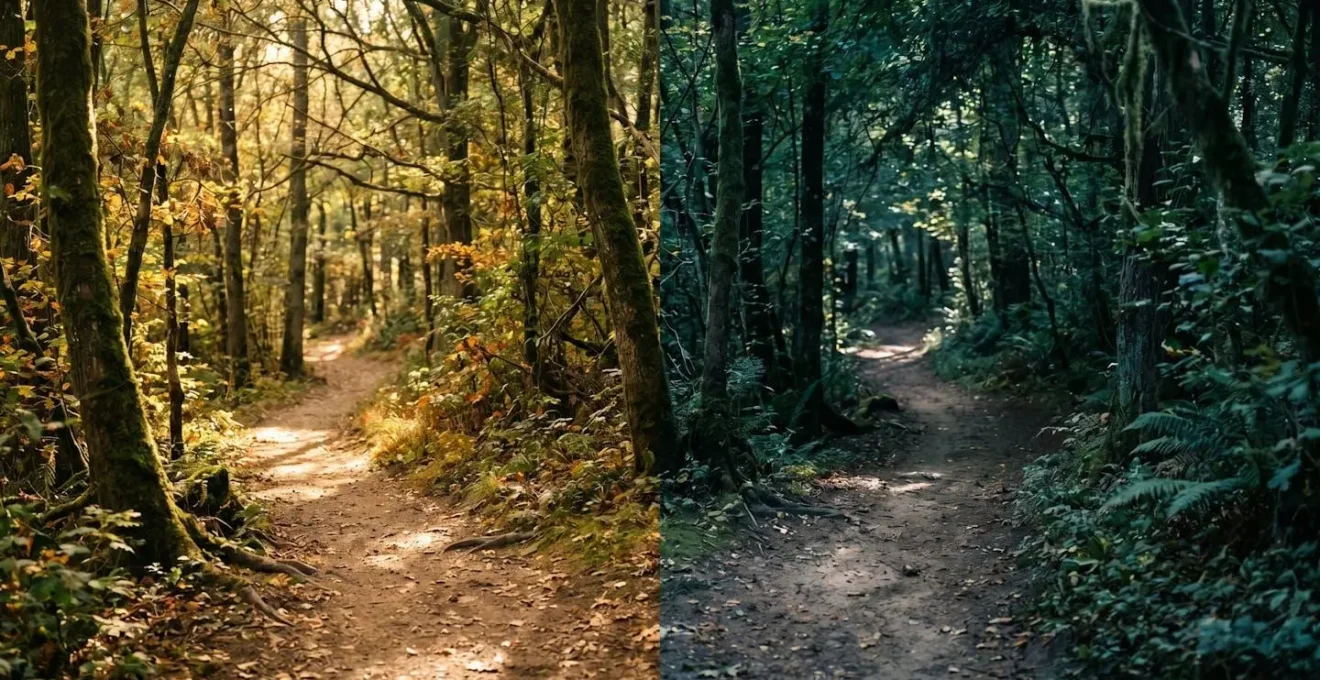
However, for beginners or those whose minds tend to wander, a guided session can be transformative. A certified guide does not act as a tour leader pointing out facts about flora and fauna. Instead, they act as a gentle facilitator. They offer a series of « invitations »—structured sensory exercises—that help you slow down and deepen your awareness in ways you might not discover on your own. A guide holds the space, allowing you to fully surrender to the experience without worrying about time or what to do next. This can often lead to a more profound and immediate state of relaxation for those new to the practice.
Interestingly, the power of the forest environment is so strong that some benefits can be accessed even without being physically present. For instance, research has shown that simply diffusing tree essential oils indoors can replicate a significant portion of the physiological effects. A 2009 study found that participants could achieve 40-50% of the health benefits of forest bathing through this method alone. This highlights that whether you are solo, guided, or even indoors, engaging with the forest’s sensory elements is the active ingredient for well-being.
When to practice: Morning dew vs evening dusk atmosphere
The forest is not a static environment; it is a living entity that changes dramatically with the time of day. Choosing when to practice Shinrin-Yoku is not just a matter of scheduling but of selecting a specific sensory palette. The morning and the evening offer two distinct, yet equally potent, atmospheric experiences for your practice.
A morning forest bath, particularly just after dawn, is an experience of awakening. The air is often cooler and carries the scent of morning dew and damp earth. Light filters through the canopy at a low angle, creating long, dramatic shadows and illuminating details you might otherwise miss. Birdsong is typically at its peak, providing a rich and vibrant soundscape. The atmosphere is one of fresh potential and quiet activity, making it an ideal time for a practice focused on gentle revitalization and setting a calm tone for the day ahead.
In contrast, an evening session during dusk offers an atmosphere of release and settling. As the sun sets, the quality of light becomes soft and diffuse, blurring sharp edges and creating a dreamlike ambiance. The dominant sounds shift from birdsong to the chirping of crickets or the rustle of nocturnal animals beginning to stir. Scents may become heavier, with the fragrance of night-blooming flowers or the rich smell of decaying leaves coming to the forefront. This is a time of transition, a natural winding down that mirrors the body’s own preparation for rest. An evening practice can be a powerful way to shed the stresses of the day and promote deep, restorative sleep.
Why walking silently increases wildlife sightings by 50%?
As your sensory awareness deepens through forest bathing, you naturally become quieter. This silence is not just an absence of noise; it is an active state of listening that radically changes your relationship with the forest ecosystem. For most wildlife, the human voice is a primary threat signal. Our specific vocal frequencies cut through the natural soundscape and are often interpreted as the sound of a predator, triggering an immediate flight response.
Scientific research confirms this intuitive understanding. A groundbreaking 2024 USDA Forest Service study conducted in a national forest found that wildlife were between 3.1 and 4.7 times more likely to flee when exposed to recreation noise, with human speech being a key component. By choosing to walk in silence, you effectively remove this primary stressor from the environment, allowing animals to remain in their natural state. You cease to be an intruder and become part of the background tapestry of the forest.
This shift from noisy observer to silent participant dramatically increases your chances of witnessing wildlife. You are more likely to see a deer grazing peacefully, a fox darting across the path, or a bird tending to its nest. A study with pygmy marmosets in the Amazon demonstrated that even in areas accustomed to humans, the animals were significantly less likely to flee when people spoke quietly or not at all. Your silence is a sign of respect, a signal to the forest’s other inhabitants that you mean no harm. This quieting of the self not only benefits the animals but also deepens your own somatic presence, as you become more attuned to the subtle movements and sounds around you.
How direct skin contact with wind and sun alters your sensory perception?
Shinrin-Yoku is often focused on what we see, hear, and smell, but the sense of touch—particularly the direct contact of our skin with the elements—is a powerful and often overlooked pathway to grounding. Our skin is our largest sensory organ, a vast network of receptors constantly sending information to our brain. In our modern, indoor lives, this sense is often dulled, shielded by clothing, shoes, and climate-controlled environments. Forest bathing invites us to reawaken it.
Allowing the sun to warm your face or the wind to move across your arms is not a passive experience. It is an active sensory input that can dramatically alter your perception. The feeling of a gentle breeze can help dissolve feelings of mental « stuckness, » while the warmth of the sun can instill a deep sense of comfort and well-being. These are primal connections, reminding our bodies of their place within the larger cycles of nature. As contributors to Mindful Magazine note, this tactile engagement is key: « When we walk barefoot on soft, damp grass, feel the papery texture of a dried leaf in our hands… we feel more connected with nature. »
This practice can be as simple as taking off your shoes and feeling the earth beneath your feet—a practice known as « earthing » or « grounding. » The different textures of soil, grass, moss, or cool stones provide a rich stream of sensory data that is both calming and stimulating. You can also trace the rough bark of a tree with your fingertips or dip your hands into a cool, clear stream. Each point of contact is a moment of mindful connection, a physical anchor that pulls you out of abstract thought and into the tangible reality of the present moment.
Key Takeaways
- Shinrin-Yoku is a science-based practice, not just a walk; it uses sensory input to lower the stress hormone cortisol.
- The key is to move slowly without a goal, allowing your five senses to guide you and anchor you in the present.
- Silence and avoiding digital distractions are essential to shift your nervous system from « fight or flight » to « rest and digest. »
Why Camping Naturally Improves Body Image Faster than Therapy?
The principles of sensory immersion and disconnection learned during a short forest bath find their ultimate expression in the multi-day experience of camping. If Shinrin-Yoku is a therapeutic conversation with nature, then camping is a full, immersive dialogue. This extended time away from societal pressures, mirrors, and the « performance self » creates a unique environment for profound psychological shifts, particularly concerning body image.
In the wild, the body is not an object to be judged for its appearance; it is a functional, capable vessel. It becomes a tool for navigating terrain, for staying warm, for carrying what is needed. This shift in perspective from what the body looks like to what it can do is incredibly powerful. The focus moves from aesthetic judgment to a deep appreciation for its strength and resilience. This experience can foster a sense of self-compassion and physical empowerment that is often difficult to achieve in a conventional therapeutic setting.
This is not merely anecdotal. Extensive research on outdoor therapies has revealed a positive influence on self-esteem and self-efficacy for over 50 years. More specifically, a powerful study evaluating an outdoor adventure program for young adult cancer survivors found that the experience led to significantly improved body image, self-compassion, and self-esteem compared to a control group. By engaging in activities like climbing or kayaking, participants reconnected with their bodies in a context of competence and adventure, rather than one of illness or perceived flaws.
Camping strips away the external markers of identity and worth, replacing them with the immediate, tangible realities of the natural world. This return to a more elemental way of being provides a potent reset for the mind and fosters a healthier, more accepting relationship with the body—a relationship built on gratitude and capability, not judgment.
The journey from a stressed urbanite to a grounded individual begins with a single, intentional step. The next step is to move from theory to practice. Find a quiet patch of green, leave your goals behind, and begin your own sensory dialogue with the natural world.